
Cambodia Investment Review
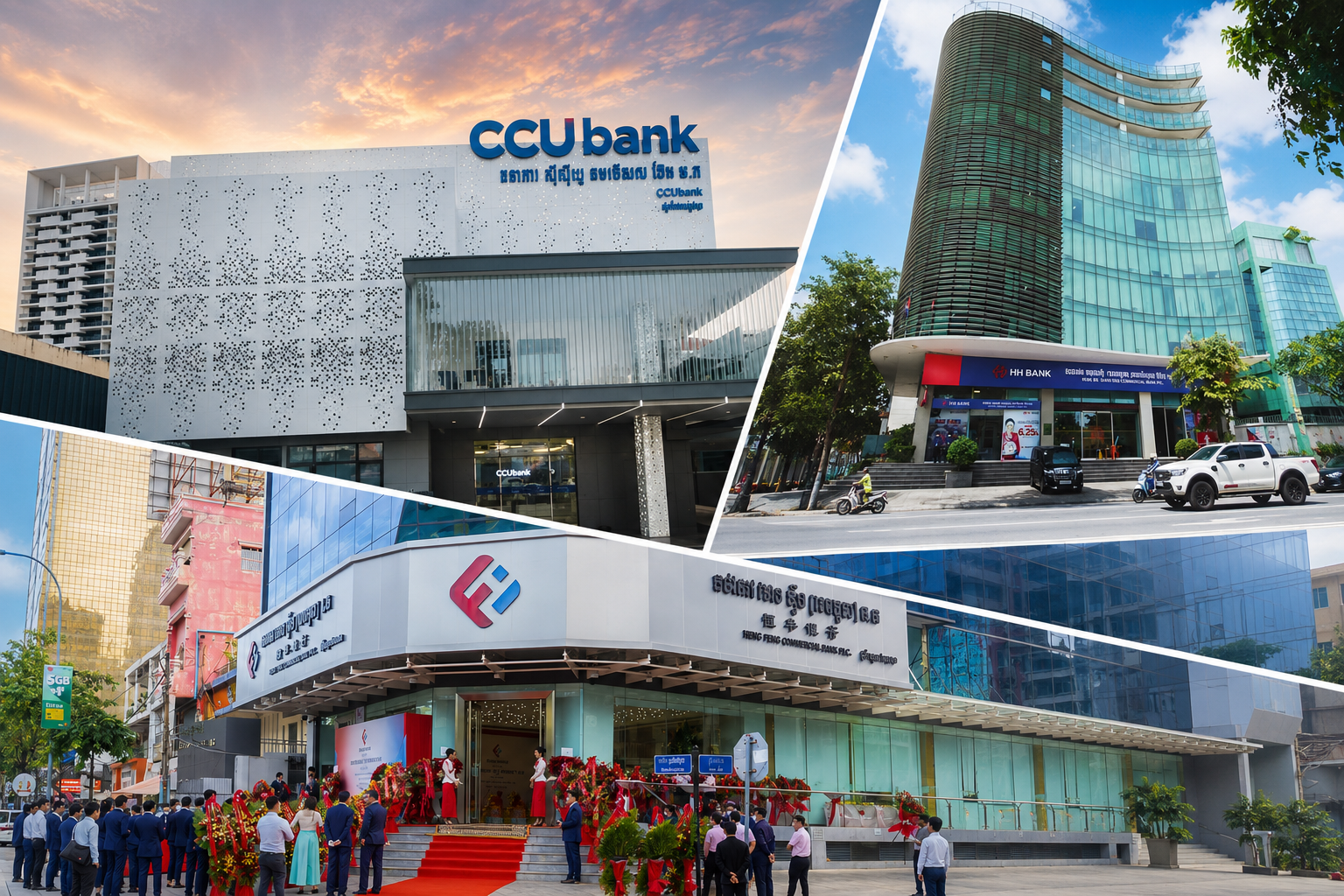
The National Bank of Cambodia (NBC) has appointed REACHS & Partners to oversee the liquidation of CCU Commercial Bank, while Baker Tilly Cambodia has been named liquidator for HH Bank and Heng Feng Bank, following the revocation of the three banks’ commercial banking licenses.
The central bank said the three institutions account for just 0.5 percent of Cambodia’s US$99.8 billion banking sector assets and 0.5 percent of the country’s US$64.2 billion in outstanding credit, stressing that the closures pose minimal risk to the overall financial system.
The announcement comes months after the liquidation of Huione Pay (H-Pay) and Panda Commercial Bank, which drew significant public attention and prompted concerns over confidence in Cambodia’s banking sector after thousands of customers sought to recover their deposits.
REACHS & Partners and Baker Tilly Cambodia Take Control
Under the NBC’s decision, REACHS & Partners has been appointed to administer the liquidation of CCU Commercial Bank, while Baker Tilly Cambodia will manage the liquidation process for both HH Bank and Heng Feng Bank.
The central bank said that once a banking license is revoked and liquidation begins, the appointed liquidator assumes legal authority over the institution’s assets. The liquidator is responsible for identifying, preserving and disposing of assets before repaying creditors in accordance with Cambodia’s banking and insolvency laws under the supervision of the NBC.
The central bank added that it will continue overseeing the liquidation process, including management of banking systems and customer data, while coordinating with relevant government ministries to facilitate asset recovery and customer claims.
Banks Were on U.S. Sanctions List
All three banks have been listed by the U.S. Treasury Department’s Office of Foreign Assets Control (OFAC), which has sanctioned a number of entities allegedly linked to cyber fraud, human trafficking, forced labour and transnational criminal networks.
However, the NBC emphasized that being placed on the OFAC sanctions list does not automatically indicate criminal wrongdoing under Cambodian law.
The regulator said each institution is subject to its own confidential supervisory assessment before regulatory action is taken.
Instead, the NBC said the licenses were revoked primarily because of weak financial performance and prolonged poor profitability, citing the lasting effects of the COVID-19 pandemic, global tariff pressures and the recent Cambodia–Thailand border conflict as factors that have affected parts of the banking sector.
No Further Bank Closures Planned
The NBC said it has no plans to revoke additional banking licenses, reaffirming that maintaining a stable, resilient and well-capitalized banking sector remains one of its highest priorities.
It also noted that the combined market share of the recently liquidated institutions, together with previous closures including Prince Bank and Panda Commercial Bank, represents only around one percent of Cambodia’s banking sector.
Lessons From Earlier Liquidations
The latest action follows the earlier revocation of the licenses of H-Pay, formerly Huione Pay, and Panda Commercial Bank, which were shut down over alleged links to cyber fraud and money laundering.
Those liquidations left thousands of customers temporarily unable to access their funds, leading to public protests and renewed scrutiny of Cambodia’s financial sector.
The NBC acknowledged that liquidation proceedings can become complex where multiple parties claim ownership of the same deposits or assets. Nevertheless, it said customers who have been able to verify ownership have generally not encountered significant difficulties in recovering eligible funds.
Under Cambodia’s liquidation framework, repayments are made according to a legal order of priority. Liquidator fees are settled first, followed by taxes and state obligations, employee wages of up to three months, and then depositor claims, including deposits of up to 2 million riels, which may be repaid in full if sufficient assets are available.
Banking Sector Remains Stable
The NBC said it will continue working closely with the appointed liquidators to ensure transparency throughout the liquidation process and maintain clear communication with affected customers.
It added that coordination with agencies including the Ministry of Land Management, Urban Planning and Construction on collateral assets and the Ministry of Posts and Telecommunications on digital banking applications will help facilitate an orderly resolution.
According to the central bank, 51 financial institutions have had their licenses revoked since 1990. Of those, 25 entered liquidation between 1990 and 2020, while 23 were liquidated between 2020 and 2026. The three latest cases bring the total number of revoked financial institution licenses to 51, reflecting the NBC’s ongoing supervision and restructuring of Cambodia’s banking sector.