

Harrison White
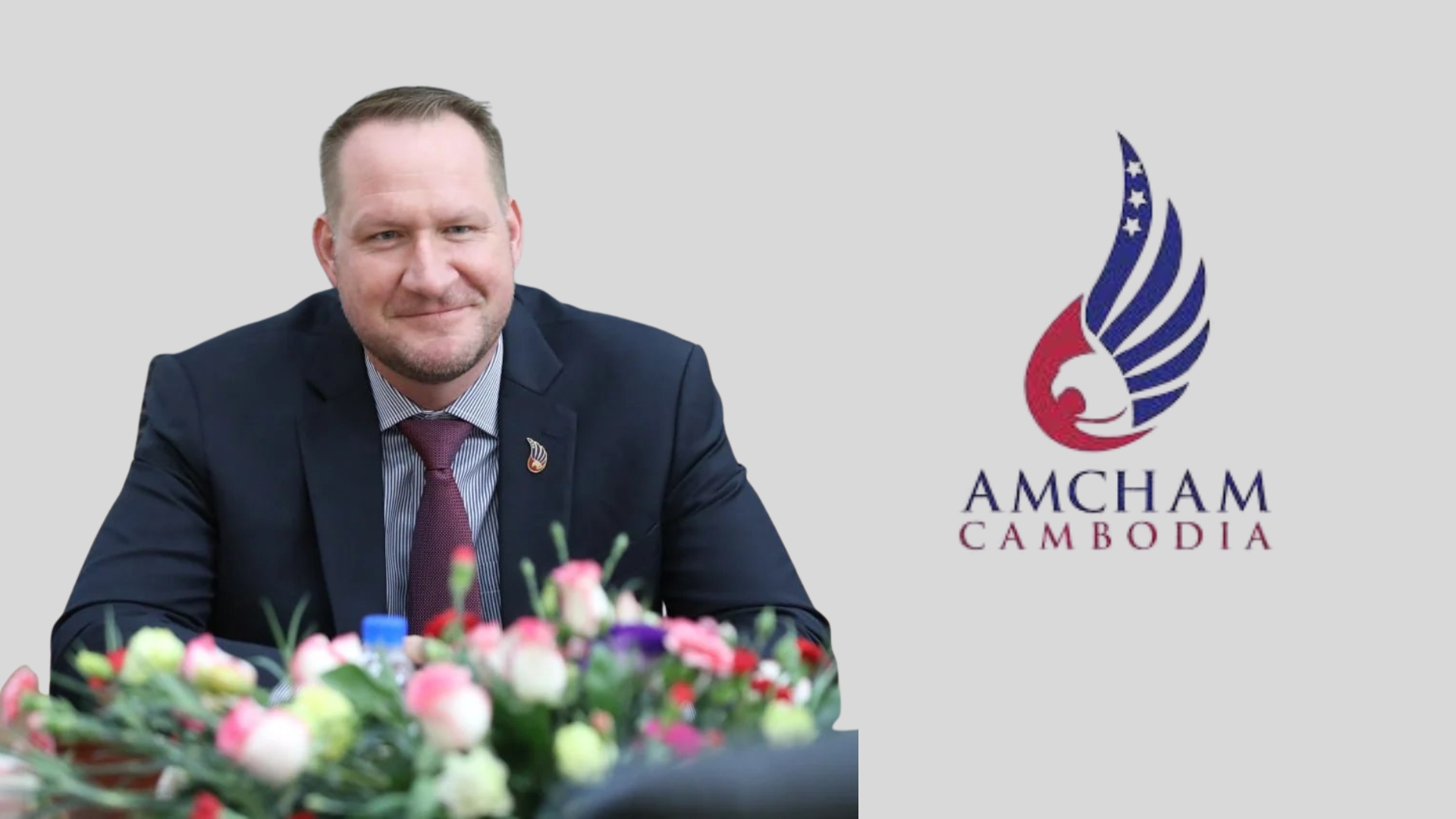
As Devin Barta returns to the presidency of the American Chamber of Commerce in Cambodia (AmCham Cambodia), he is taking the helm of an organisation entering a new phase of growth, with rising membership, stronger financial performance, and renewed ambitions to deepen business cooperation between Cambodia and the United States.
Speaking with Cambodia Investment Review, Devin outlined his priorities for the year ahead, sharing his vision for strengthening member engagement, improving advocacy, fostering closer collaboration with other chambers of commerce, and positioning Cambodia to capitalise on shifting global investment trends.
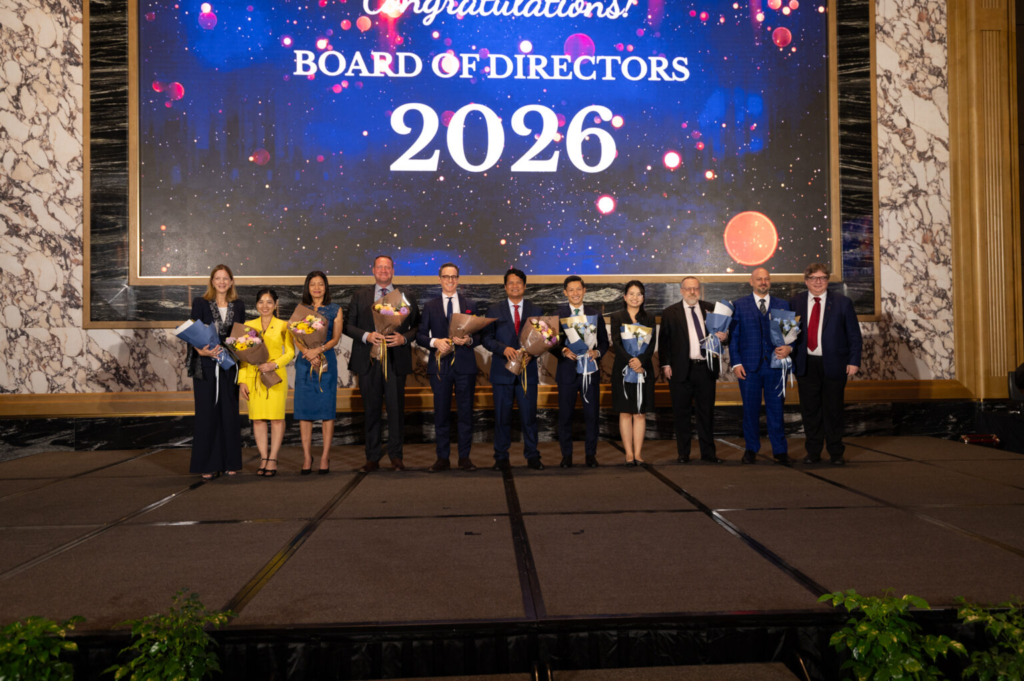
His appointment follows the completion of outgoing President Casey Barnett’s term and marks Barta’s second stint leading the chamber after previously serving from 2023 to 2024.
Returning to Serve a Community He Calls Home
For Devin, accepting the presidency again was driven by a belief in both Cambodia’s economic potential and the important role AmCham can play in supporting it.
Read More: Devin Barta Elected as AmCham Cambodia President for 2026
“It is an honor and privilege to return to the role of AmCham Cambodia President. As someone who considers Cambodia home, I genuinely believe in the power of the AmCham community to be a force for good in supporting sustainable and equitable economic growth that benefits everyone here.”
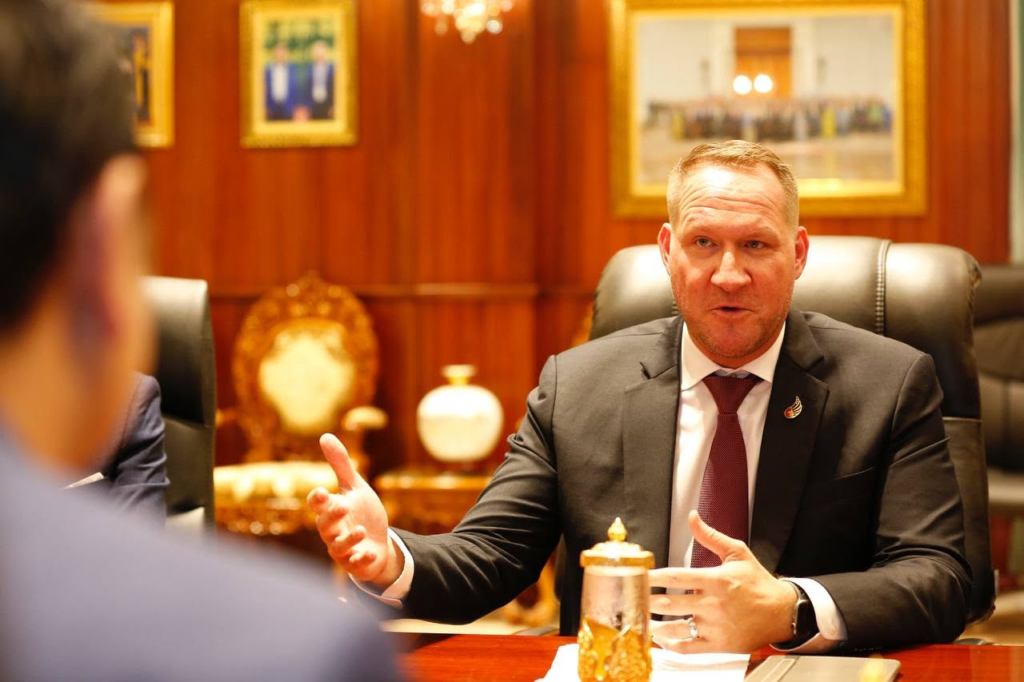
He said his agenda for the next 12 months is built around three priorities: increasing member participation through committees and events, strengthening cooperation with fellow chambers of commerce to amplify advocacy efforts, and building closer ties between the U.S. and Cambodian business communities.
“Ultimately,” he said, “everything comes back to that central mission of supporting our members.”
Taking the Helm at a Time of Renewed Growth
Devin assumes leadership as AmCham enters 2026 from a position of increasing strength.
According to the chamber’s latest annual report, membership has climbed to 250 companies, returning to levels last seen in 2022 after adding around 50 new members during the past year. The organisation now represents businesses across manufacturing, logistics, education, professional services, technology, and other key sectors of Cambodia’s economy.
Membership retention remained high at 87%, reflecting continued confidence in the chamber’s advocacy work, networking opportunities, and engagement with policymakers.
Financially, the organisation also posted a solid performance. Total revenue rose 15% year-on-year to more than $377,000, while income generated from events increased by almost one-third to over $163,000. Membership fees continued to provide a stable foundation, contributing more than $208,000, and the chamber recorded an annual operating surplus exceeding $43,000 while maintaining cash reserves of approximately $173,000.
These figures, alongside improvements to internal governance and financial reporting systems, position the chamber to continue investing in member services and advocacy initiatives.
Turning Global Challenges into Opportunities
The international business environment remains characterised by uncertainty surrounding tariffs, trade policy, supply chains, and geopolitical developments. Devin acknowledged these issues are front of mind for many AmCham members operating in Cambodia.
“American businesses operating in Cambodia are certainly feeling the impacts of global uncertainty surrounding U.S. trade policy, tariffs, and shifting supply chains, and our members are busy navigating these challenges.”
However, he believes the changing landscape could also create opportunities for Cambodia.
“Disruption also gives rise to opportunities, as companies continue to diversify their sourcing and manufacturing.”
As multinational firms seek to reduce concentration risks and establish more resilient supply chains across Southeast Asia, Barta sees Cambodia as well positioned to attract additional investment if it continues to offer a stable and competitive business environment.
He said AmCham will continue leveraging its relationships and advocacy channels to help ensure the Kingdom remains an attractive destination for international business.
Building on the Work of Past and Present Leaders
AmCham has undergone a period of leadership transition in recent years, including changes in executive leadership and staffing. Rather than viewing that period as a challenge alone, Devin believes it has highlighted the resilience of the organisation and the importance of institutional continuity.
“The only constant we can truly rely on is that things will change and how we adapt is what matters.”
He credited both the chamber’s current leadership and those who helped build the organisation over many years.
“We are fortunate to be able to stand on the shoulders of the leadership teams that have come before, whether board members, presidents or administrative teams. Everyone added something that helped the chamber get it where it is today.”
At the same time, he expressed confidence in the current staff and board, saying they bring fresh perspectives and renewed energy to the organisation.
“As long as we keep our focus firmly on putting the members first and consistently delivering on what our members need, I am confident that AmCham Cambodia will continue to thrive.”
Unlocking New Areas of U.S.–Cambodia Cooperation
Looking ahead, Devin believes there is considerable scope to strengthen economic ties between Cambodia and the United States despite ongoing global uncertainty.
One immediate opportunity, he said, lies in increasing Cambodia’s imports of U.S. agricultural products and manufactured goods, contributing to a more balanced bilateral trading relationship.
Beyond merchandise trade, he highlighted significant potential in infrastructure development, digital services, technology, and critical minerals.
“There is tremendous potential to sign deals and agreements in areas such as infrastructure development, digital services and technology, and critical minerals, all of which support Cambodia’s development and America’s strategic interests in the region.”
He added that these sectors could become the foundation for long-term partnerships that benefit both countries while supporting Cambodia’s continued economic modernisation.
AmCham Cambodia intends to play an active role in facilitating those connections and encouraging greater engagement between businesses, investors, and policymakers.
Measuring Success Through Member Impact
While membership growth and financial performance are important indicators, Devin said he will judge the success of his presidency by the value delivered to members and the chamber’s influence on the broader business environment.
By the end of his term in 2027, he hopes to see stronger member engagement through committee participation, surveys, and events, as well as more effective advocacy with government stakeholders.
“Improved member engagement via survey participation and event attendance will tell us that our members feel genuinely connected to the chamber and that we are delivering real value for them.”
He also wants to ensure the concerns of businesses are heard at the highest levels.
“We want to know that the voices of our members have been heard at the right levels and have contributed to a better business environment here in Cambodia.”
Finally, Devin aims to establish more robust frameworks for collaboration between Cambodia’s various chambers of commerce, enabling them to advocate more effectively on shared priorities affecting the private sector.
“If we can achieve those three things, I would consider it a successful year for AmCham and the broader business community we are proud to serve.”