
Cambodia Investment Review
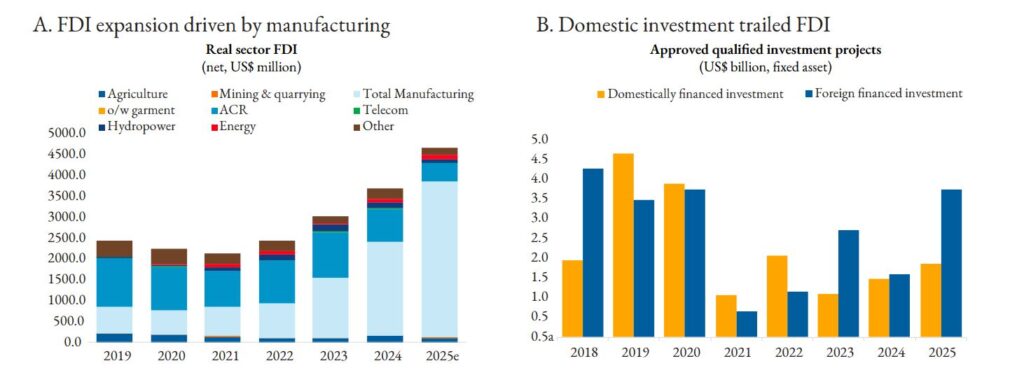
Cambodia attracted $5.1 billion in foreign direct investment (FDI) in 2025 and recorded double-digit export growth in the opening months of 2026, underscoring continued investor confidence in the Kingdom despite a challenging global economic environment.
According to the latest World Bank Cambodia Economic Update, released on June 9, foreign investment and strong trade performance have emerged as key pillars supporting the economy as Cambodia navigates external shocks, a property market downturn and changing regional labour dynamics.
The report estimates that FDI inflows helped create approximately 400,000 formal jobs during 2025, providing important employment opportunities for workers transitioning from agriculture as well as returning migrant workers.
Goods exports also continued to expand, rising 17.7 percent year-on-year during the first quarter of 2026, supported by demand from international markets and Cambodia’s growing manufacturing base.
Foreign Investment Continues to Support Job Creation
The World Bank noted that foreign investment remains one of Cambodia’s strongest economic drivers, helping diversify the economy and create employment opportunities across a range of sectors.
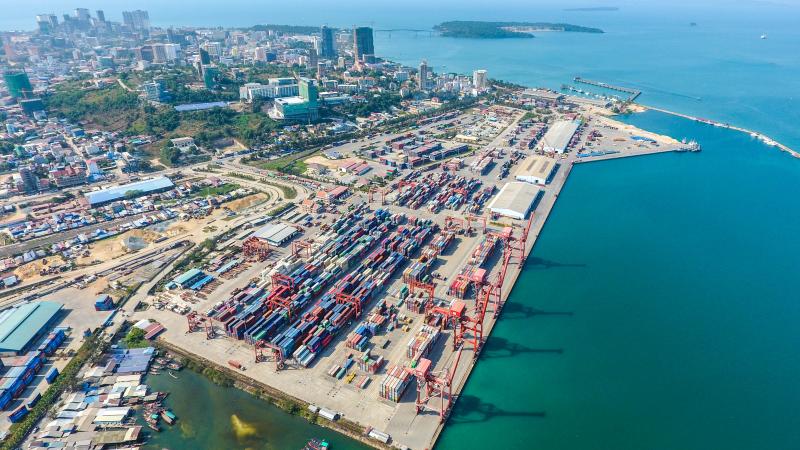
The $5.1 billion recorded in 2025 comes as Cambodia continues to position itself as a manufacturing and export hub within Southeast Asia, benefiting from its strategic location and participation in regional and global trade networks.
The report highlighted that formal employment opportunities generated through investment are becoming increasingly important as the country absorbs workers returning from overseas labour markets and seeks to move more workers into higher-productivity sectors.
While economic growth is expected to moderate in the near term, the World Bank said continued investment inflows will remain critical to supporting incomes and employment.
Export Sector Remains a Bright Spot
Cambodia’s export sector also delivered a strong performance in the first quarter of 2026, with goods exports increasing by 17.7 percent.
The growth reflects continued resilience among exporters despite slowing global growth and increased uncertainty in international markets.
Manufacturing exports remain one of Cambodia’s most important sources of foreign exchange earnings, with the sector continuing to attract international buyers seeking to diversify supply chains across Asia.
The World Bank said export growth is helping offset some of the pressures facing other parts of the economy, including construction and real estate.
Demographic Dividend Offers Long-Term Opportunity
Tania Meyer, World Bank Country Manager for Cambodia, said the country’s ability to continue creating jobs will be critical in determining its long-term economic trajectory.
“Cambodia’s economy is holding in the face of simultaneous shocks, demonstrating a resilience that can be sustained through targeted policy action to protect jobs and livelihoods,” Meyer said.
She noted that Cambodia’s working-age population is expected to peak around 2043, creating a limited but significant opportunity to accelerate economic development through investments in education, skills and productivity.
The World Bank argues that sustained investment in human capital, alongside continued support for sectors capable of generating large-scale employment, will be essential if Cambodia is to maximise the benefits of its demographic transition and achieve its long-term Vision 2050 development ambitions.