
Cambodia Investment Review
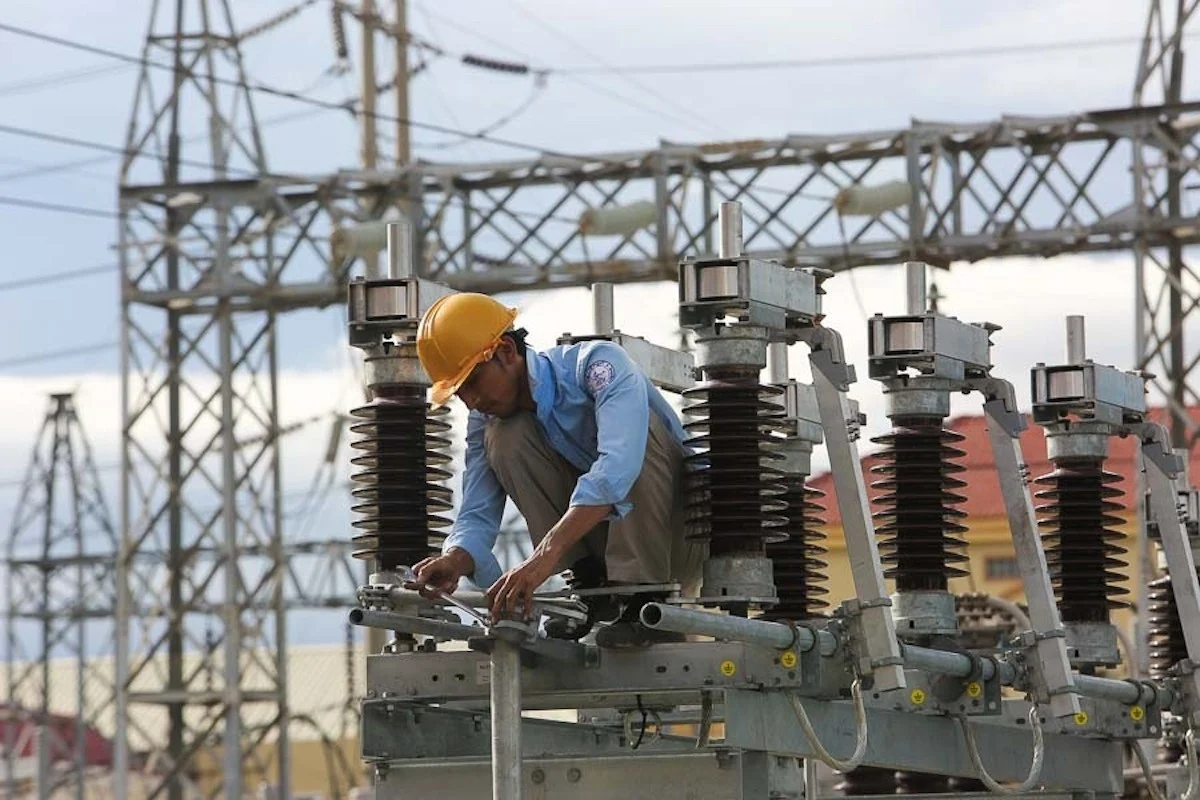
Cambodia’s high electricity costs and persistent grid reliability challenges are limiting the country’s ability to attract higher-value manufacturing investment, according to a new assessment by the ASEAN+3 Macroeconomic Research Office (AMRO), which warns that energy constraints remain a structural barrier to industrial upgrading.
While Cambodia has achieved rapid economic growth over the past two decades, AMRO said the country’s export sector remains heavily concentrated in labor-intensive industries such as garments, footwear and travel goods, with limited progress in expanding into higher-value sectors including electronics, automotive components and advanced food processing.
The report argues that electricity has become one of the key factors determining whether Cambodia can move further up global value chains as it prepares to graduate from Least Developed Country (LDC) status by 2029.
Among ASEAN’s Most Expensive Industrial Power Markets
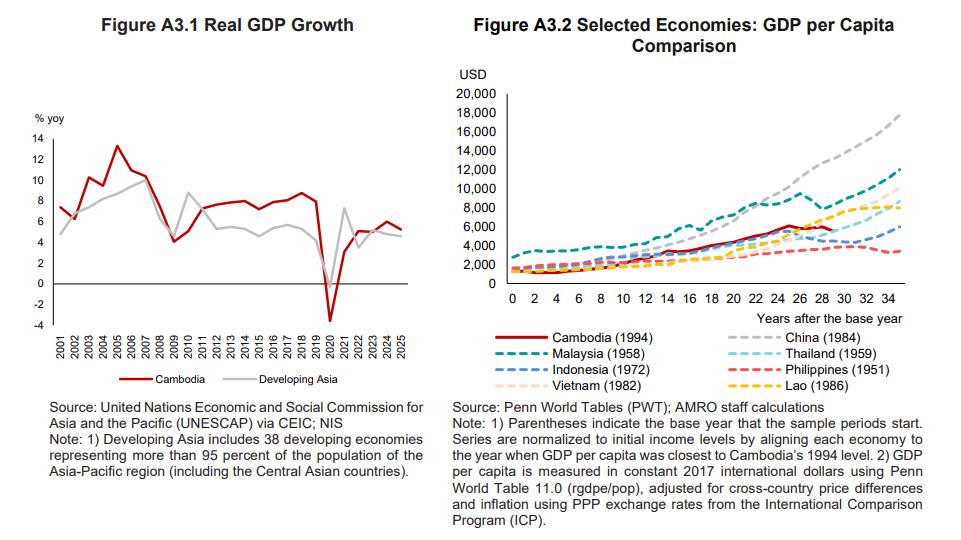
Despite significant improvements in electrification, Cambodia continues to have some of the highest industrial electricity tariffs in Southeast Asia.
Read More: Opinion: The Green Exit is Cambodia’s Security Strategy
According to AMRO, industrial electricity prices in Cambodia remain considerably higher than competing manufacturing destinations such as Vietnam, where industrial tariffs are roughly half Cambodia’s levels.
The higher cost of electricity is increasingly influencing investment decisions by multinational manufacturers evaluating production locations across ASEAN.
Reliability also remains an issue.
World Bank Enterprise Survey data cited by AMRO found that 42.8% of Cambodian businesses experienced electricity outages in 2023, with the figure rising to 55.7% among manufacturing firms and more than 82% within the garment sector.
Previous research referenced in the report found that firms affected by power outages typically experience productivity levels around 11% lower than comparable businesses with stable electricity supplies.
Assembly Economy Faces Growth Ceiling
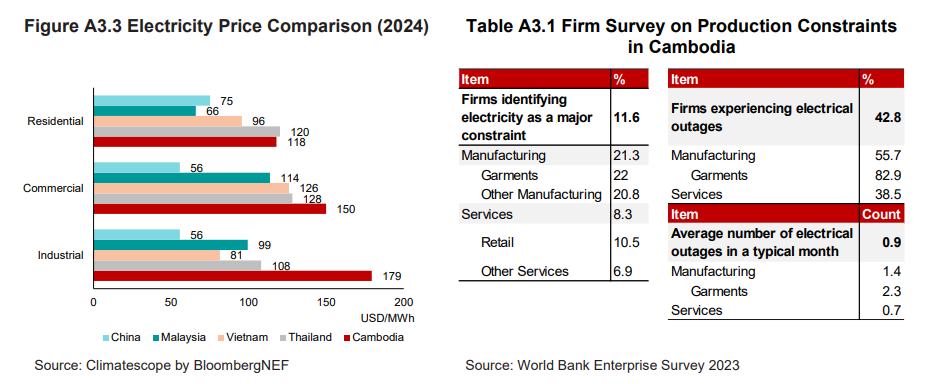
AMRO argues that Cambodia’s manufacturing sector remains concentrated in relatively low electricity-intensive assembly activities, which generally generate lower value-added than upstream manufacturing.
Garment assembly, for example, requires relatively modest electricity consumption, while textile production consumes more than six times as much electricity but also creates substantially greater domestic value.
Because Cambodia imports nearly all of the fabric used by its garment industry, around half the value of every garment export leaves the country through imported inputs, limiting domestic value creation.
A similar pattern exists in Cambodia’s emerging automotive sector.
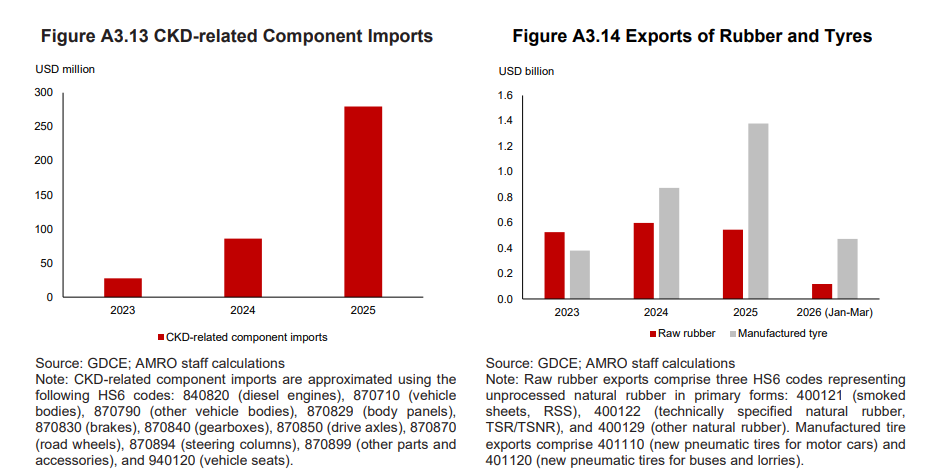
Although several international manufacturers have established vehicle assembly operations following investment incentives introduced under the country’s new Law on Investment, most production remains focused on Completely Knocked Down (CKD) assembly using imported components rather than higher-value parts manufacturing.
AMRO said moving into industries such as textile production, electronic components and automotive parts manufacturing would require significantly more reliable and affordable electricity than is currently available.
Energy Infrastructure Improving, But Challenges Persist
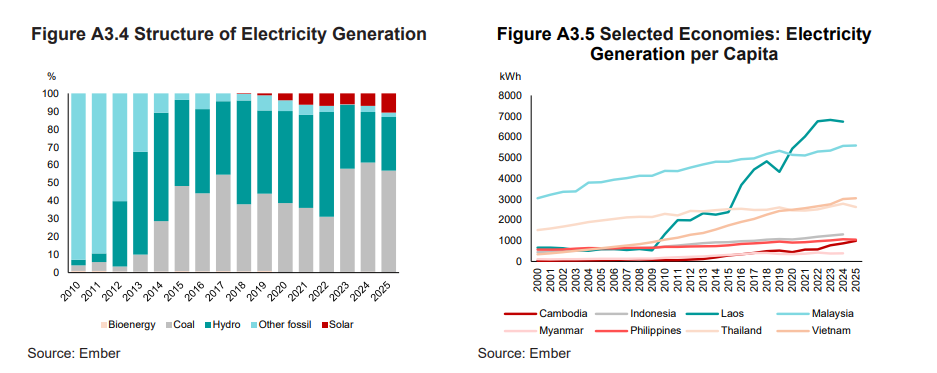
Cambodia has made substantial progress expanding its electricity network.
Power generation capacity increased to nearly 6 gigawatts in 2025, while electricity delivered to consumers rose 12% year-on-year. Household electricity access reached almost 96%, with licensed electricity services covering virtually every village nationwide.
Renewable energy also now accounts for more than 60% of installed generation capacity, led primarily by hydropower.
However, AMRO noted several structural vulnerabilities remain.
Coal still provides nearly half of domestically generated electricity, hydropower output remains vulnerable to drought and seasonal rainfall, transmission infrastructure continues to suffer from bottlenecks, and Cambodia still relies on electricity imports from neighboring countries during periods of high demand.
Tyre Industry Demonstrates Potential
The report points to Cambodia’s rapidly expanding tyre manufacturing sector as evidence that reliable electricity can support industrial upgrading.
Tyre exports increased almost fourfold between 2023 and 2025 after several major manufacturers established production facilities inside special economic zones with dedicated and more reliable electricity supplies.
The Sihanoukville Special Economic Zone, for example, operates its own 100-megawatt power station, allowing manufacturers to undertake more electricity-intensive production than would typically be feasible elsewhere in the country.
Combined with Cambodia’s growing natural rubber industry, AMRO said this demonstrates how improved power infrastructure could help the country capture significantly more value within global manufacturing supply chains.
Solar Expansion Could Lower Costs
Looking ahead, AMRO recommends accelerating investment in solar energy, grid infrastructure and energy storage to improve reliability while reducing electricity costs.
Read More: LOLC Cambodia Expands Solar Investment as ESG Strategy Drives Greener Operations
The report notes Cambodia possesses strong solar resources and that falling global prices for solar panels and battery storage have made renewable energy increasingly competitive.
Alongside expanding domestic generation, AMRO also recommends strengthening transmission infrastructure and further integrating Cambodia into the ASEAN Power Grid to improve energy security and provide manufacturers with more stable and affordable electricity supplies.
According to the report, addressing these structural electricity constraints will be essential if Cambodia is to transition from labor-intensive assembly into higher-value manufacturing industries capable of supporting stronger productivity growth and greater domestic value creation over the coming decade.