
Cambodia Investment Review
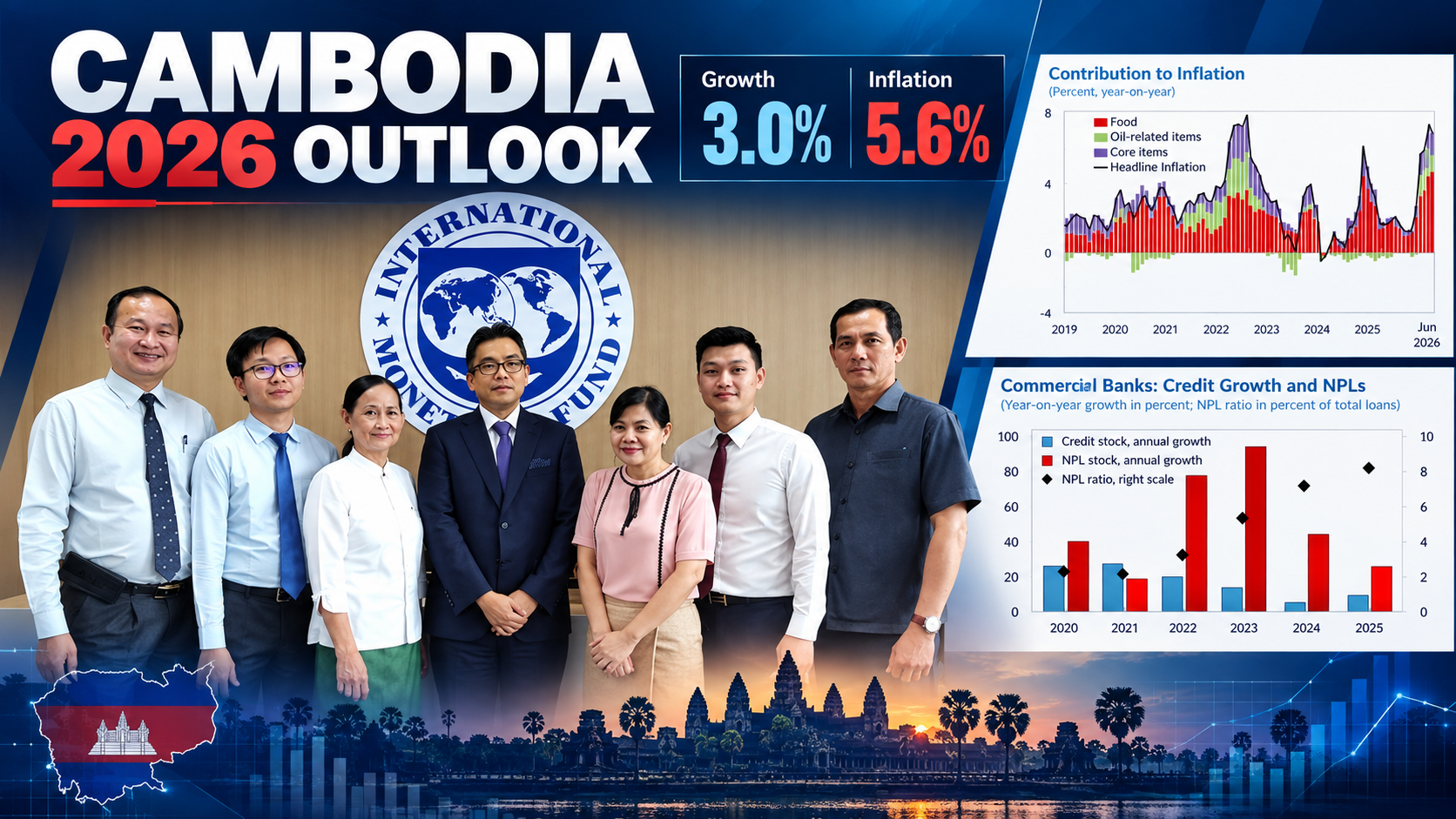
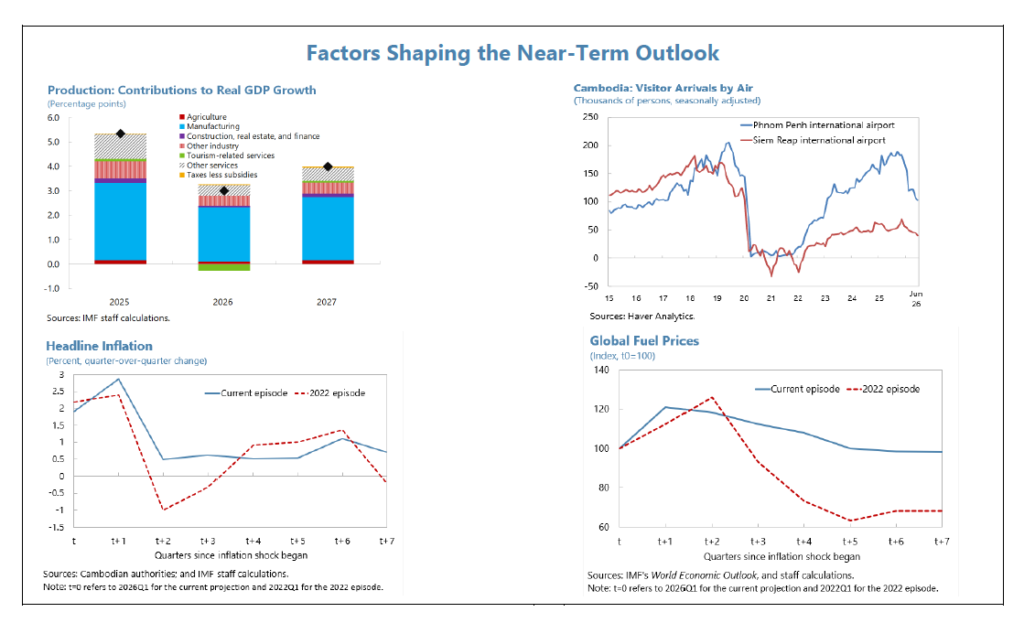
Cambodia’s economy is expected to grow 3% in 2026, down from 5.3% last year, while inflation is projected to average 5.6%, the International Monetary Fund said in its latest assessment.
The IMF expects growth to recover to 4% in 2027 and inflation to ease to 3.1%. It warned, however, that a prolonged property downturn, pressure on banks’ loan portfolios and potential disruptions to trade or energy supplies could make this year’s slowdown more severe.
Higher energy prices initially drove inflation, but price pressures have since spread more broadly through the economy, the fund said.
The assessment was released Monday after the IMF Executive Board completed its annual consultation with Cambodia on September 22. It presents a more difficult near-term outlook for an economy supported by manufacturing exports, foreign investment and infrastructure projects in 2025, even as domestic demand remained weak.
Property downturn adds pressure to banks
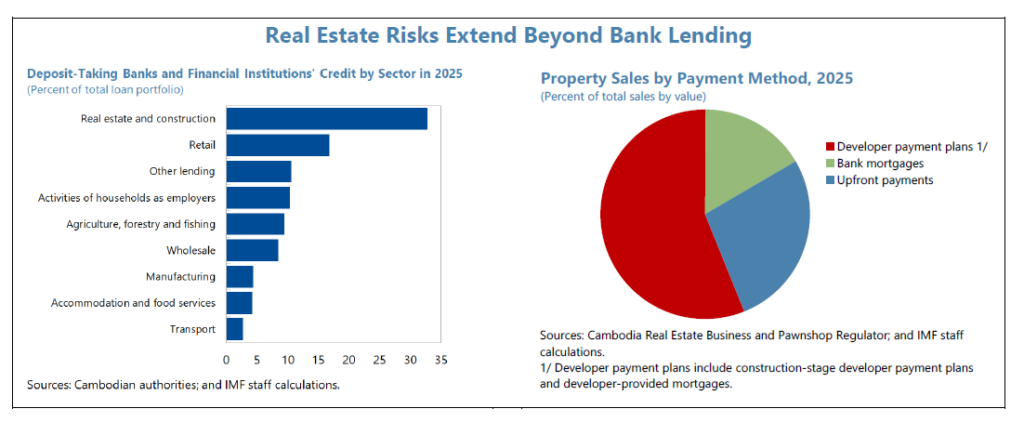
Cambodia’s prolonged real estate correction is a central concern in the IMF’s assessment. The fund said tighter financial conditions, weaker credit and deposit growth, and rising pressure on banks’ loan portfolios are weighing on activity.
The end of regulatory forbearance has made problems with loan quality more visible. A deeper property correction could increase losses for lenders with concentrated exposure to developers, large borrowers and real estate projects, while further weakening borrowers’ ability to repay.
The IMF called for banks to recognise problem loans promptly, set aside adequate provisions and develop credible plans to address any capital shortfalls. It also urged closer oversight of large borrower and related-party exposures, along with stronger procedures for resolving nonperforming loans.
Although financial vulnerabilities have increased, the fund said broader risks to the banking system remain contained. It recommended that emergency liquidity support be limited to institutions assessed as solvent and that authorities strengthen tools for handling banks that cannot recover.
The IMF also raised concerns about financial flows associated with scam operations and human trafficking. It called for urgent action to identify potential links between criminal activity and banks, close gaps in licensing rules and strengthen cooperation among relevant agencies. Persistent scam activity could damage tourism, investment and confidence in Cambodia’s financial system, it said.
Tourism, remittances and exports face headwinds
Cambodia’s growth is also being affected by weaker tourism and remittances. According to the IMF, border tensions with Thailand reduced land-based tourism and remittance flows and prompted the return of nearly one million Cambodian migrant workers.
At the same time, garment export growth is expected to slow. The IMF cited subdued domestic demand and higher energy costs as additional pressures on businesses and households.
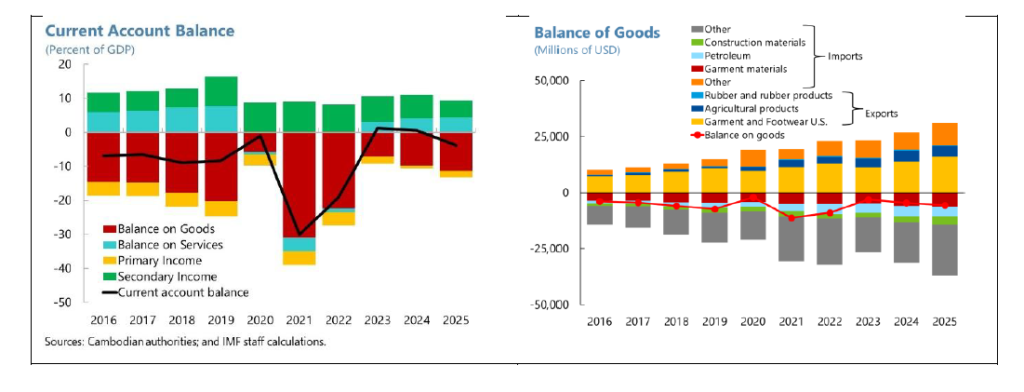
The fund projects the current account deficit will widen from 3.7% of GDP in 2025 to 8.7% in 2026. It expects imports to rise faster than exports this year, though it said foreign direct investment and international reserves provide important buffers. Public debt remains sustainable, with a low risk of debt distress, according to the assessment.
IMF calls for focused support
The IMF recommended temporary, targeted fiscal support to cushion the slowdown, particularly for vulnerable households and viable businesses. Broad fuel-related assistance should be phased out as price pressures ease, it said.
Over the longer term, the fund urged Cambodia to strengthen tax collection, improve the way public money is allocated and spent, and increase oversight of risks tied to state-owned enterprises and public-private partnerships. Those steps would become more important as access to concessional financing declines.
The IMF also called for reforms to attract higher-quality foreign investment, build links between international investors and Cambodian suppliers, improve skills and strengthen energy security.
Planned government fiscal stimulus could lift growth above the IMF’s forecast, while stable global commodity prices would help ease inflation. But the fund warned that renewed energy volatility, trade disruption, climate shocks or a sharper property downturn could leave Cambodia facing a more difficult recovery.