

Cambodia Investment Review
Cambodia has launched a national startup strategy targeting $30 million in investment by 2030 as the government seeks to turn more early-stage businesses into competitive companies and strengthen the country’s position in regional innovation markets.
The National Strategy on Startup Development 2026–2030 sets four headline targets, including helping 300 startups participate in incubation programs and enabling 100 startups to secure investment.
Cambodia also aims to lift its Startup Ecosystem Performance Index classification from an “Emerging Ecosystem” to an “Expanding Ecosystem” by the end of the strategy period.
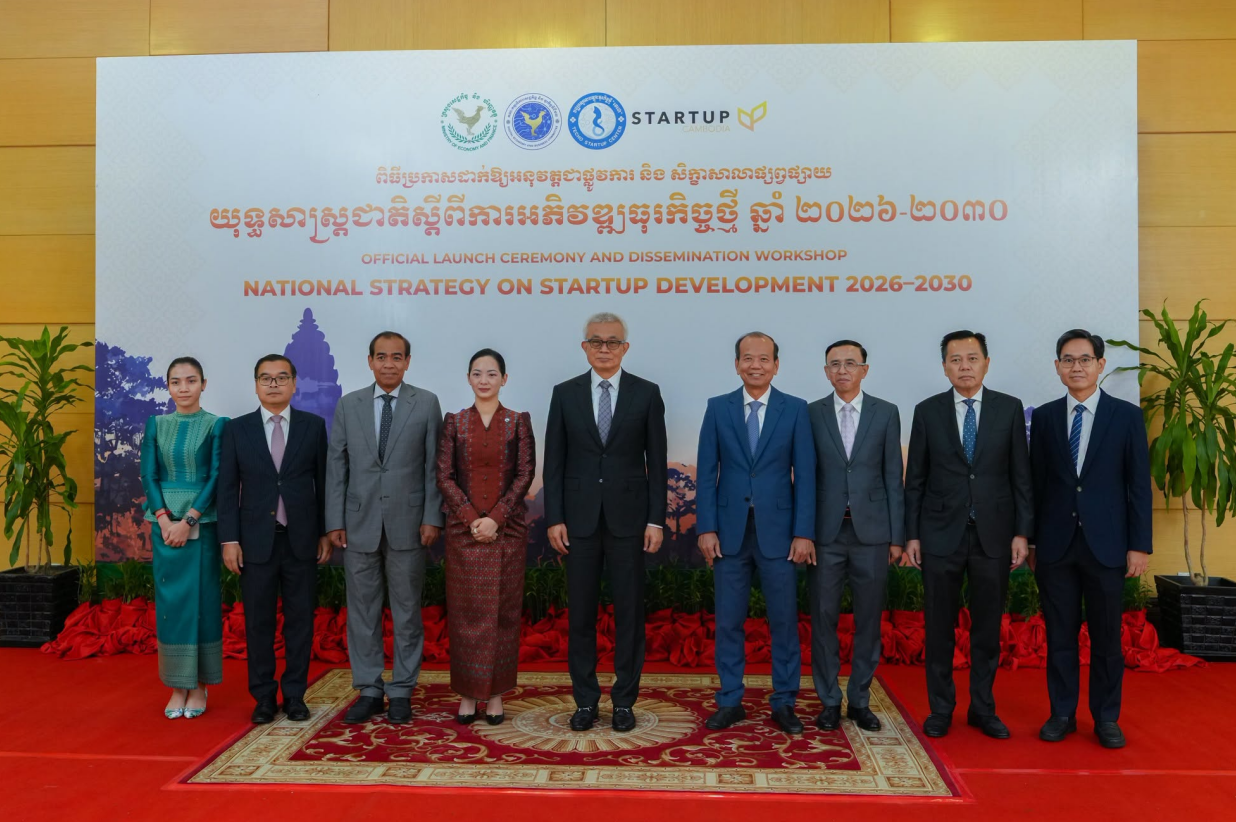
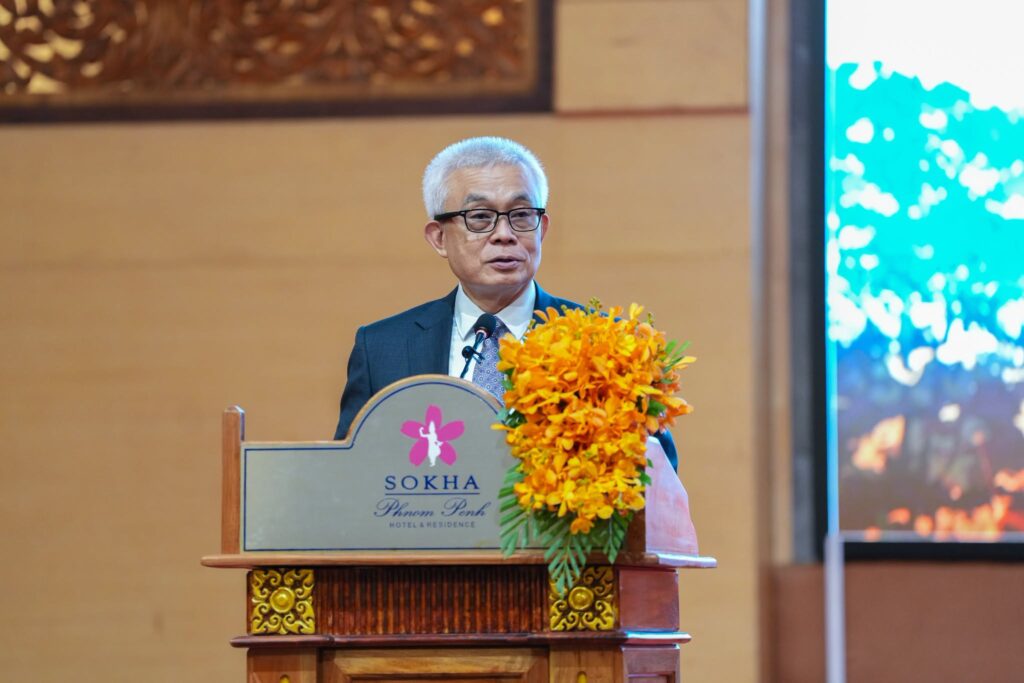
The strategy was officially launched on Tuesday at Sokha Phnom Penh Hotel by Deputy Prime Minister and Minister of Economy and Finance Aun Pornmoniroth, representing Prime Minister Hun Manet.
The ceremony and dissemination workshop brought together government officials, investors, development partners, universities, business-support organizations, entrepreneurs and private-sector representatives to discuss how the strategy will be implemented.
Startups Positioned as Drivers of Economic Growth
The government is positioning startups as an increasingly important source of innovation, entrepreneurship and economic growth as Cambodia works toward becoming a high-income economy by 2050.
Unlike conventional micro, small and medium-sized enterprises, startups typically use innovation and digital technology to create new business models, address market gaps and enter emerging industries, according to the strategy.
The framework is intended to help ministries, public institutions and private-sector stakeholders address barriers that prevent young businesses from accessing finance, developing new products and expanding beyond their initial markets.
Its broader vision is to create a more vibrant, inclusive and sustainable ecosystem where entrepreneurs can develop new solutions, strengthen existing markets and create new ones.
The strategy also seeks to help Cambodian startups scale into competitive companies while building stronger links with regional and global investment and innovation networks.
Four Startup Targets for 2030
Under the strategy, Cambodia has set four overarching targets to achieve by 2030:
- Upgrade Cambodia’s Startup Ecosystem Performance Index classification from an “Emerging Ecosystem” to an “Expanding Ecosystem.”
- Support 300 startups through incubation programs.
- Enable 100 startups to receive investment.
- Attract $30 million in total startup investment.
Individual ministries and institutions responsible for implementing the strategy will be required to establish their own key performance indicators aligned with the four national targets.
The targets provide measurable benchmarks for Cambodia’s startup ambitions, although their success will depend on effective coordination across government, investors, universities and organizations supporting entrepreneurs.
Government Calls for Concrete Implementation
Speaking at the launch, Aun Pornmoniroth called on responsible ministries and public institutions to translate the national strategy into practical action plans.
He also urged the Digital Economy and Business Committee to work with relevant stakeholders to establish a monitoring and evaluation framework supported by clearly defined KPIs.
The system will be used to track progress, assess outcomes and strengthen accountability throughout the strategy’s implementation.

Aun Pornmoniroth said participants across the startup ecosystem should coordinate closely with the ministries and institutions leading the strategy to build a supportive environment in which startups can develop into competitive enterprises.
The strategy is built around three approaches: government acting as a developmental enabler, ecosystem-based startup development and “co-evolution,” under which public institutions and private-sector participants develop alongside the startup ecosystem.
Turning Strategy Into Investment
The launch also included remarks from Kong Marry, secretary of state at the Ministry of Economy and Finance and secretary-general of the General Secretariat of the Digital Economy and Business Committee, followed by a presentation outlining the strategy.
A panel discussion titled “Translating National Strategy into Impacts: The Future of the Startup Sector in Cambodia” examined how the framework could be converted into measurable support for entrepreneurs and investors.
Cambodia’s ability to reach the strategy’s targets will likely depend on whether it can expand access to early-stage capital, improve incubation support and create clearer pathways for promising startups to scale.
If effectively implemented, the strategy could help build a stronger pipeline of investment-ready companies while positioning innovation-led businesses as a more significant part of Cambodia’s long-term economic transformation.