

EuroCham Cambodia
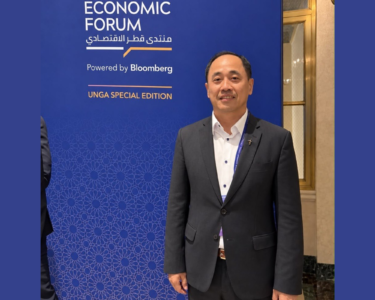
Serving as Chair of the Transport & Logistics Committee for six years, as well as being Head of Operations at DHL Cambodia, Bunthan reflected on the sector progress he’s witnessed during his time at the head of the Committee, as well as ongoing challenges facing exporters.
Notably, he zeroed in on the $50 export de minimis and how it remains an administrative burden on Cambodia’s small operators, and how meaningful reform to the regulation could benefit the broader economy.
You’ve been at the head of the Transport & Logistics Committee for six years, during which time Cambodia’s shipping sector has made some significant changes. What do you consider to be the most meaningful developments to the industry during your tenure with the Committee?
Bunthan: Over the past six years, the most meaningful development in express logistics has been Cambodia’s fundamental transition from a heavily document-based, manual customs model to a digitised, data-driven ecosystem. Historically, express packages were treated similarly to general cargo, subjected to a vigorous legacy clearance process that required over 20 redundant hard-copy documents.
During my tenure, close collaboration between the EuroCham’s Transport & Logistics Committee and General Department of Customs and Excise (GDCE) resulted in some remarkable reforms.
Regarding administrative reform, we successfully advocated the removal of major redundant hard-copy document requirements. This shift slashed physical administration workloads and achieved a 53.6% reduction in A4 paper and copying costs supporting both efficiency and sustainability objectives.
This has a positive impact on operational efficiency, which delivered substantial improvements in speed and productivity. Next-day clearance timeliness increased from 1.18% to 16.03%, while shipments pending clearance for more than six days were reduced by 58%. With no additional manpower, the DHL broker team achieved a 48% increase in productivity, highlighting the effectiveness of digitalisation and process simplification.
More broadly, the clearance model also went from reactive to proactive. We flipped the operational sequence from “clearance starts after arrival” to “clearance starts before arrival”. This allows Customs to complete risk assessments in advance, accelerating import duty payment and cargo release upon landing. The initiative required regulatory reform, system integration, and close collaboration with Customs authorities.
Strategic Partnerships were also fostered. In May 2025, we facilitated the first-ever Memorandum of Understanding (MoU) between the General Department of Customs and Excise (GDCE) and an express operator, DHL Express. Building on this partnership, DHL Express became the first express logistics provider and the first European company in Cambodia to be awarded Authorised Economic Operator (AEO) status in June 2026, marking a new era of trust, compliance, and public-private collaboration.
The Cambodian government has ambitions to be a regional logistics hub, and while cargo flows have increased and improved infrastructure and administration remains a priority, challenges remain. Looking ahead, what do you think will be the key priorities and most promising strategies to achieve this goal?
Bunthan: While cargo volumes have increased, Cambodia’s logistics costs remain high due to fragmented services and regulatory bottlenecks. To successfully position Cambodia as a regional logistics hub, we must prioritise a number of core strategies.
First, developing a unified government digital ecosystem is essential. Businesses currently face fragmented regulatory processes across ASYHUB, CVDS, ASYCUDA, and other government agency platforms, requiring repetitive data submissions and manual intervention. A key priority is the full integration of these systems through the Cambodia National Single Window (CNSW) using S2S/API connectivity, creating a seamless “submit once, use many times” environment that supports efficiency, transparency, and trade facilitation.
It is also critical that the full potential of Techo International Airport (TIA) be utilised. The new airport represents an incredible opportunity. However, to compete with regional giants like Singapore’s Changi or Bangkok’s Suvarnabhumi, Cambodia must offer attractive and competitive rental rates (moving away from premium airport cargo rates toward regional standards). Regulators must authorise express “self-handling” facilities with direct airside access, 24/7 customs clearance, and move compliance controls level under a coordinated governance framework involving Customs, Civil Aviation, Other government agencies and Airport Operator. These measures are essential to support the speed, reliability, and operational requirements of the logistics industry.
Finally, we must modernise and digitalise export processes. Every unnecessary export document is a hidden tax on Cambodia competitiveness. While we have made significant progress in digitising import processes, export procedures remain largely manual, paper-based, and resource-intensive. Activating the Export Module within the Customs platform (ASYHUB) and increasing the Export De Minimis threshold (Category 2) from FOB USD 50 to at least USD 1,000 would eliminate unnecessary administrative requirements for low-value shipments.
The $50 export bottleneck continues to be an issue for small operators seeking to reach outside markets, despite ongoing advocacy efforts from EuroCham and DHL. Can you explain this issue in a bit more detail?
Bunthan: Currently, any export consignment valued above FOB USD $50 is subject to formal customs clearance procedures. Many businesses, particularly SMEs and micro-entrepreneurs, perceive customs clearance as complex, time-consuming, and costly, especially when brokerage services are usually engaged or required to handle customs clearance.
While shipments below this USD $50 threshold benefit from a simplified consolidated summary declaration process, consignments exceeding USD $50 enter a clearance process that remains largely paper-based, requiring supporting documents and manual data entry into the customs system (ASYCUDA).
As a result, even low-value exports, such as locally produced handicrafts, specialty food products, or artisan goods, are subjected to virtually the same administrative requirements as higher-value commercial shipments. For many small businesses, the cost, effort, and time required to complete export clearance procedures can exceed the value of the goods themselves, creating a significant barrier to international market access as the compliance cost is high!
From a big-picture perspective, how would reducing this burden benefit Cambodian businesses and what would meaningful reform look like?
Bunthan: To unlock Cambodia’s export potential, we propose increasing the export de minimis threshold to USD 2,000 initially (with a subsequent review and adjustment to USD 1,000). We believe this shift would deliver three transformative benefits to the Cambodian export economy.
First, it would accelerate SME and E-Commerce Growth. A higher threshold would significantly reduce compliance costs and administrative barriers for SMEs, artisans, and emerging e-commerce sellers. By making international trade more accessible, Cambodian businesses would be better positioned to reach global consumers, expand export opportunities, create jobs, and strengthen the country’s competitiveness in international markets.
Second, it would enhance regulatory and operational efficiency. The reform would substantially reduce the administrative workload for both the General Department of Customs and Excise (GDCE) and the private sector. Customs resources could then be redirected toward higher-risk and higher-value shipments, improving risk management effectiveness while facilitating legitimate trade.
Finally, this type of reform would signal market readiness to stakeholders. A modernised export threshold sends a strong signal to investors, multinational companies, and global e-commerce platforms that Cambodia is committed to facilitating trade and creating a business-friendly environment. It would demonstrate the country’s readiness to compete with leading ASEAN economies in attracting cross-border commerce and digital trade opportunities.
By increasing the export de minimis threshold, Cambodia can remove a significant regulatory bottleneck that disproportionately affects small exporters. This reform would enable businesses of all sizes, from large manufacturers to individual handicraft producers, to fully benefit from the world-class infrastructure at Techo International Airport. More importantly, it would help transform Cambodia’s logistics ecosystem from a cost center into a strategic enabler of economic growth, export diversification, and global competitiveness.
This will be your last tenure as Chair of the Transport & Logistics Committee. With years of experience at the intersection of the private sector and policy makers, what advice would you give to the next generation of Committee leadership?
Bunthan: Having spent years at the node of private industry and public policy, my advice to the next generation of EuroCham leadership is built on three main pillars.
First, focus on evidence-based advocacy and know the numbers. Effective advocacy is built on facts, not opinions. Rather than approaching policymakers with general concerns, we presented clear, data-driven evidence and practical solutions. We secured key reforms by conducting detailed Gemba walks to map end-to-end logistics processes and measure actual processing times, performing “mystery shopper” exercises to validate the feasibility of pre-arrival clearance and e-payment payments with customs. Transforming operational realities into measurable evidence, we were able to build credibility, influence policy discussions, and drive meaningful reform.
Second, try to position the private sector as a strategic partner, not an antagonist. The most successful advocacy is collaborative, not adversarial. Build mutual trust with key government stakeholders, including the CDC, MEF, and GDCE. Rather than framing logistics improvements solely as cost-saving measures for businesses, reforms should be positioned as enablers of national priorities such as trade facilitation, investment attraction, job creation, digital transformation, and e-commerce export growth. When public and private sectors align behind a shared vision, meaningful and lasting change becomes possible. The question should never be what benefits your company or the private sector, but how reforms can make Cambodia more competitive, attractive for investment, and connected to global trade.
Lastly, clearly identify the gap between policy and on-the-ground reality. A signed instruction or regulation or decree does not automatically equal implementation. Even when central authorities agree to digitalise procedures, you will find that the actions on the ground are not always the same. For instance, we found that the officers still demand manual paperwork, dual submissions, or additional approvals.
Your job is to keep your ears to the ground, identify and eliminate these implementation gaps, ensuring that policy intentions are translated into reality at every touchpoint, from headquarters to the cargo terminal floor.