
Cambodia Investment Review | Exclusive
Cambodia’s banking sector has entered a new phase of development where long-term success will depend less on expanding credit volumes and more on directing capital towards productive sectors that strengthen the country’s economy, according to Khemara Ros, Executive Director (ED) of the Association of Banks in Cambodia (ABC).
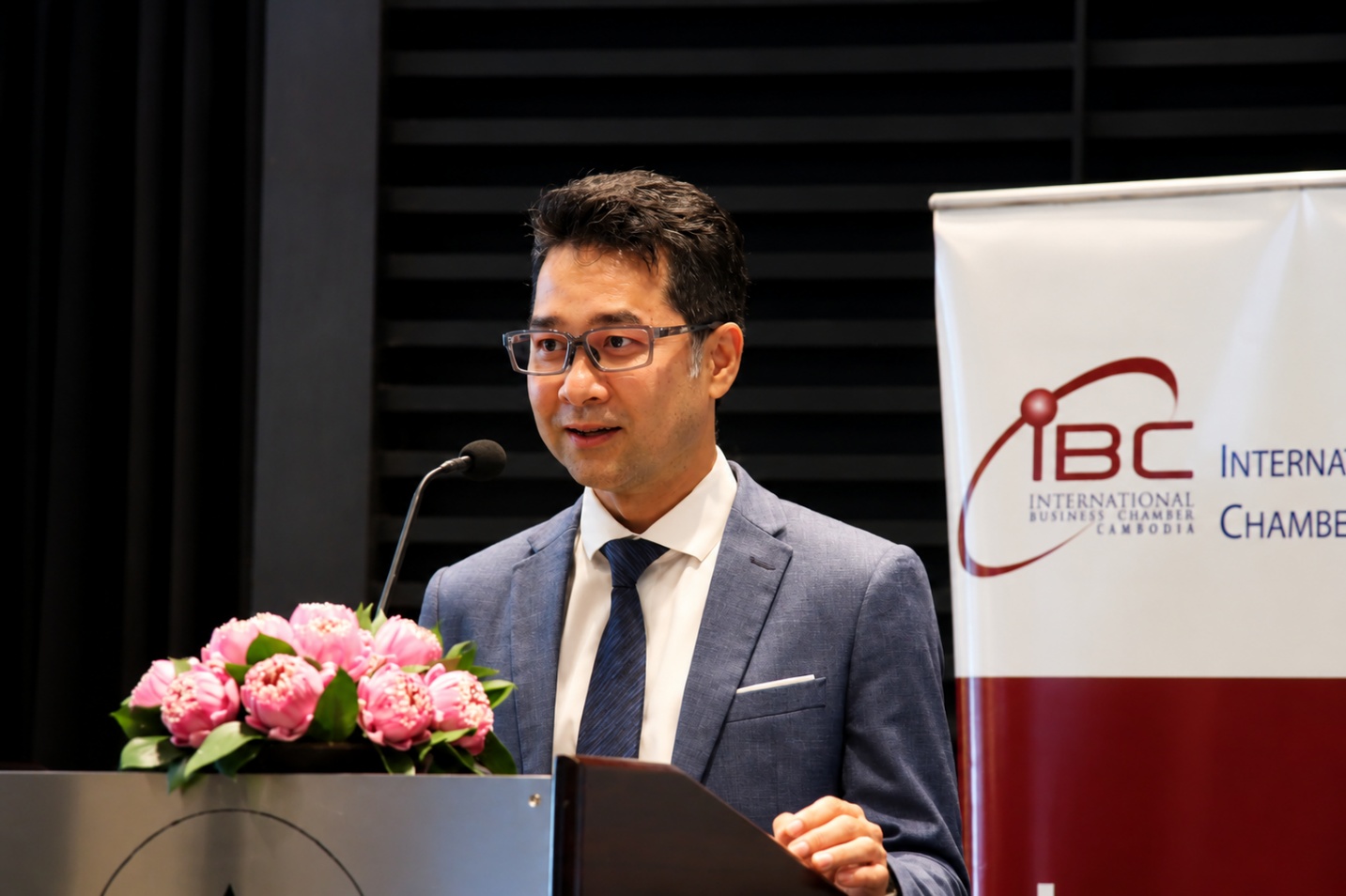
Presenting the banking industry’s six-month review and outlook during the International Business Chamber (IBC) 6-Month Industry Review & Outlook for 2026 at Rosewood Phnom Penh, Khemara Ros delivered an optimistic assessment of the financial sector’s resilience while outlining a roadmap for sustainable growth during the second half of the year and beyond.
His presentation highlighted a banking system that remains well-capitalised, highly liquid and capable of supporting Cambodia’s economic ambitions, while emphasising that the industry’s next opportunity lies in financing businesses and projects that generate lasting value.
“The answer is not simply more credit. It is better credit,” Khemara told business leaders, summarising what he believes will define Cambodia’s next banking growth cycle.
Strong Banking Foundations Support the Economy
Khemara began by reaffirming the strength of Cambodia’s banking sector despite a more moderate economic environment.
While Cambodia’s GDP growth is forecast at 3.9% in 2026, he noted that banks continue to operate from a position of considerable financial strength, supported by robust regulatory buffers and prudent risk management.
According to the presentation, the sector maintains a Capital Adequacy Ratio (CAR) of around 22% and a Liquidity Coverage Ratio (LCR) of approximately 179%, providing confidence that financial institutions remain well-equipped to support businesses, households and investment activity.
Rather than facing liquidity constraints, Cambodia’s banks are increasingly focused on maintaining high-quality lending portfolios while continuing to finance sustainable economic development.
The presentation reinforced the view that Cambodia’s financial system has matured significantly over recent years and is now entering a more disciplined stage of growth.
The Next Chapter Is About Better Credit
One of the presentation’s central themes was that Cambodia’s next stage of banking development should focus on improving the quality of lending rather than simply increasing loan volumes.
Khemara argued that productive credit allocation will play a critical role in supporting the country’s long-term competitiveness.
He identified several priority areas where financing can deliver the greatest economic impact, including:
- Manufacturing and industrial investment
- Foreign direct investment (FDI)
- Export-oriented businesses
- Supply chain development
- Infrastructure projects
- Well-managed small and medium-sized enterprises (SMEs)
By directing capital towards these sectors, banks can help strengthen Cambodia’s productive economy while supporting employment, investment and long-term growth.
“The answer is not simply more credit. It is better credit,” Khemara emphasised.
Supporting Businesses Through a More Selective Credit Cycle
While the overall banking system remains resilient, Khemara acknowledged that Cambodia’s changing economic environment is encouraging banks to become increasingly selective in their lending decisions.
Rather than signalling weakness, he suggested this reflects a more mature approach to risk management.
Higher energy costs, labour market adjustments and broader global uncertainty have placed additional pressure on some businesses, particularly those operating with tighter margins.
According to the presentation, these pressures are most visible across segments including SMEs, tourism, transport and property-related businesses.
However, rather than withdrawing support, banks are increasingly working with customers to strengthen repayment capacity, restructure viable loans where appropriate and ensure financing continues to support sustainable business growth.
This more measured approach, Khemara suggested, ultimately contributes to a healthier financial system for both lenders and borrowers.
Unlocking Capital for Cambodia’s Future Investment
Looking beyond current lending conditions, Khemara highlighted several reforms that could further strengthen Cambodia’s financial sector and improve capital efficiency.
Among the priorities outlined were continued development of Asset Management Companies (AMCs), improvements to collateral recovery mechanisms and further expansion of Cambodia’s capital markets.
Together, these initiatives would allow financial institutions to recycle capital more efficiently, freeing additional resources to support new investment opportunities across the economy.
The proposals form part of a broader vision for a banking sector that not only remains stable but also becomes increasingly effective at supporting Cambodia’s long-term development objectives.
Digital Finance and Sustainability Create New Opportunities
Khemara also identified digital finance and sustainable finance as important areas of future growth.
As Cambodia’s financial ecosystem continues to evolve, technology is creating new opportunities to expand responsible access to finance while improving efficiency across the banking sector.
At the same time, sustainable finance is expected to play an increasingly important role in helping businesses invest in cleaner technologies, energy efficiency and long-term resilience.
Together, these trends have the potential to broaden financing options beyond traditional sectors while improving access to capital for responsible SMEs and emerging industries.
A Banking Sector Entering a More Mature Era
Throughout his presentation, Khemara described an industry that has evolved significantly over the past decade.
Having successfully strengthened capital buffers and maintained financial stability through multiple economic challenges, Cambodia’s banking sector is now well positioned to support the country’s next phase of economic development.
Rather than pursuing rapid credit expansion alone, banks are increasingly focused on promoting responsible lending, prudent risk management and financing sectors capable of generating sustainable economic value.
For businesses, this means access to finance remains available, particularly for projects supported by sound fundamentals, strong governance and clear long-term growth potential.
Looking Ahead
Khemara concluded by positioning Cambodia’s banking industry as a key partner in the country’s continued economic transformation.
With strong capital levels, ample liquidity and an increasingly sophisticated approach to lending, the sector remains well placed to support investment, entrepreneurship and private sector expansion.
As Cambodia enters the second half of 2026, the Association of Banks in Cambodia’s outlook suggests the next chapter for the industry will not be defined by how much credit is created, but by how effectively that credit helps build a stronger, more diversified and more competitive economy.