
Cambodia Investment Review
Cambodia’s economic performance in 2026 may ultimately depend on whether the government can deliver meaningful fiscal stimulus and revive a struggling tourism sector, according to economist Stephen Higgins, who warned the Kingdom is on track for one of its weakest periods of economic growth in nearly two decades outside the COVID-19 pandemic.
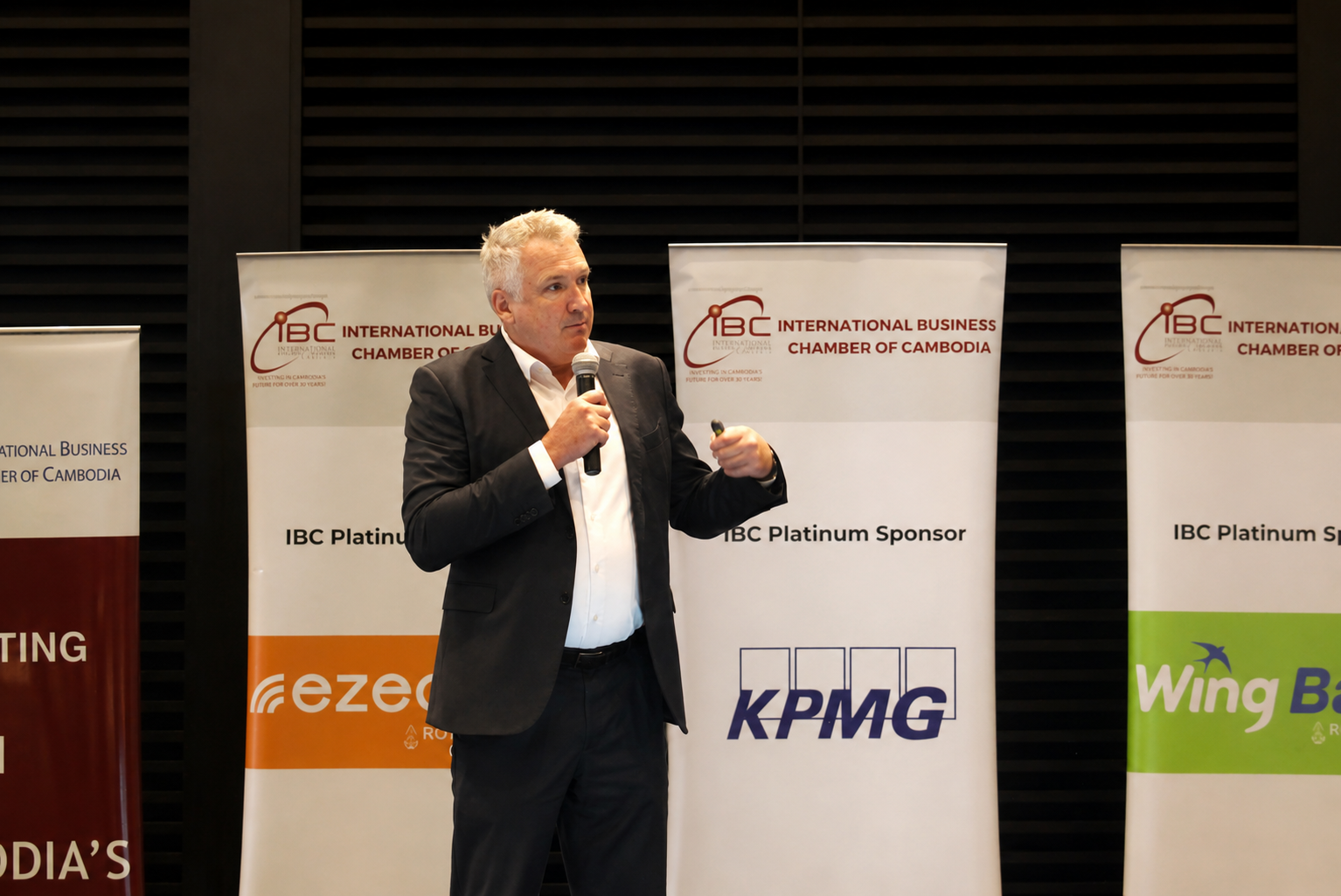
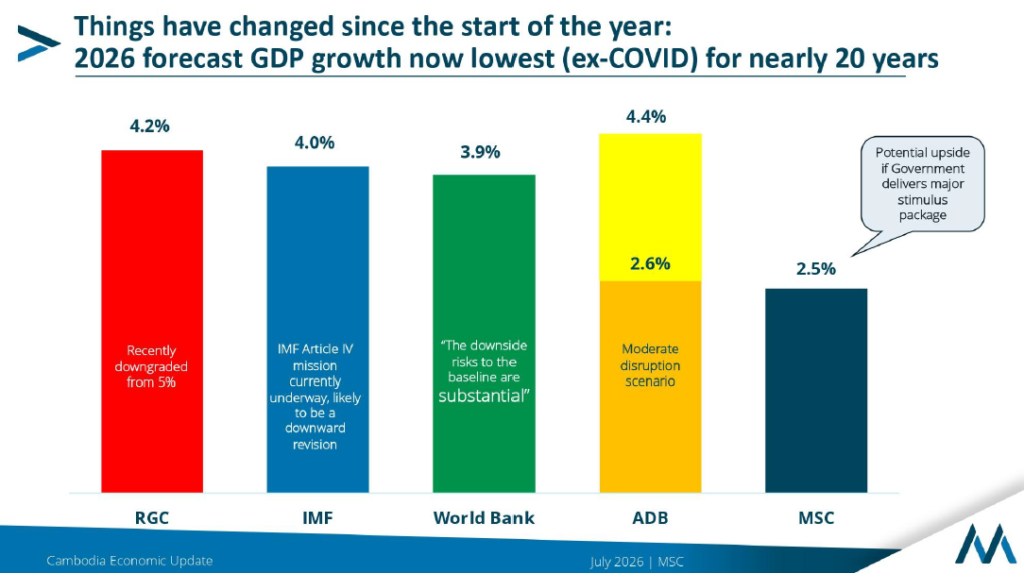
Presenting Mekong Strategic Capital’s latest economic outlook during the International Business Chamber (IBC) Open Meeting, Higgins lowered his 2026 GDP growth forecast to 2.5%, down from the firm’s earlier projection of around 4% made at the beginning of the year. He attributed the downgrade to a combination of geopolitical tensions, the Gulf conflict, the Thai border dispute, the ongoing crackdown on scam centres, a prolonged tourism downturn and continued weakness in Cambodia’s property market.
While the near-term outlook has deteriorated, Higgins stressed that the economy’s trajectory is not set in stone, arguing that decisive policy action could still improve growth over the remainder of the year.
Government Policy Could Shape the Second Half
Higgins said the government’s response over the coming months could play a significant role in determining whether Cambodia avoids a prolonged slowdown.
Read More: Cambodia’s ‘Two-Speed Economy’: Tourism Gap Holding Growth Near 4% in 2026, MSC Report
He pointed to the potential for a sizeable fiscal stimulus package to support domestic demand and business activity, while also calling for greater investment in tourism promotion to address one of the country’s weakest-performing sectors.
“The potential upside exists if the Government delivers a major stimulus package,” Higgins said, noting that Cambodia’s tourism industry requires urgent attention after several years of underperformance.
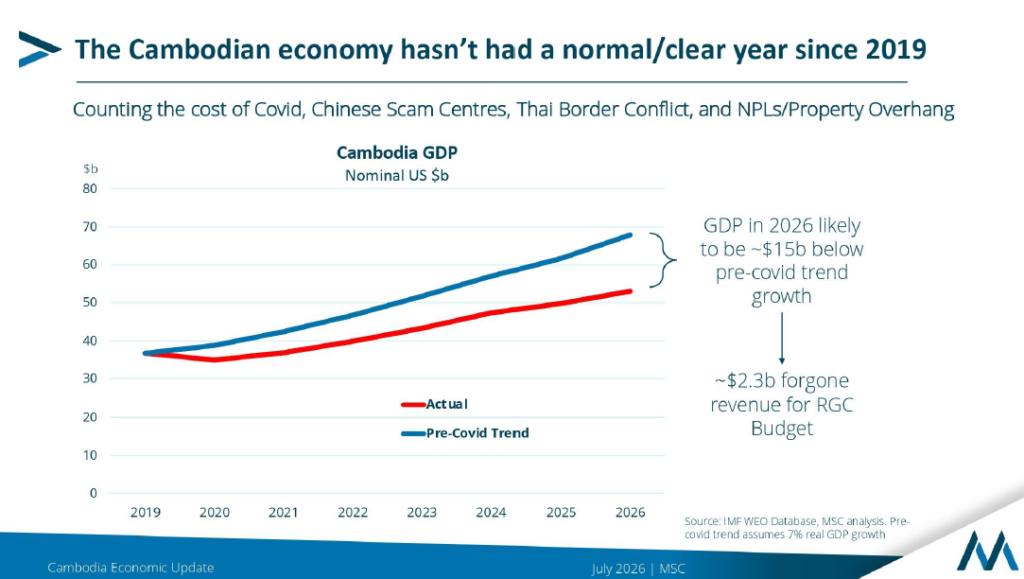
His presentation also highlighted that Cambodia’s economy has not experienced a “normal” year since 2019, having absorbed successive shocks from the pandemic, weakness in the property market, the dismantling of scam centres and more recently geopolitical tensions affecting regional trade and travel.
Manufacturing Continues to Drive Growth
Despite the weaker headline forecast, Cambodia’s manufacturing sector continues to outperform expectations.
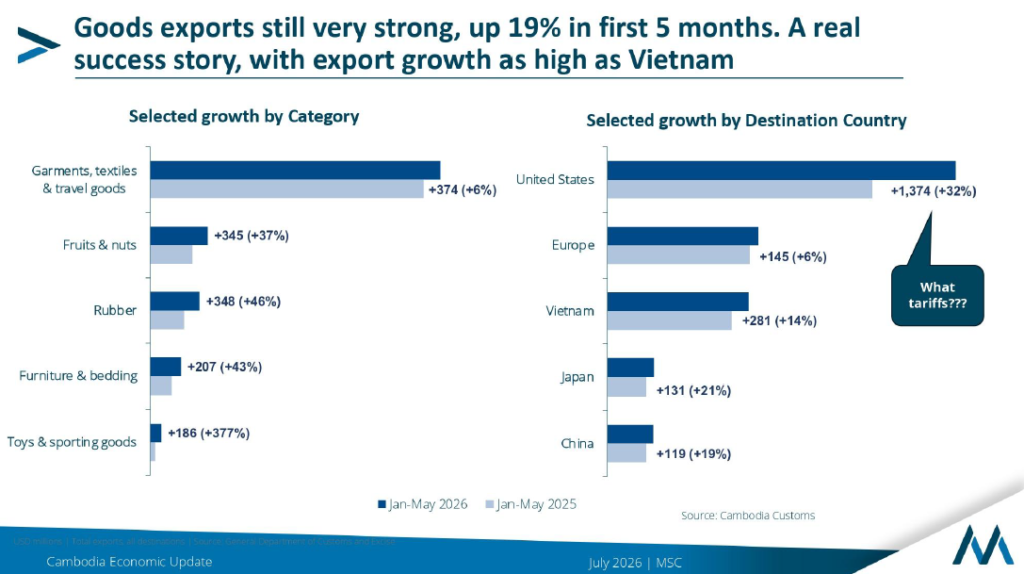
Goods exports increased 19% during the first five months of 2026, supported by strong growth across garments, furniture, rubber, fruit exports and sporting goods. Exports to the United States rose 32%, while shipments to Vietnam, Japan, China and Europe also recorded solid gains.
Higgins described exports as one of Cambodia’s biggest economic success stories this year, arguing that manufacturing has remained remarkably resilient despite concerns surrounding global trade uncertainty and higher tariffs.
He noted that Cambodia’s export performance is currently comparable with neighbouring Vietnam, providing an important source of support for the broader economy even as domestic sectors remain under pressure.
Tourism and Property Continue to Weigh on the Economy
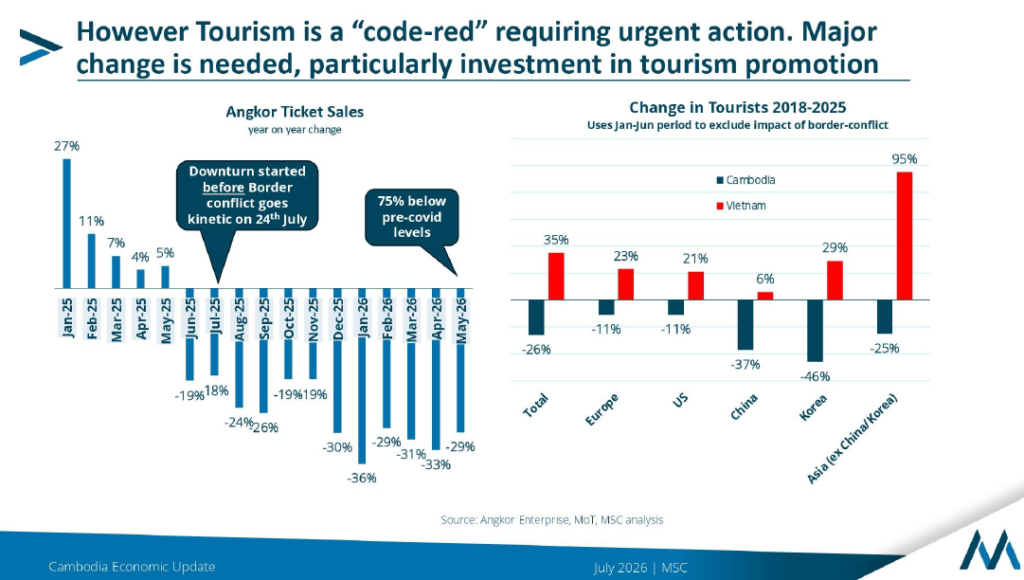
The strongest warning in Higgins’ presentation centred on tourism, which he described as being in a “code-red” situation.
Visitor arrivals remain well below pre-pandemic levels, while Angkor ticket sales have continued to weaken. Higgins argued that the downturn began before the recent escalation of the Thailand border dispute, suggesting the sector faces deeper structural challenges rather than simply temporary geopolitical disruptions.
He said greater international marketing and investment in tourism promotion will be critical if Cambodia hopes to regain market share as neighbouring destinations continue to outperform.
At the same time, financial pressures continue to build across households and businesses.
According to Higgins, approximately US$13.5 billion, or 21.7% of outstanding loans, are now either more than 30 days overdue or have been restructured. While he said Cambodia’s banking system remains well-capitalised and capable of absorbing losses, he warned that continued stress within the property market is likely to delay a broader economic recovery.
Long-Term Growth Story Remains Intact
Despite the challenging outlook for 2026, Higgins maintained that Cambodia’s long-term economic fundamentals remain strong.
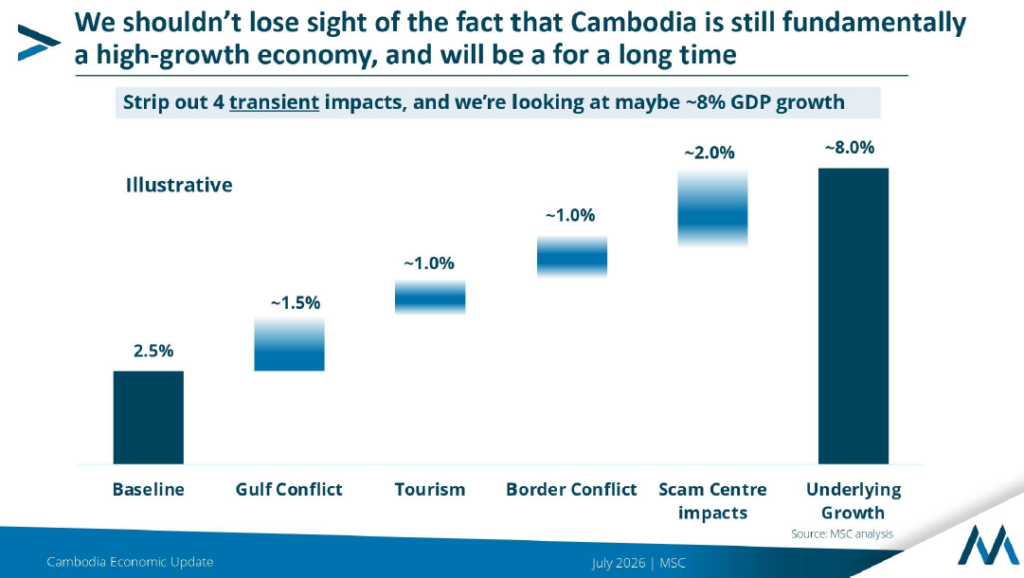
He argued that the country’s current slowdown reflects several temporary shocks occurring simultaneously rather than a deterioration in its underlying growth potential. Removing the effects of the Gulf conflict, tourism weakness, border tensions and the economic adjustment following the crackdown on scam centres, Higgins estimated Cambodia’s underlying growth rate could still approach 8%.
While acknowledging that 2026 is shaping up to be one of Cambodia’s most difficult economic years in recent memory, Higgins concluded that the country’s long-term growth story remains intact. The challenge now, he said, is navigating the current period through targeted government support, restoring tourism competitiveness and allowing the economy’s stronger underlying fundamentals to re-emerge.