
Gareth Johnson
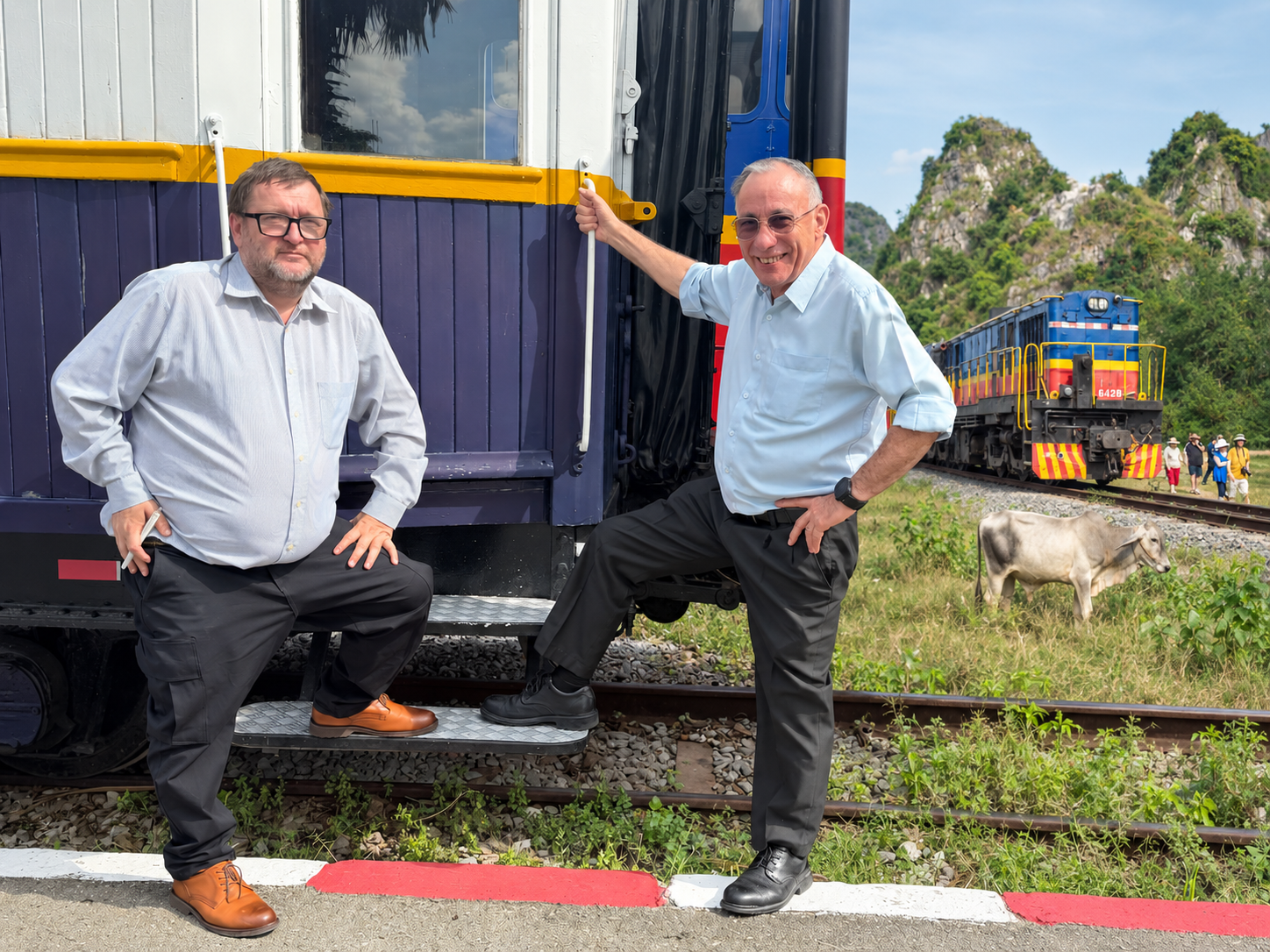
There are not many people who can claim to have spent most of their working life around trains, but John Guiry is certainly one of them. The CEO of Royal Railway Group has worked in the railway industry around the world and has now spent around a decade in Cambodia, making him something of a veteran when it comes to the country’s railway revival.
It is also fair to say that Cambodia is a rather different railway environment to many of the places he has worked before. The network has a complicated history, having been badly affected by decades of war and neglect before being rehabilitated, with passenger and freight services gradually returning over the past decade. Royal Cambodian Railways has been operating the network since 2010 and today runs both passenger and freight services across the country.
When Cambodia Investment Review sat down with Guiry, therefore, we were interested in what the railway might look like over the next ten years rather than simply where it is today. His answer was fairly straightforward: there is still a lot of growing to do.
“Few places have railways expanding like Cambodia,” he tells us, and there is a definite sense that he sees the current period as being just the beginning of what the railway can eventually become.
The growth is already visible in the numbers, with Royal Cambodian Railways reporting 43 percent year on year revenue growth. There has also been substantial private investment, with Royal Group chairman Kith Meng putting around $31 million into the railway.
That investment is particularly important because running a railway is not cheap. Fuel prices have been “skyrocketing”, according to Guiry, although he says government regulation has helped keep things moving. The bigger issue, however, is making sure that the railway continues to expand in a way that makes commercial sense.
This is something Guiry is clearly focused on. He is not interested in the idea that a railway can simply exist because it is important infrastructure. It has to be properly managed, financially sustainable and capable of continuing to invest in itself.
From A Railway People Doubted To One With A Future
That has not always been an easy sell in Cambodia.
“Cambodians were certainly skeptical in the early years,” Guiry says, but believes that attitude has changed as people have seen what Royal Cambodian Railways has actually achieved.
That is perhaps understandable. For years the railway was associated with an old and unreliable network and danger (www.khmerRouge.com), rather than being seen as an important part of Cambodia’s economic future. Today the conversation is increasingly different, with rail becoming part of a much bigger discussion about logistics, manufacturing, tourism and regional connectivity.
The passenger side of the business is perhaps the most interesting.
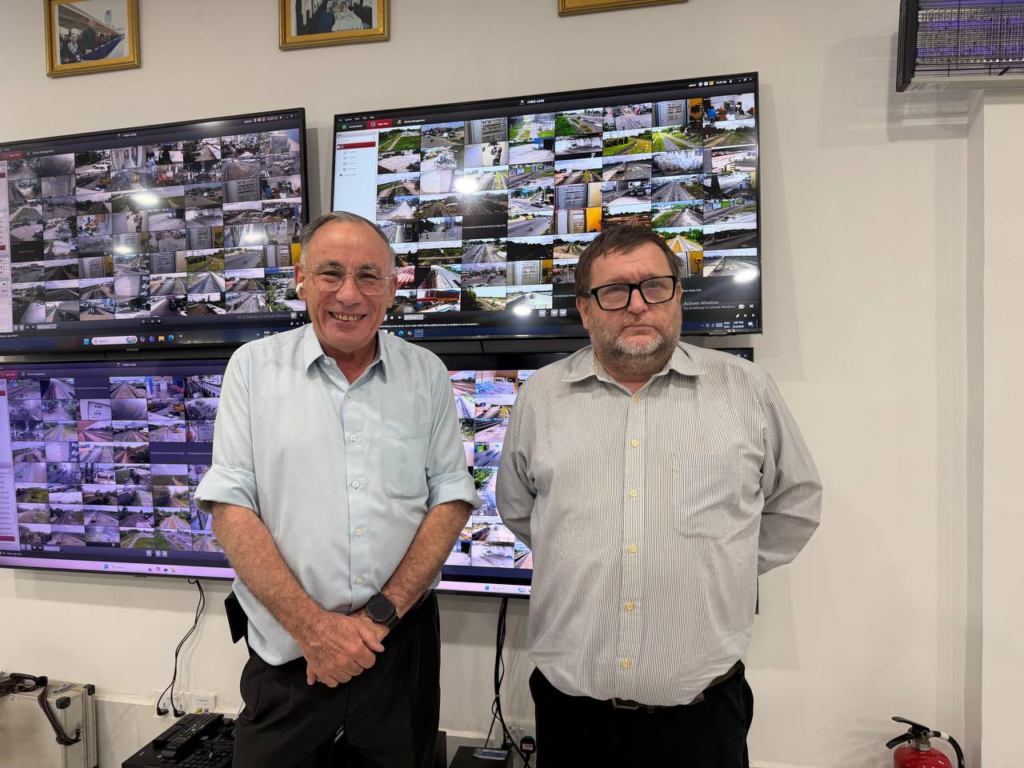
Guiry is realistic that making money from passenger trains takes time. The immediate priority is improving the service and making people comfortable using the railway, particularly in a secure environment. Royal Cambodian Railways has spent around $1.8 million on improving the customer experience, while continuing to invest in its wider operations.
But he also sees something in rail that road transport simply cannot replicate.
“With the train there is so much potential because we are selling an experience, not just a journey.”
That is an important distinction for Cambodia, where tourism (https://www.youngpioneertours.com/cambodia-tours-and-travel/) remains a major part of the economy. A train journey can itself become part of the holiday, rather than simply being the means of getting from Phnom Penh to somewhere else.
There is also considerable potential in expanding the destinations that can be reached by rail. Siem Reap is an obvious tourism destination, while the longer term possibilities of connecting places such as Rattanakiri and Mondulkiri would open up another side of Cambodia to rail based tourism and domestic travel. At the other end of the journey, the new Techo International Airport in Phnom Penh also creates another important transport node, and the ability to integrate rail with the airport and the rest of the country’s transport network will become increasingly important.
The bigger opportunity, though is with freight.
Royal Cambodian Railways is increasingly trying to move beyond the traditional model of having companies bring their goods to the railway and instead is working directly with businesses to integrate rail into their supply chains.
Guiry describes the ambition as being “almost like a bus to the front door of companies”.
That means working with shipping companies and the Cambodian Logistics Association to develop logistics hubs, while also dealing directly with major companies. One example he gives is Khmer Foods, where Royal Cambodian Railways can effectively pick up goods directly from the company’s headquarters.
The same approach is being applied across some of Cambodia’s biggest industries, including rice and garments, while Royal Cambodian Railways is also moving dangerous goods in line with international standards.
This is where Guiry sees the real economic opportunity. If rail can connect factories and warehouses directly to ports and logistics hubs, it becomes much more than a passenger service or an old railway line running through the middle of the country.
It becomes part of Cambodia’s industrial infrastructure.
Thailand, Vietnam & Connecting Cambodia To The World
The regional picture is potentially even more interesting.
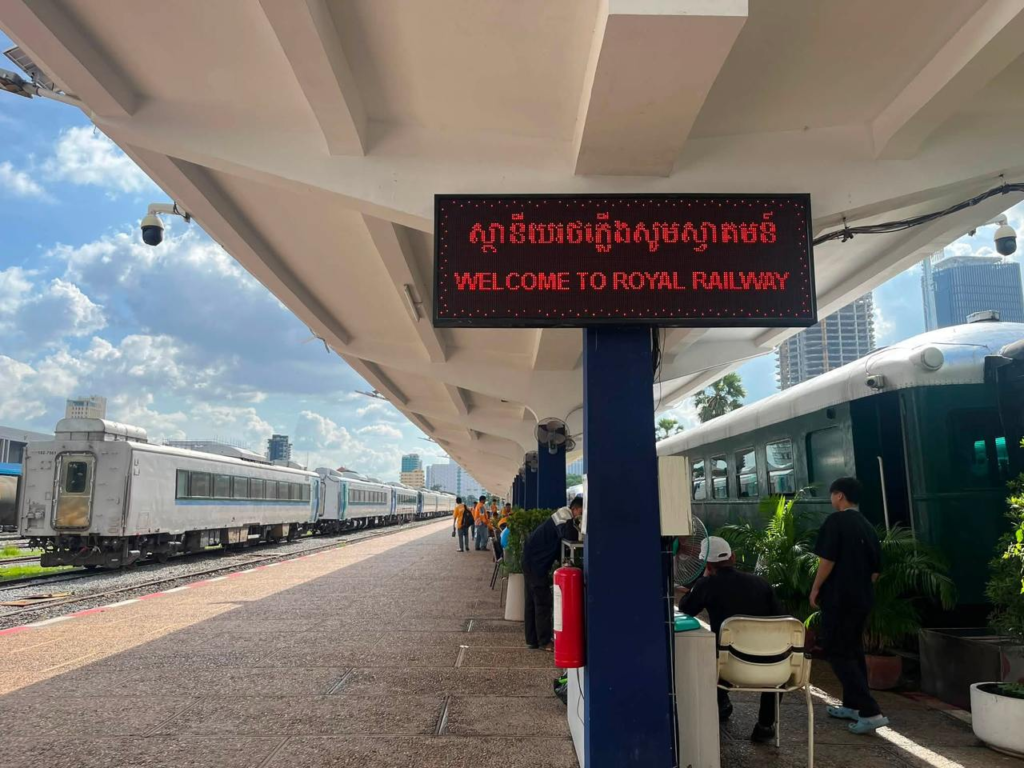
Cambodia’s railway is already connected to Thailand, although the current border situation has obviously complicated matters. Before the current disruption, Guiry says Royal Cambodian Railways had operated around 500 trains across the border, with 498 being commercial trains and two tourist services.
“Now is obviously not a great time,” he admits, but remains confident that the service will be able to happen again.
The importance of that connection goes beyond tourism. A functioning railway between Cambodia and Thailand creates opportunities for freight, trade and eventually much greater regional integration.
Vietnam is a more complicated proposition.
Guiry believes that a rail link between Cambodia and Vietnam will likely happen eventually, but the major questions are the cost and, perhaps more importantly, who is going to pay for it.
The development of the highway between the two countries has also made the argument more complicated. Why build a railway when there is already an increasingly good road connection?
But Guiry makes an interesting point. If the highway becomes too successful, the resulting increase in traffic could actually create more pressure for a railway.
And while “high speed” has become something of a buzzword when it comes to railways, Guiry is keen to make a distinction. For Cambodia and the wider regional network, he says the priority should be “higher speed” rather than necessarily high speed.
The difference is important when the costs involved are considered. Guiry points out that building a high speed railway from Ho Chi Minh City to Poipet could cost around $4 billion, before even taking into account the substantial amount of bridge construction that would be required.
For him, therefore, the question is not simply about how fast a train can travel, but what can realistically be achieved for the investment involved. A faster, more efficient railway that can move people and freight reliably may ultimately make considerably more economic sense than attempting to build a full high speed network at enormous cost.
And the prize would be considerably bigger than simply having another passenger route.
A rail connection through Vietnam would effectively give Cambodia another route towards the wider world, connecting the country into a much larger regional transport network.
For a country trying to establish itself as a manufacturing and logistics centre, that could be hugely significant.
Of course, none of this happens without getting the fundamentals right first.
Guiry tells us that he had already spent six hours that morning working on financial management. For him, it comes down to understanding the numbers, knowing the costs and setting clear objectives.
“You have to know costs and objectives.”
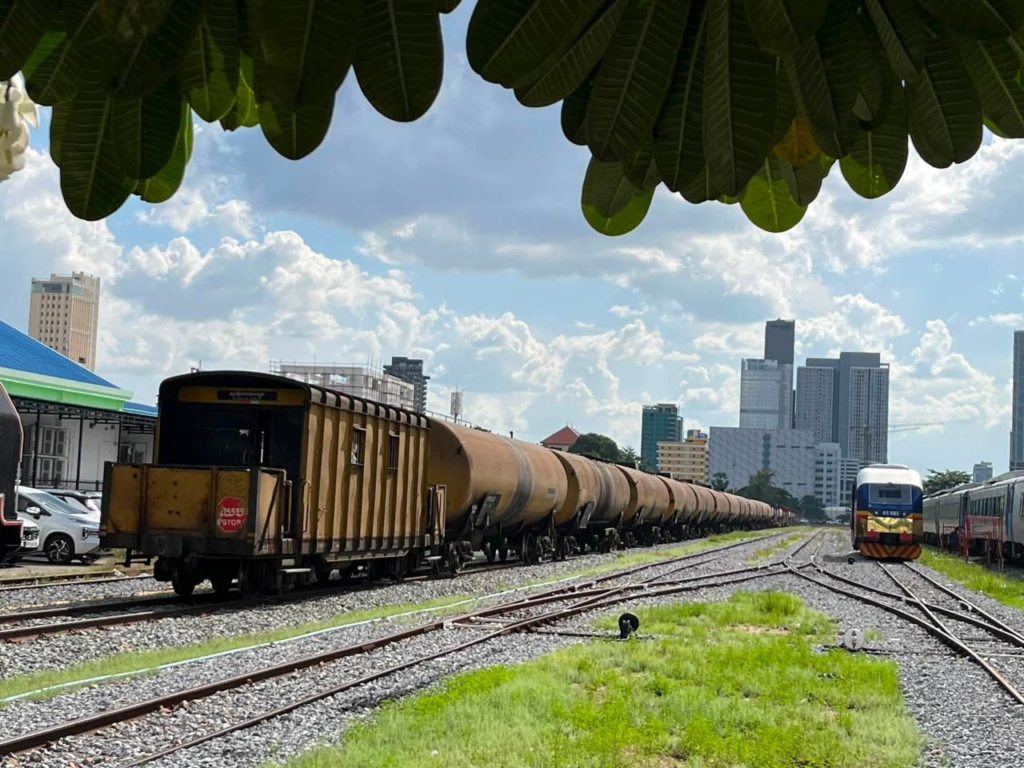
Royal Cambodian Railways trains its staff and has systems in place to ensure that it meets its targets. The company is also fully regulated and independently audited, with Guiry stressing that it has passed the relevant tests.
That perhaps sums up his approach to Cambodia’s railway future. There is plenty of ambition, but it is mixed with a fairly practical understanding that trains have to be paid for, customers need to be looked after and businesses need a reason to put their goods on the railway.
Cambodia has spent years rebuilding its railway network. The next stage is about working out just how useful that network can become.
With new logistics hubs, expanding industry, major ports, highways and Techo International Airport all changing the country’s transport landscape, Royal Cambodian Railways has an opportunity to position itself at the centre of that development.
For Guiry, after a decade in Cambodia and a career spent working on railways around the world, the railway’s future is therefore not really about trains at all.
It is about connecting Cambodian businesses to markets, connecting tourists to experiences and, eventually, connecting Cambodia itself more closely to its neighbours and the wider region.
The railway has already come a long way.
According to Guiry, however, the more interesting part of the journey is only just beginning.