
Cambodia Investment Review
Maha Damaj has formally begun her role as UNICEF Representative to Cambodia, bringing more than 30 years of development and humanitarian experience as the organisation expands its work across education, healthcare, child protection and child-sensitive public financing.
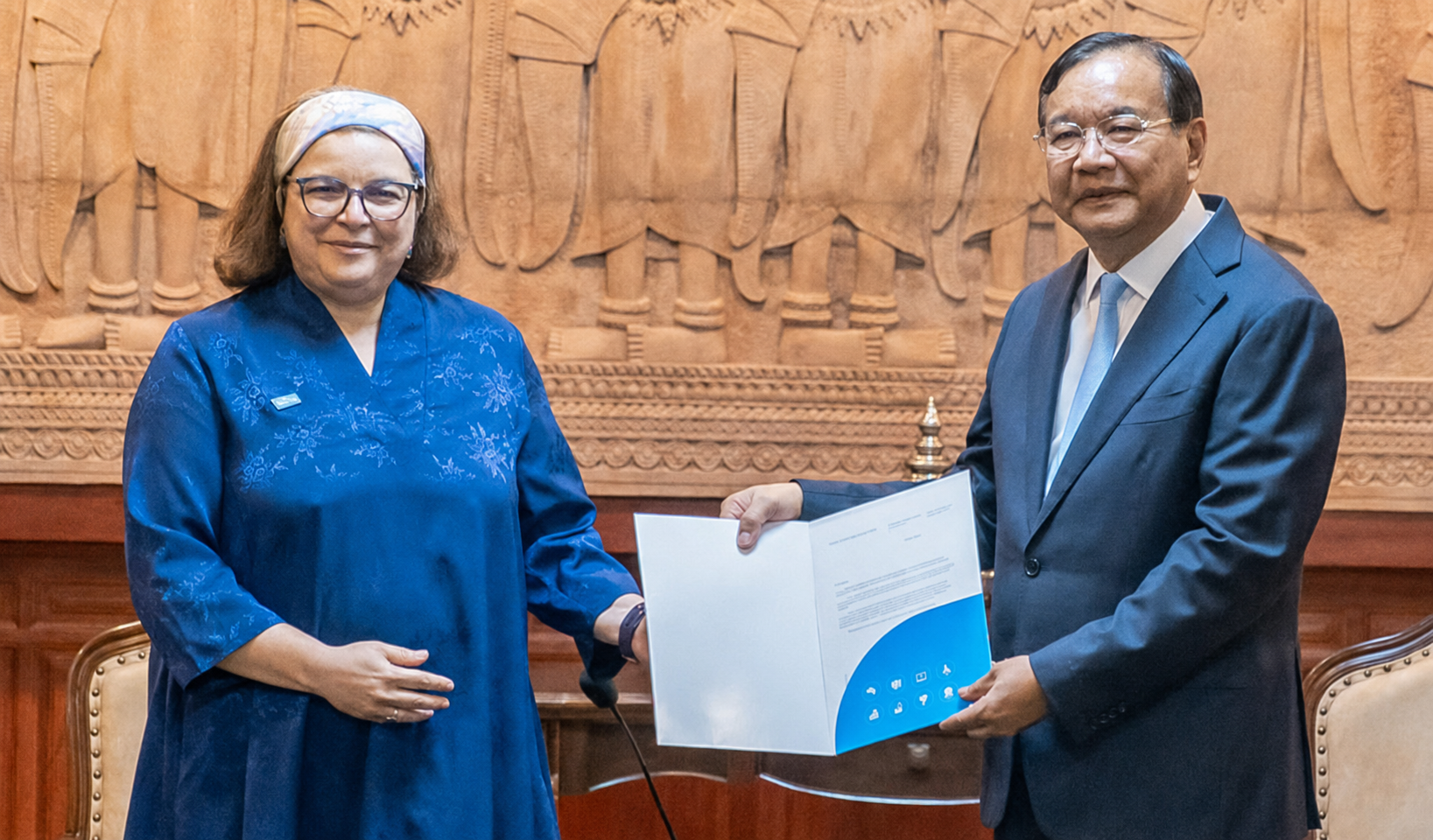
The Lebanese national presented her credentials to Minister of Foreign Affairs and International Cooperation Prak Sokhonn on August 25, succeeding Australian representative Will Parks.
Damaj said UNICEF would continue working with the Cambodian government under its 2024–2028 country programme, which covers health and nutrition, quality education, child protection, water, sanitation and hygiene, commonly known as WASH, and public spending that considers the needs of children.
Investment in Children Supports Cambodia’s Human Capital
The appointment comes as Cambodia seeks to strengthen its workforce, improve social protection and prepare for a more skills- and knowledge-driven economy.
Investment in children’s health, nutrition and education has direct implications for the country’s future labour force and economic competitiveness. UNICEF’s work on child-sensitive public financing also supports efforts to ensure government resources are directed towards programmes that deliver measurable outcomes for children and vulnerable communities.
During their meeting, Damaj and Prak Sokhonn discussed inclusive access to education and healthcare, evidence-based policymaking, stronger national child-protection systems and sustainable financing for programmes affecting children.
Prak Sokhonn reaffirmed the government’s support for UNICEF’s activities and welcomed the continuation of a partnership that has lasted for more than seven decades.
He also encouraged the agency to strengthen its support for vulnerable children, particularly those exposed to violence, trafficking and online exploitation.
Humanitarian Response Remains a Priority
Prak Sokhonn thanked UNICEF for its humanitarian assistance following developments along the Cambodia-Thailand border.
The agency’s response has included support for child protection, education continuity, health and nutrition, WASH services and psychosocial assistance for displaced children and their families.
The work highlights UNICEF’s dual role in Cambodia: supporting long-term social and economic development while maintaining the capacity to respond to emergencies affecting children and local communities.
Both sides agreed that future cooperation should remain aligned with Cambodia’s evolving development priorities and its progress towards achieving the United Nations Sustainable Development Goals.
Damaj Brings Three Decades of International Experience
Before taking up her position in Cambodia, Damaj served as UNICEF Representative in Moldova.
She has more than 30 years of experience across development and humanitarian programmes, with expertise spanning disability inclusion, child protection, youth participation, child rights and social innovation.
Her previous work has included leadership of national and regional programmes designed to improve services for children and adolescents, particularly those facing social or economic vulnerability.
Damaj’s arrival also comes as UNICEF Cambodia increases engagement with the country’s private sector. Partnerships with businesses and industry organisations can help mobilise resources, promote child-friendly workplace practices and support initiatives covering education, digital inclusion, climate resilience and youth employability.
With Cambodia working to develop a more productive and skilled workforce, UNICEF’s cooperation with government, development partners and businesses is expected to remain closely connected to the country’s longer-term human-capital and economic-development priorities.