
Cambodia Investment Review
The Asian Development Bank (ADB) has approved a $63.44 million financing package to support Cambodia’s renewable energy transition, backing the development of a large-scale battery energy storage system designed to strengthen grid stability, support industrial growth, and increase the country’s capacity to integrate renewable power.
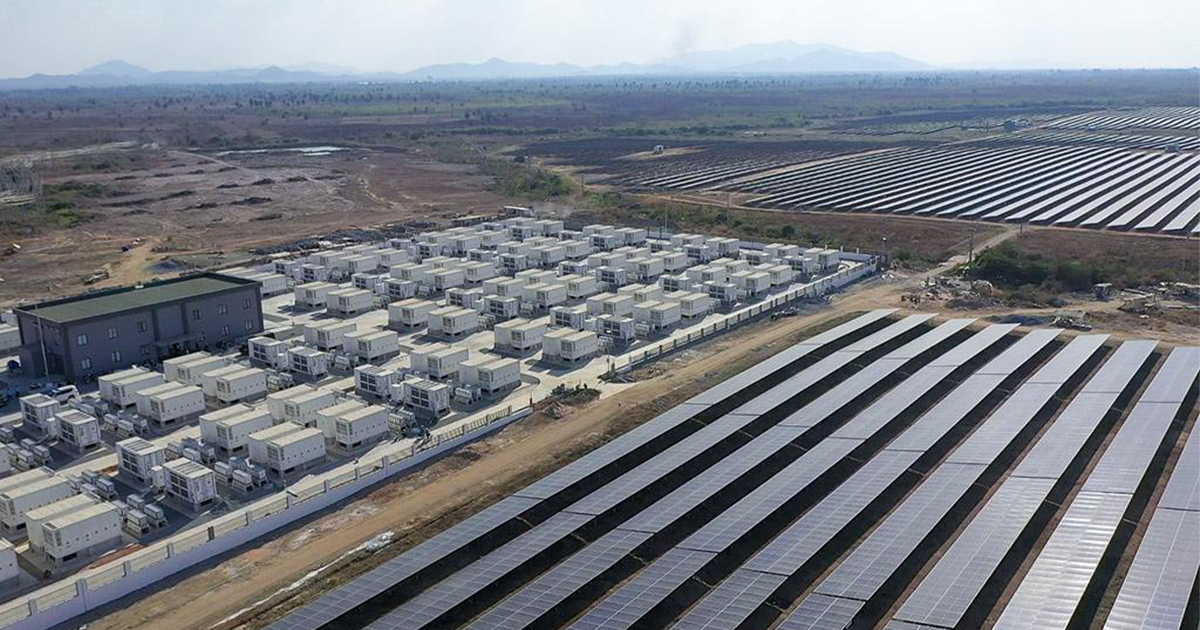
The project will finance the construction of a 250-megawatt/500-megawatt-hour battery energy storage system (BESS) at the Takeo substation, marking one of Cambodia’s most significant investments in energy storage infrastructure to date.
The facility will store excess electricity generated from renewable sources and release it back into the grid during periods of peak demand, helping to manage fluctuations in supply and improve overall grid reliability.
The investment comes as Cambodia seeks to increase the share of renewable energy in its power mix while meeting rising electricity demand from expanding industrial zones, agro-processing facilities, and growing urban centers across the country.
ADB Country Director for Cambodia Yasmin Siddiqi said the project would help Cambodia strengthen its energy security while accelerating its clean energy ambitions.
“By strengthening the power grid with advanced battery storage, we are helping the country unlock more renewable energy while ensuring that families, farmers, and businesses benefit from safe, stable, and affordable electricity,” Siddiqi said.
Supporting Renewable Energy Targets
Cambodia has set a target of achieving 70% renewable energy capacity by 2030 and has increasingly turned to solar power and other clean energy sources as part of its long-term energy strategy.
The battery storage system is expected to play a critical role in enabling greater integration of intermittent renewable generation into the national grid. Once operational, the project is projected to reduce greenhouse gas emissions by approximately 27,700 tonnes annually.
The investment also aims to reduce Cambodia’s dependence on imported fuels, which continue to account for a significant portion of power generation and expose the country to global price volatility and supply disruptions.
Strengthening Regional Power Connectivity
Beyond domestic energy security, the project is expected to enhance Cambodia’s ability to participate in cross-border electricity trade with neighboring Viet Nam and support broader regional power integration efforts under the ASEAN Power Grid initiative.
Improved grid flexibility and storage capacity are expected to facilitate more efficient electricity imports and exports, helping Southeast Asian countries optimize energy resources across national borders.
Financing Structure
The financing package includes a $40 million concessional loan and a $5 million grant from ADB through the Asian Development Fund.
Additional co-financing of $18.44 million will be provided by the Green Climate Fund and the United Kingdom through the ASEAN Catalytic Green Finance Facility.
Alongside physical infrastructure, the project will support the development of regulatory frameworks for battery energy storage systems and strengthen the technical capabilities of Electricité du Cambodge (EDC), the country’s state-owned electricity utility.
ADB said the initiative will also promote workforce development within Cambodia’s energy sector, with a particular focus on increasing female participation in technical and leadership roles.