
Henry Henderson
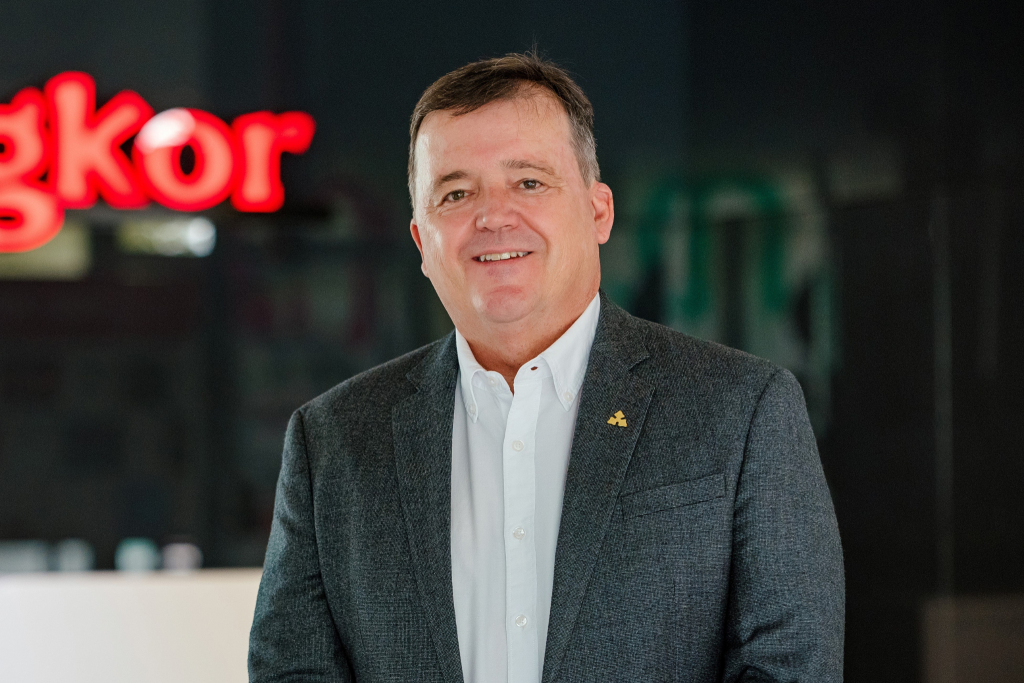
For this week’s interview, EuroCham’s Junior Communications Officer Henry Henderson spoke with Michiel Oerlemans, Managing Director, of Cambrew Ltd, about his nearly three-decade career in the global brewing industry.
Having worked across Africa and Southeast Asia in a range of emerging markets, Michiel reflects on the leadership lessons that come from navigating highly dynamic economies and culturally diverse business environments.
In the discussion, he shares his perspective on Cambodia’s fast-moving beverage sector, the importance of responsible consumption, and how developing local talent and maintaining strong principles can help build a sustainable business that contributes to the country’s long-term economic growth.
Henry: To begin, could we hear a little bit about you, your background, and how you found your way to Cambodia?
Michiel: Henry, it’s been quite a journey. I’ve been in the brewing business for almost 26 years now. I started back in 1995 and spent about 10 years in South Africa in the brewing industry there. After that, I ran my own business in agriculture for about four years, then moved back into corporate life, rejoining the SABMiller group, which was a major beer company at the time.
I then moved to a small country called Lesotho, which is in the middle of South Africa. Very few people know about that beautiful place, I always say it’s the Switzerland of Africa. It’s really beautiful. I spent two years there, then two years in Zambia, four years in Ghana, and about a year and a half in Nigeria. After that, I decided to leave Africa to broaden my experience beyond the continent.
I moved to Laos for four years, spent three years in Myanmar, and I’ve now been in Cambodia for about seven months. I’ve always been in beer, but in four countries I’ve also managed other beverage categories such as water and soft drinks. In short, that’s my career history. Cambodia is my seventh country, excluding South Africa.
Senior Leadership Roles Across Africa & Southeast Asia
Henry: With your wide range of experience and senior leadership roles across Africa and Southeast Asia, what key experiences along that journey have helped shape how you lead the business here in Cambodia?
Michiel: If I think back, many of the countries I’ve worked in are emerging economies. In emerging markets, you get very volatile dynamics, whether driven by consumers, short-term regulatory changes, or unexpected policy shifts. That creates an environment where you need to be agile and adaptive.
That experience really helps me here in Cambodia, which is still an emerging and fast-developing economy. It’s also a highly competitive market. Being used to those dynamics is extremely helpful.
Another important factor is cultural understanding. Grasping cultural nuances within the business, the broader business community, and among consumers is essential. Every country is different, with its own unique culture. That said, I do see some consistency between Laos and Cambodia, particularly in family orientation and shared values.
Understanding how people think, how they operate, and how they prefer to be managed helps shape leadership appropriately. That’s very important.
Another critical element in emerging economies is balancing international standards with local nuances. I’m not suggesting Cambodia lacks standards, but international companies operate with compliance principles and values that are non-negotiable. Ensuring those are embedded in the business is vital. I’ve had experience doing that in other markets, which helps here.
Operationally, understanding what “good” looks like in the beverage industry, including responsible consumption, is also key. Applying lessons learned from other countries helps ensure we build a sustainable business here for many years to come.
Henry: How would you describe the current dynamics of Cambodia’s food and beverage sector? What stands out to you compared to other markets you’ve worked in?
Michiel: What really stands out is the competitiveness. The beverage categories here are highly competitive and extremely dynamic. In my experience, this is probably the most competitive market I’ve worked in.
It’s not just about the number of players, it’s the fact that many of them are highly effective. For example, in Ghana there were many players, but not all were sustainable or highly active. In Cambodia, there are many strong and capable players, which creates a unique level of competition.
Consumers here are also very discerning and move quickly. They have a wide range of choices, which is good because it drives competitiveness and brings out the best in companies. But consumer preferences change rapidly, which adds another layer of dynamism compared to other emerging markets.
One notable difference is the promotional mechanics used in the market. In my opinion, some of these are not fully sustainable long-term and may encourage irresponsible consumption. That is a concern.
If we don’t protect the categories we operate in, whether beer, soft drinks, or energy drinks, we risk damaging them in the future. Responsible alcohol consumption is one of our core values. If we remain committed to that, we can build a sustainable category accepted by the community for many years. Irresponsible consumption of anything will not benefit anyone.
Some promotional approaches appear short-term focused rather than long-term sustainability. I would like to see that evolve.
Consumer Preferences & Competitive Pressure
Henry: How do you see the company strengthening its market position while responding to consumer preferences and competitive pressure?
Michiel: We play an important role in the beverage industry and in the economy. We have deep roots here, having started in 1965. We were the first beer company and are still here today, which we’re very proud of.
Over the years, we’ve supported not only consumers but also the communities we operate in. We’ve developed many employees who have gone on to succeed even in other companies, including competitors. We’re proud of that.
Strengthening our market position isn’t just about gaining market share. It’s about being seen as a responsible, sustainable company that will be here for another 65 years.
My ideal vision is that consumers, stakeholders, retailers, and customers see us as deeply rooted in Cambodia, operating with international standards, and standing tall as a flagship Cambodian company, supported by a global partner like Carlsberg. If we achieve that, it benefits everyone and contributes positively to Cambodia’s image.
Henry: As Managing Director, how do you approach empowering local teams while delivering long-term value?
Michiel: Developing people is something very close to my heart. Seeing people grow and succeed gives me energy.
The first step is understanding cultural nuances. Leadership requires understanding why people make certain decisions or hesitate to make others. Often, cultural context explains it.
I use the analogy that a good leader knows when to walk in front and when to step back and let others lead. People must feel competent to make decisions. If they’re not yet ready, it’s the leader’s role to guide them. Getting that balance right creates empowerment.
Empowerment and performance go hand in hand. You won’t get performance without empowerment, and without performance, people won’t feel empowered. They must move together.
Exposing local talent to international markets also accelerates development. Likewise, inviting colleagues from other countries to see what we’re doing in Cambodia empowers our teams. It shows them they can both learn and teach, which is very motivating.
Doing this, we don’t just build a strong business, we build a pipeline of Cambodian leaders who can carry the company, and the industry, forward for the long term.
Cambodia’s Economy & Beverage Ecosystem
Henry: Looking ahead, what is your vision for the company’s role in Cambodia’s economy and beverage ecosystem?
Michiel: We want to remain an important player that contributes positively to the wider population and the economy.
Our business impacts many lives, through employment, retailers, distributors, and communities. But we must operate in a compliant, sustainable, and ethical way. Without those values, the business won’t succeed in five years. It’s not optional.
We see ourselves still here in 20 years and more, occupying a meaningful space in multiple beverage categories, and being recognised as a responsible operator that develops people and gives back to the community.
We are not here only for profit. It’s profit plus principles. Our responsibility is to deliver high-quality, consistent, affordable products, not cheap, but fairly and responsibly priced, and to market them responsibly.
We want people to look back in 10 years and say we helped establish a responsible way of doing business that ensured a sustainable beverage industry and continued to be part of the country’s economic and social progress.