
Stew Post
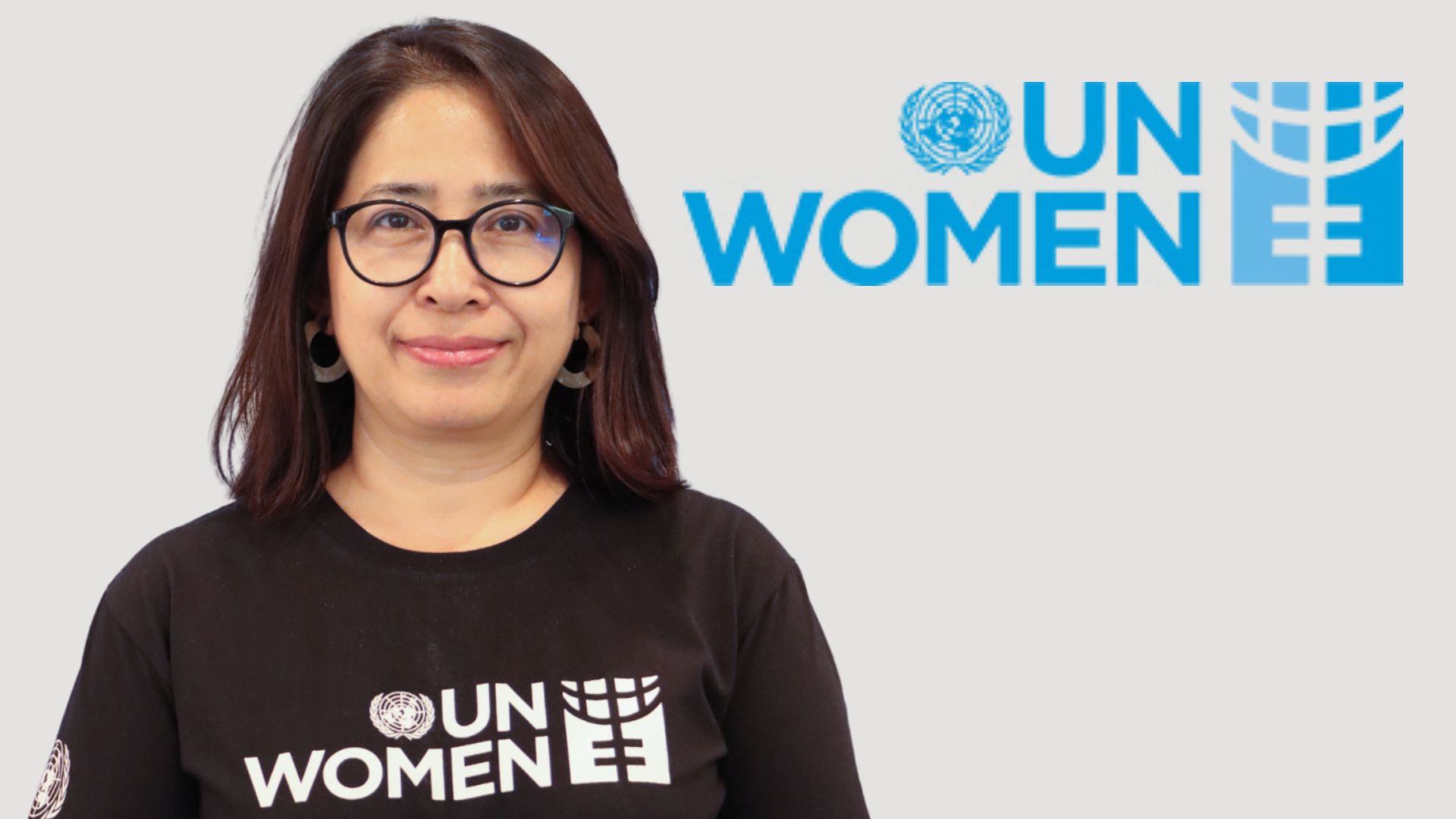
This week, Senior Communications Officer Stew Post spoke with Sophea Khun, National Country Program Coordinator for UN Women in Cambodia, ahead of a business-focused International Women’s Day event on 6 March.
The pair’s discussion explored her work with the international organisation, obstacles preventing women from progressing into leadership positions in Cambodia, and how businesses can take an active role in promoting gender equality in the workplace.
Stew: Can you start by telling us a bit about yourself, how you came to work with UN Women in Cambodia and what your role is with the international organisation?
Sophea: I currently serve as the National Country Programme Coordinator at UN Women Cambodia. My professional focus has always been on inclusive development and strengthening institutions to advance gender equality and women’s rights.
In Cambodia, my role is to oversee programme implementation and partnerships, including our engagement with government, the private sector and civil society. I collaborate with partners and stakeholders to ensure that commitments to women’s leadership and participation, and economic empowerment are translated into practical, measurable action within workplaces, value chains, and governance structures.
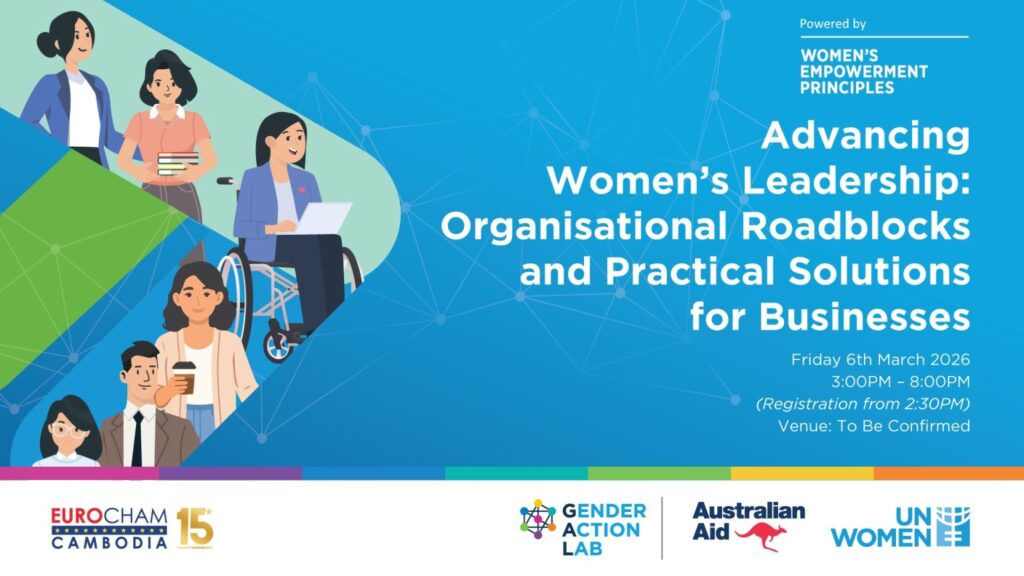
Women Leadership: Organisational Roadblocks and Practical Solutions for Businesses
Stew: International Women’s Day is just around the corner. This year’s event, “Women Leadership: Organisational Roadblocks and Practical Solutions for Businesses,” places a strong emphasis on action. From your perspective, what are the most pressing organisational barriers preventing women’s leadership in Cambodia today?
Sophea: Across Cambodia, many talented women enter the workforce, yet far fewer reach senior leadership. This is not about capability — it is about organisational systems.
The most pressing barriers include unconscious bias in hiring and promotion, limited access to leadership development pathways, and workplace policies that do not adequately address care responsibilities. In some sectors, particularly traditionally male-dominated industries, role segmentation and informal networks further restrict women’s exposure to strategic functions that often lead to leadership roles.
These barriers may not always be visible, but their cumulative impact significantly narrows the leadership pipeline.
Stew: The Women’s Empowerment Principles provide a structured framework for advancing gender equality in the workplace. Can you give a quick breakdown of the WEPs and how they can help companies identify internal roadblocks and move toward practical, measurable solutions?
Sophea: The Women’s Empowerment Principles, or WEPs, developed by UN Women and Global Compact, provide a globally recognised framework built around seven areas: leadership commitment, non-discrimination, employee well-being, professional development, supply chain practices, community engagement, and measurement and reporting.
The strength of the WEPs lies in their practicality. They help companies assess internal policies and practices, clarify leadership accountability, and identify gaps that may limit women’s progression. More importantly, the framework guides companies in setting measurable targets and tracking progress.
The WEPs are also unique in their scope. They are the only global framework on gender equality designed to be applied across the entire value chain, from corporate leadership and workplace policies to procurement, supply chains, marketplace practices, and community engagement. This holistic approach ensures that gender equality is not treated as a standalone initiative but is embedded throughout business operations and decision-making.
In this way, WEPs serve both as a diagnostic tool and a roadmap for action.
Focuses On Testing And Scaling Real-World Solutions
Stew: UN Women’s WEPs Corporate Action Lab (WEPsCAL) focuses on testing and scaling real-world solutions. Can you share how this platform supports businesses in addressing leadership gaps and driving meaningful organisational change?
Sophea: Through the WEPs Corporate Action Lab (WEPsCAL), businesses identify a specific gender-related challenge within their organisation related to the theme of Women in Leadership, for example, leadership progression or recruitment bias, and test targeted, evidence-based interventions. Using a human-centred design approach, companies explore the root causes of barriers, prototype practical solutions, and adapt them based on real-world feedback.
Delivered through a cohort-based, lab modality, WEPsCAL brings companies together in a structured process of co-learning, peer exchange, and guided experimentation. Rather than prescribing solutions, the Lab supports businesses to innovate, test, and refine approaches that respond to their own organisational context and that they can address within their available resources.
This approach allows companies to manage risk, build internal ownership, and implement meaningful change grounded in practical business realities. Over time, successful interventions can be strengthened, scaled, and embedded into business practice.
Stew: The discussion will also draw insights from traditionally male-dominated industries. Why is it essential to examine leadership pathways in these sectors, why is buy-in from male leadership important, and what practical opportunities exist for companies to create more inclusive decision-making structures?
Sophea: Traditionally male-dominated industries often shape national economic growth and corporate norms. If leadership equality is not addressed in these sectors, structural gaps or barriers can persist across the wider economy.
Buy-in from male leadership is essential because sustainable transformation requires those in decision-making roles to actively champion inclusive governance. Policy alone is not sufficient; leadership commitment, resource allocation to targeted actions, and accountability are critical.
There are practical steps companies can take — reviewing human resource policy and succession planning processes, diversifying selection panels, strengthening mentorship and capacity development programmes reflects different needs and role of talented women and men employees, and ensuring that leadership criteria value inclusive competencies. These measures help build more transparent and inclusive decision-making structures.
Accelerating UN Women’s Agenda
Stew: This event is co-organised with EuroCham and brings together leaders from across the business community. How important are partnerships like these in accelerating UN Women’s agenda, and how can sustained cooperation with organisations such as EuroCham help turn conversations into long-term impact?
Sophea: Partnerships with business associations and chambers, such as our collaboration with EuroCham, are important because they place gender equality within the core of business conversation, not as a side issue, but as part of how modern, competitive companies operate.
These platforms help us reach a wider group of companies and engage leadership directly. They also help shift the narrative: gender equality is not only the right and moral thing to do; it also makes business sense, from talent retention and productivity to stronger governance and long-term performance.
Sustained cooperation allows us to move beyond a single event toward ongoing engagement, including through the Women’s Empowerment Principles, the Corporate Action Lab, and continued dialogues on inclusive leadership and economic participation.
Want to learn more about the WPEsCAL, the private sector’s role in advancing gender equality, and how you can get involved? Sign up for “Advancing Women’s Leadership: Organisational Roadblocks and Practical Solution for Businesses” on 6 March.