
Cambodia Investment Review
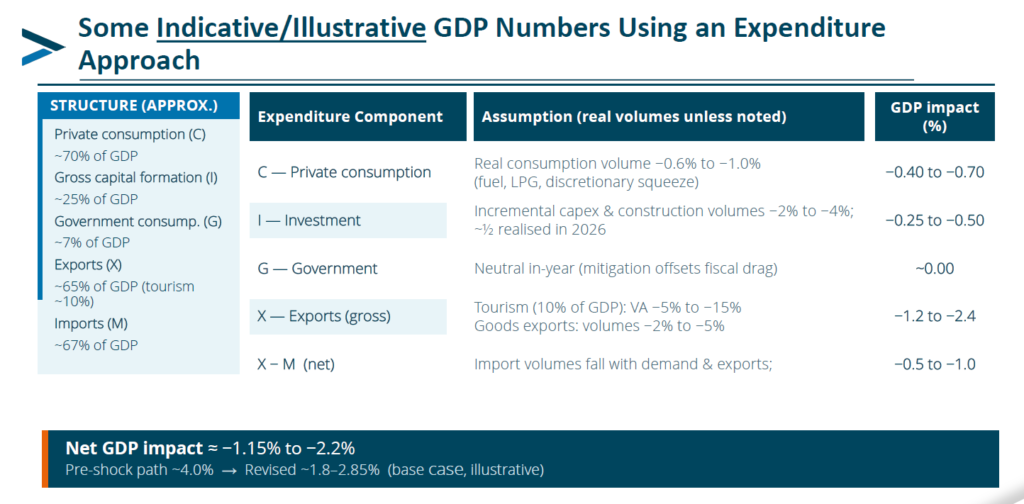
Cambodia’s economic growth outlook for 2026 could slow sharply to between 2% and 2.5%, down from an earlier expectation of around 4%, as the fallout from conflict in the Middle East pushes up fuel prices and adds pressure to an already uneven domestic economy, according to a new report by Mekong Strategic Capital.
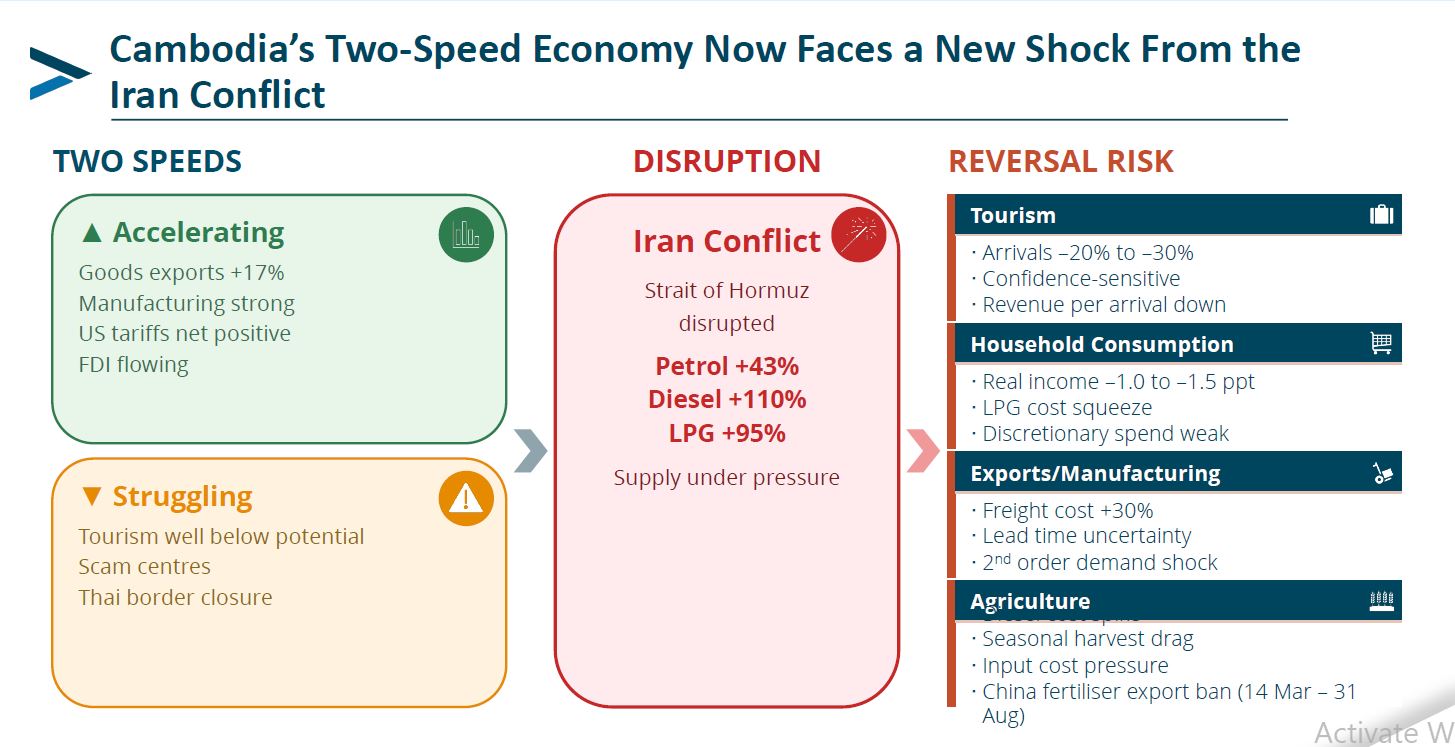
The analysis said Cambodia entered 2026 with a “two-speed economy,” where goods exports and parts of manufacturing were showing resilience, while tourism, real estate and some domestic sectors remained under pressure. The escalation in the Middle East, however, has created a fresh external shock through higher oil prices, disrupted shipping routes and rising transport costs.
Mekong Strategic Capital said the combined impact could reduce Cambodia’s growth rate by 1.5 to 2 percentage points this year, depending on how long the disruption lasts and whether global energy markets stabilize.

Fuel Costs Add Broad Inflation Pressure
The report warned that Cambodia faces a broad inflation shock rather than simply higher fuel prices at the pump. It estimated the conflict could add between 1.5 and 3.2 percentage points to inflation in 2026, above a previous baseline of around 2%.
Higher fuel and LPG costs are expected to filter through supply chains, increasing food transport expenses, restaurant operating costs and logistics prices across the economy.
For households, the effect could be immediate. Rising transport and cooking fuel costs may reduce disposable income and weigh on discretionary spending, particularly in urban areas.
Private consumption represents roughly 70% of Cambodia’s GDP, making household demand one of the most important factors for overall growth, the report noted.
Tourism and Services Seen Most Exposed
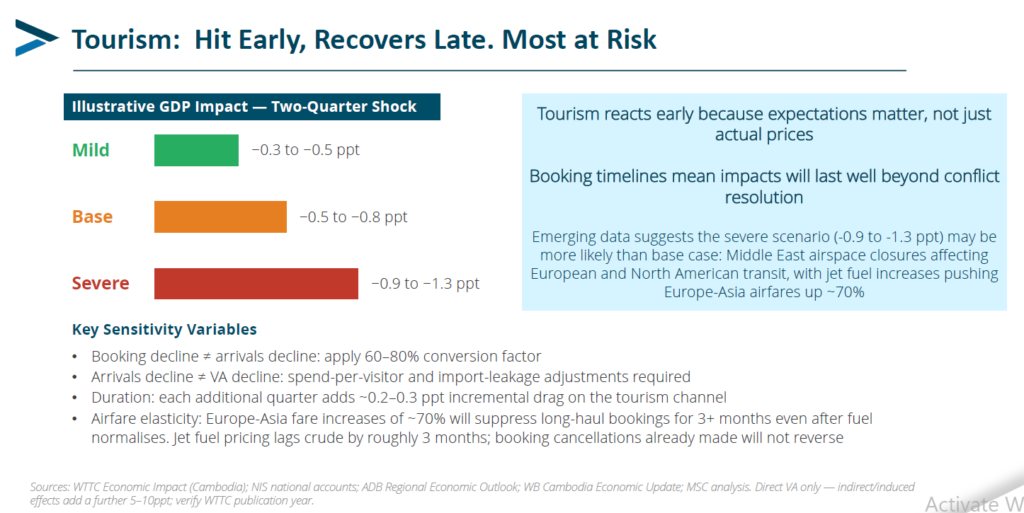
Tourism could be among the sectors most vulnerable to the shock. The report said higher jet fuel costs, airspace disruptions and more expensive long-haul travel may reduce bookings from Europe and North America, two markets viewed as important for Cambodia’s recovery in higher-spending visitors.
Mekong Strategic Capital estimated tourism alone could shave 0.5 to 0.8 percentage points from GDP growth under a base-case scenario, with deeper downside risks if disruptions persist.
Restaurants and small food operators could also face challenges due to LPG shortages and elevated prices. Informal vendors and smaller operators were identified as particularly exposed because of their limited ability to absorb higher energy costs.
Agriculture and Manufacturing also Under Pressure
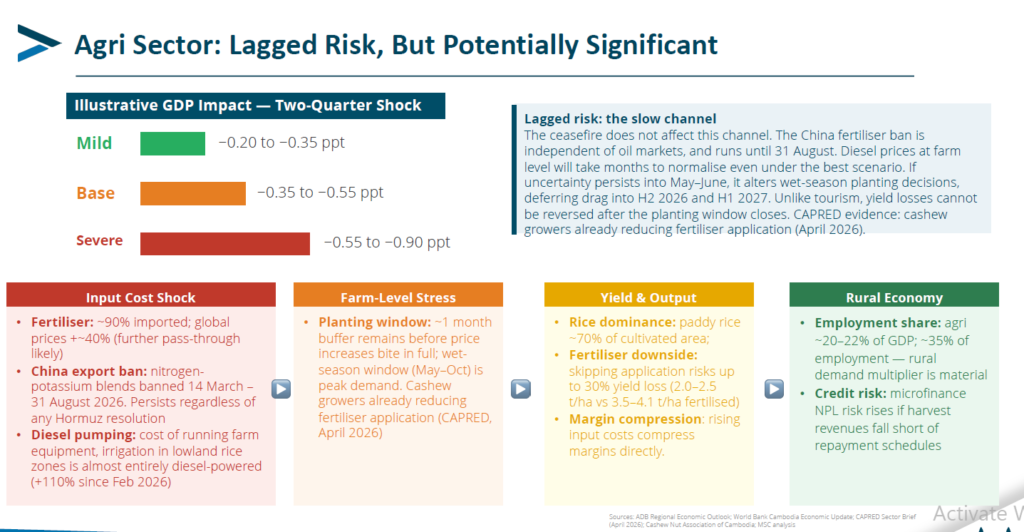
The report said agriculture may face lagged but significant risks, especially if diesel prices remain elevated during the wet-season planting cycle. Higher fertilizer costs and supply constraints could reduce yields and squeeze rural incomes.
Manufacturing and exports, another key driver of Cambodia’s economy, may also face headwinds from weaker overseas demand, higher freight charges and rising production costs.
Cambodia has benefited from strong exports to the United States in recent quarters, but slower consumer spending abroad could eventually feed through into lower garment and footwear orders, the report said.
Outlook Hinges on Global Stability
Mekong Strategic Capital said the outlook remains highly uncertain and depends largely on the duration of Middle East tensions and the speed at which oil supply chains normalize.
Even if geopolitical tensions ease quickly, the report noted it could still take weeks for lower crude prices to translate into cheaper diesel and petrol in Cambodia because of refining, shipping and distribution timelines.
The firm said a sustained stabilization in global energy markets could support growth closer to the upper end of forecasts, while renewed disruption could push growth lower than 2%.
It added that Cambodia’s policy response would need to be broad and coordinated, rather than piecemeal, to help cushion the impact on businesses and consumers.