
Stew Post
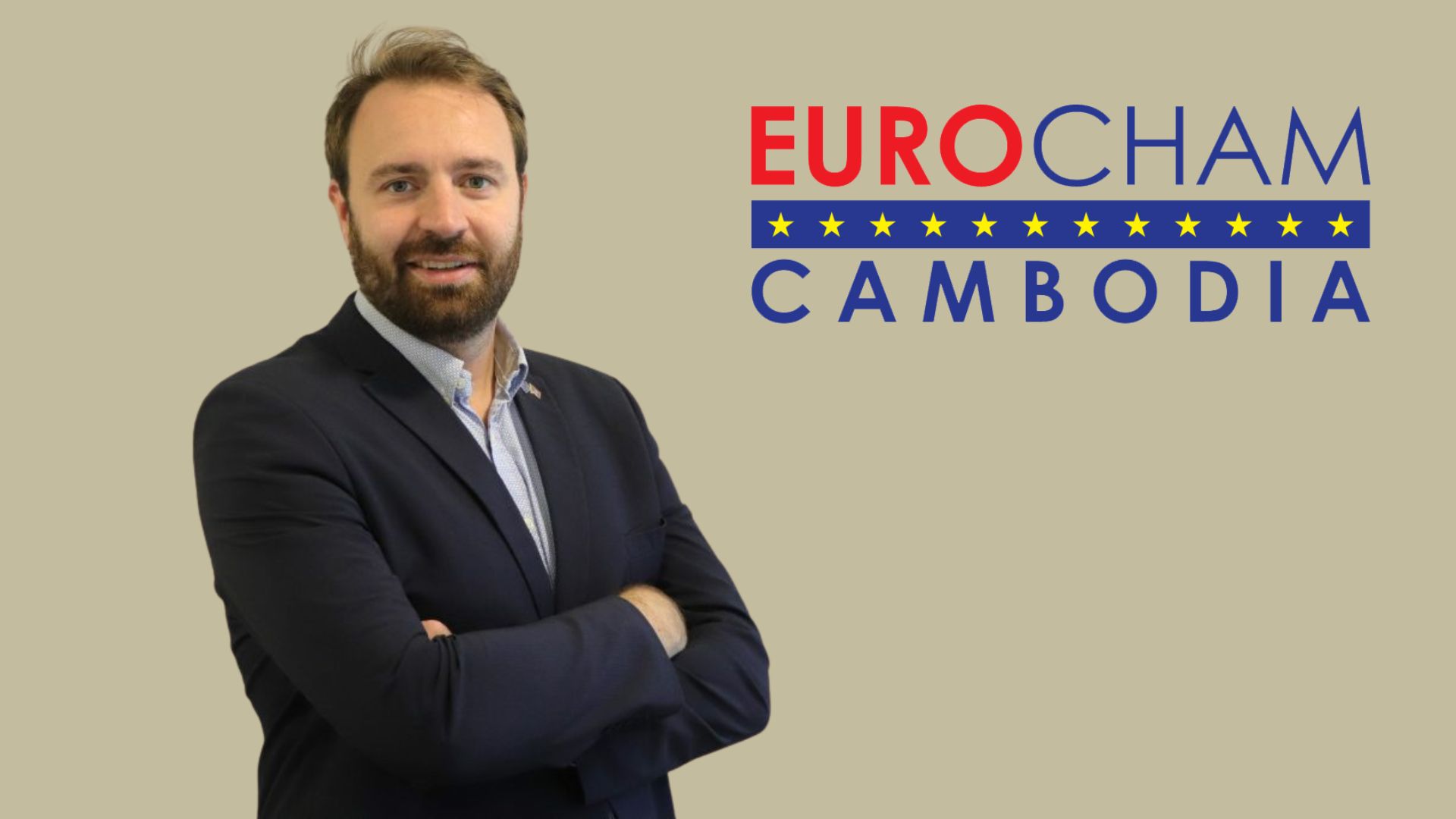
For this week’s interview, Senior Communications Officer Stew Post spoke with Jorne Nooij, EuroCham Advocacy Specialist. After six months in this new role, the pair discussed the impetus behind the creation of the Advocacy Specialist position, what sets it apart from the Chamber’s established advocacy work, and some of the most interesting projects he’s worked on so far.
The pair also discussed some upcoming advocacy initiatives to look out for.
Built A Strong Track Record Through Its Committees
Stew: To get started, can you give us a bit of background about the Advocacy Specialist position and how it differs from the other committee-based work of the department?
Jorne: The Advocacy Specialist role didn’t appear out of nowhere, it’s really the next step in the evolution of EuroCham’s advocacy work. Over the years, the department has built a strong track record through its committees, policy dialogue, and flagship initiatives like the White Book and the Live Advocacy Compass. That consistency positioned EuroCham as a trusted partner for initiatives like the EU-German Global Access and Trade Expertise (GATE) project, which is where my role comes in.
While the committees remain the backbone of industry representation, my position focuses more on the cross-cutting issues that don’t sit neatly within one sector. Instead of coordinating a single committee, I spend much of my time connecting the dots — looking at broader reform topics across sectors. In a way, it’s stepping back from the individual trees to look at how the whole forest grows.
Another part of the role is direct outreach to businesses to understand where procedures work well, and where they quietly don’t. Those insights help shape technical recommendations that we can bring into constructive dialogue with government counterparts. Advocacy here isn’t about grand gestures; it’s often about careful, detailed work that can support systems function a little more predictably.
And of course, the unexpected always happens. One day you’re reviewing long-term strategic plans, the next you’re helping members make sense of a new regulation that appeared overnight — which keeps the job interesting.
Stew: Can you tell us about your previous work and how it prepared you for your role as EuroCham’s Advocacy Specialist?
Jorne: While studying economics at university, I realised pretty quickly that pure theory didn’t really match my personality. During my studies I kept travelling to the Middle East and working with NGOs, which gave me real on-the-ground experience before I even graduated. I kept gravitating toward projects that felt meaningful — mostly around environmental issues — until my partner and I decided to take a leap and move to Cambodia Gto start a new chapter.
Not long after arriving, I applied for a role at UNDP and then… four months later I suddenly got the email saying I had the job. Joining the economics team gave me a much deeper understanding of Cambodia’s development landscape. I worked on projects bigger than myself — including research on Cambodia’s graduation from LDC status — which, as global politics likes to remind us, can become outdated overnight when new tariffs appear.
After helping facilitate a Canadian trade mission, I realised I enjoyed working at the intersection of policy and business, which eventually led me into advocacy. And six months into this role, I now find myself fully settled in.
Transparent Environmental Reporting
Stew: Now that you’ve had six months in the position, what have been some of the interesting or meaningful projects you’ve worked on so far at EuroCham?
Jorne: There have been quite a few, but one that really resonated with me was around Environmental Impact Assessments. At the time, many private-sector licenses to carry out these studies had been revoked, which created uncertainty for companies that rely on transparent environmental reporting to operate responsibly and stay competitive internationally. My role was to help bring this issue into constructive discussions with government counterparts and make sure the business perspective was clearly understood.
Another project I really enjoyed was working on the Autonomous Port of Sihanoukville (PAS). Together with European shippers and freight companies, we looked at how to make processes smoother and more efficient in and around the port; everything from customs working hours and railway processing fees to improving digital booking systems for trucks and containers. It might sound technical, but these small operational details are the main artery of Cambodia’s supply chain to the world.
As a Dutchman, I usually bring a bit of friction into the room first. But once the problems are on the table, I like to be the WD-40 that helps systems run the way they were supposed to in the first place.
Stew: What do you think are the most pressing issues facing Cambodia’s business landscape and how can EuroCham’s advocacy work help address them?
Jorne: One of the key challenges many European businesses mention is the complexity of administrative procedures, particularly when registration, licensing, or trade documentation require the involvement of multiple third-party service providers. Often, when we speak directly with companies, they struggle to fully explain certain processes because parts of them sit outside their direct control. While these services play a role in the wider economy, they can add additional layers of cost and uncertainty, which ultimately makes operating in Cambodia more expensive than it needs to be.
Through the EU-German GATE project, EuroCham has been working to support practical ways to reduce unnecessary bureaucratic friction — not through large investments, but by improving coordination, transparency, and efficiency. Encouragingly, the Council for the Development of Cambodia has been open to technical discussions that focus on solutions. This collaborative approach is important, because advocacy here is less about pushing for dramatic change and more about fine-tuning already established systems so they work better for both the public and private sectors.
Our goal this year is to turn these conversations into concrete findings and recommendations that strengthen service delivery for businesses while supporting Cambodia’s broader ambition to remain an attractive and competitive investment destination.
From our side, you can expect continued work on practical initiatives, including an upcoming “red tape” project, which will look at how simplifying procedures and improving transparency can make it easier for businesses to adapt to these new expectations while operating more efficiently in Cambodia.
Launch Of The White Book 2026
Stew: Are there any interesting advocacy projects or initiatives that EuroCham members and the wider public should keep an eye out for?
Jorne: Besides the much-anticipated launch of the White Book 2026, which will present a new set of refined recommendations to improve Cambodia’s business environment — one area to keep a close eye on is the growing conversation around greener supply chains. This is quickly becoming more than just a trend. In the garment sector, one of Cambodia’s most important industries and a major source of recent growth, international brands are increasingly asking how production here can support their net-zero commitments.
What matters more and more is the ability for companies to measure and report on their environmental footprint, especially energy use. As sustainability requirements tighten globally, some brands may start comparing sourcing destinations not only on cost or speed, but also on carbon intensity. This creates both a challenge and an opportunity for Cambodia to position itself as a competitive, future-ready manufacturing hub.
Here, we have been engaging with businesses to develop comprehensive recommendations to share with our government counterparts in the near future.


