
Cambodia Investment Review
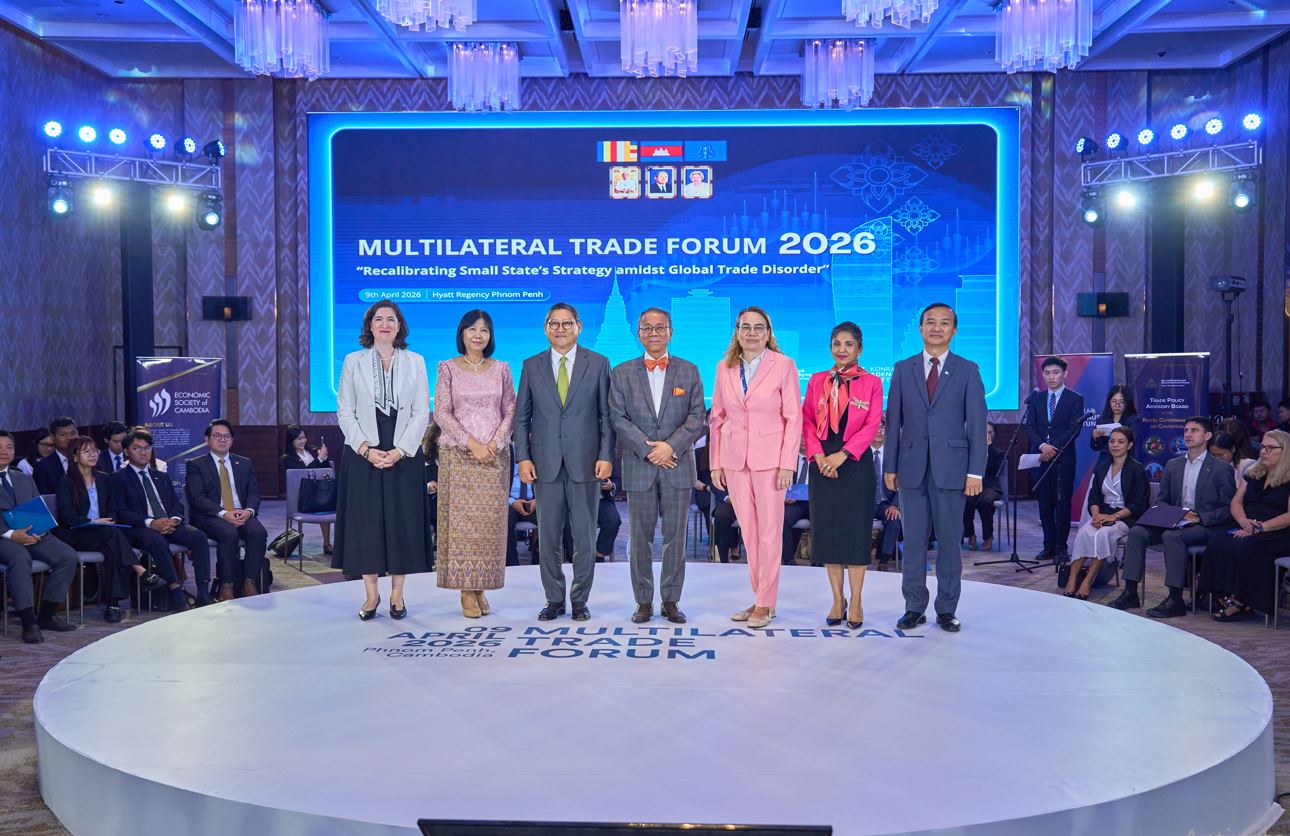
Cambodia should accelerate efforts to diversify export markets, strengthen domestic industrial capacity and deepen regional integration as global trade fragmentation intensifies ahead of the country’s planned graduation from Least Developed Country (LDC) status in 2029, according to speakers at the Multilateral Trade Forum 2026 held in Phnom Penh.
The forum, themed “Recalibrating Small States’ Strategies Amidst Global Trade Disorder,” was co-organised by the Trade Policy Advisory Board (TPAB), the Economic Society of Cambodia (ESC), and Konrad-Adenauer-Stiftung (KAS) Cambodia.
Held for the first time, the event brought together senior Cambodian government officials, diplomats, business leaders, development partners, academics and students to assess growing pressures on the global trading system and discuss strategies to improve Cambodia’s resilience and competitiveness.
Among senior officials attending were Deputy Prime Minister Sok Chenda Sophea and Acting Minister of Foreign Affairs and International Cooperation Eat Sophea, alongside representatives from ministries including Economy and Finance, Commerce-linked agencies, labour, public works, industry, energy and environment.
Diplomatic representatives included ambassadors from Brunei, Canada, Laos, Myanmar, Malaysia and Singapore, as well as delegates from Australia, the United States, Vietnam and the European Union.
Rising urgency for small economies
Natalie Russmann, Country Representative of KAS Cambodia and Malaysia, said the forum came at a time when smaller and developing economies faced mounting uncertainty and needed to rethink their trade strategies.
Read More: Opinion: ASEAN’s Economic Crossroads in 2026
She also noted the significance of the event as one of KAS Cambodia’s final major engagements in the country, with the organisation set to conclude operations in Cambodia by the end of 2026 after more than three decades of presence.
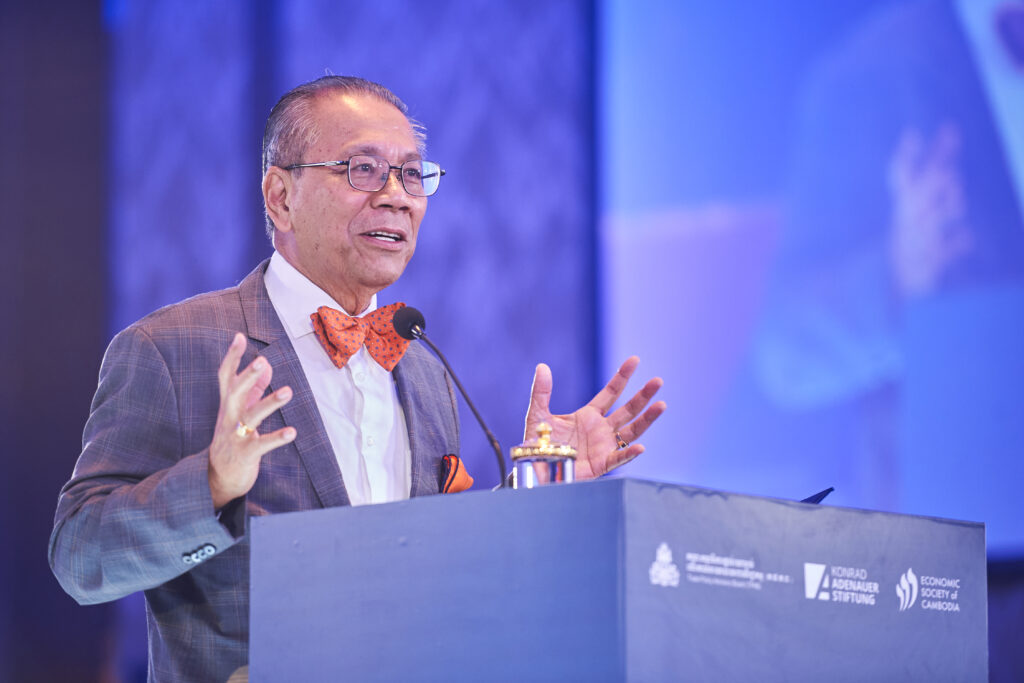
Bundit Sapheacha Dr. Sok Siphana, Senior Minister in charge of Multilateral Trade and Economic Affairs, Chairman of TPAB and Founding Chairman of ESC, delivered opening remarks focused on the weakening state of multilateral trade governance.
He pointed to the recent 14th WTO Ministerial Conference, which ended without a ministerial declaration, as evidence of growing dysfunction in the global rules-based system.
Rather than viewing disruption solely as a threat, Sok Siphana said Cambodia should use the moment to recalibrate by broadening market exposure, investing in domestic production capability and strengthening regional partnerships.
LDC graduation and export exposure in focus
A leaders’ roundtable titled “Multilateralism and Regionalism: A Shifting Paradigm for Rules-Based International Trade” featured Sok Chenda Sophea, World Bank Country Director Tania Meyer, Asian Development Bank Country Director Yasmin Siddiqi, UNIDO Cambodia representative Sok Narin and World Bridge Group Chairman Neak Oknha Sear Rithy.
Participants discussed Cambodia’s long-term Vision 2050 ambitions and the challenges tied to LDC graduation, including the eventual loss of some preferential market access such as European tariff benefits for garments and other exports.
The panel also highlighted constraints including logistics costs, human capital shortages and recent trade disruptions caused by Thailand’s border closure.
Speakers called for faster structural reforms in productivity, skills development and the energy transition, while encouraging stronger dialogue between government and the private sector.
Diversification, diplomacy and new market access
A second panel on strategic hedging and economic diversification examined Cambodia’s dependence on the U.S. market, institutional gaps and regulatory barriers.
Panelists included Shandre Mugan Thangavelu of the Jeffrey Cheah Institute for Southeast Asia, Bradley Jenson Murg of Paragon International University, Julian Clarke of ADB, Ms. Iv Ek Nimnuon of UNDP Cambodia and Casey Barnett, President of CamEd Business School.
They urged greater use of ASEAN and Regional Comprehensive Economic Partnership (RCEP) frameworks, broader development beyond major cities and industrial policies supporting digital and green growth.
A third panel focused on multilateral diplomacy as a tool for diversification. Speakers included H.E. Dr. Chheang Vannarith, Dr. Eng Netra, H.E. Dr. Cheunboran Chanborey, H.E. Dr. Sar Senera, Dr. Ken Loo and Dr. Oum Sothea.
Discussions centred on how Cambodia can use RCEP and the Comprehensive and Progressive Agreement for Trans-Pacific Partnership (CPTPP) market opportunities to attract investment into electronics, agro-processing and higher-value manufacturing.
The panel also emphasised the need for stronger institutions, improved accountability, skills development and policy agility.
Forward-looking response needed
The forum concluded with a collective call for Cambodia to respond to global trade disruption through adaptation rather than retreat.
Participants said cross-sector collaboration between government, business and development partners would be critical to ensure Cambodia’s trade and economic policies remain competitive, resilient and forward-looking in the years ahead.