
Cambodia Investment Review
The UK government has announced a new £1.6 million ($2.17 million) funding package to support mine clearance and explosive ordnance risk education in Cambodia, with the initiative also expected to unlock broader economic and investment opportunities across affected provinces.
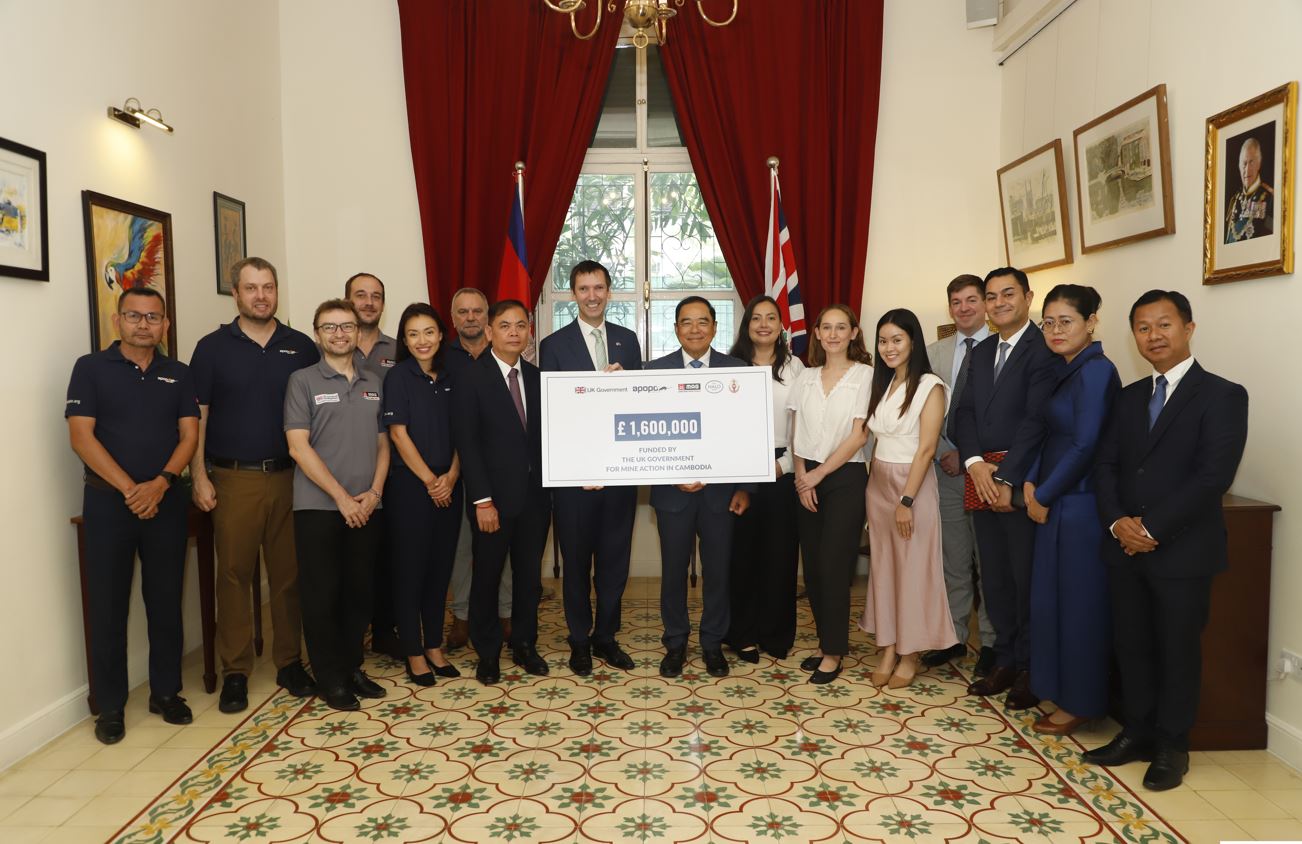
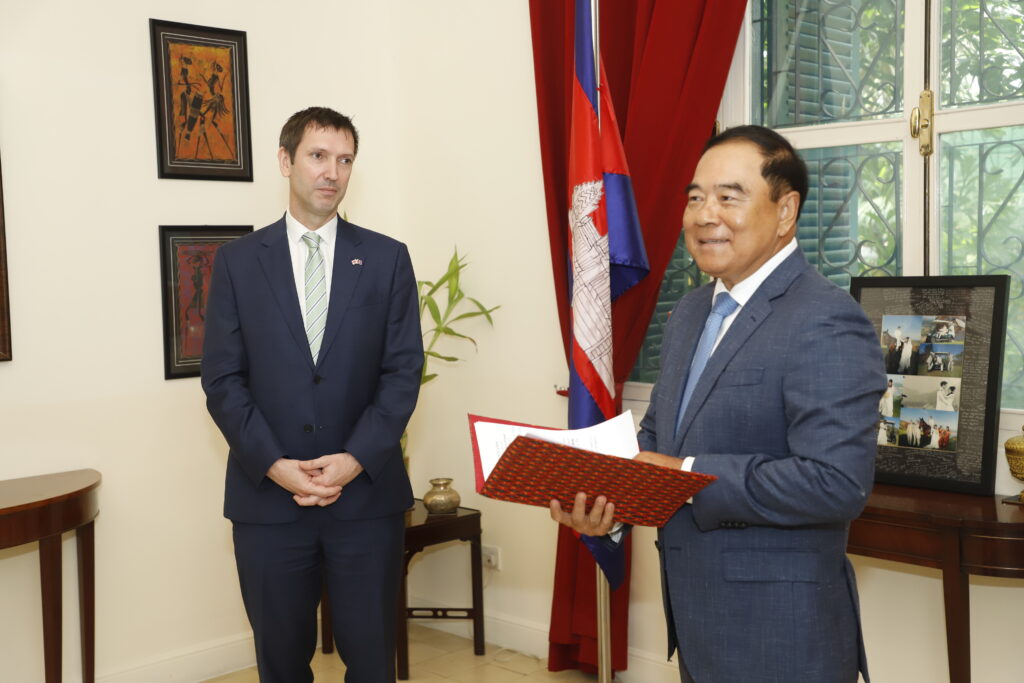
The funding, announced on May 6 at the official residence of British ambassador Dominic Williams, will support humanitarian mine action activities for another year through three organisations: HALO Trust, Mines Advisory Group (MAG), and APOPO.
While the initiative is primarily focused on improving public safety and reducing the risks posed by unexploded ordnance (UXO), demining activities are increasingly viewed as a key enabler of rural economic development, infrastructure expansion, tourism growth, and agricultural investment in Cambodia.
Large areas of land in provinces such as Battambang, Siem Reap, Oddar Meanchey, Banteay Meanchey, Pailin, Pursat and Koh Kong continue to face challenges linked to landmine contamination, limiting land use, transport connectivity, and broader private sector development.
Demining Increasingly Linked To Economic Development
Under the latest UK-backed program, HALO Trust and MAG expect to clear approximately 890,300 square metres of land while delivering more than 4,000 explosive ordnance risk education sessions to over 44,000 people.
The clearance work is expected to directly benefit more than 5,000 Cambodians and improve access to land for farming, housing, local businesses, and future infrastructure projects.
Demining has become an increasingly important component of Cambodia’s broader economic development strategy, particularly in rural provinces where access to safe and usable land remains essential for agriculture, logistics, industrial expansion, and community development.
As Cambodia continues to attract investment into sectors such as manufacturing, agro-processing, renewable energy, and tourism, the removal of landmines and unexploded ordnance is also helping reduce barriers to development in previously inaccessible areas.
Agricultural Redevelopment And Cambodia’s 2030 Goal
Agricultural redevelopment has also emerged as a growing focus within Cambodia’s mine action strategy, particularly as the government seeks to improve rural productivity and strengthen food security.
As part of the UK-supported initiative, APOPO’s Minefields to Ricefields (M2R) project will rehabilitate approximately 3.4 million square metres of land for agricultural use. The project is expected to directly benefit at least 500 farming families, with hundreds more anticipated to benefit indirectly through improved local economic activity and land accessibility.
Speaking during the announcement, Senior Minister Ly Thuch, first vice-president of the Cambodia Mine Action and Victim Assistance Authority (CMAA), said Cambodia and the UK have maintained a strong partnership in humanitarian mine action for more than four decades.
He noted that Cambodia remains committed to achieving its target of becoming mine-free by 2030, adding that ongoing international support continues to play an important role in improving safety and creating long-term opportunities for affected communities.
According to CMAA, the UK has contributed approximately £65 million to Cambodia’s humanitarian mine action sector to date, making it one of the country’s longstanding development partners in the sector.