

Cambodia Investment Review
Thailand’s Anti-Money Laundering Office (AMLO) has announced plans to seek court approval to confiscate assets worth approximately 13 billion baht (around $420 million), many of which authorities allege are connected to online scam operations with links to Cambodia.
The move reflects an intensifying regional response to transnational fraud and financial crime, as both Thailand and Cambodia face mounting international scrutiny over scam compounds, labour trafficking, and cross-border money flows.
Thai authorities said the cases involve multiple suspects and span land holdings, condominium units, vehicles, yachts, and bank deposits. According to AMLO, the assets were impounded after suspects were unable to demonstrate that they were legally acquired.
Multiple High-Profile Cases
AMLO outlined four major cases currently being referred to prosecutors for court petitions seeking forfeiture.
One case relates to Chen Zhi, described by Thai authorities as an alleged figure in scam-linked networks. AMLO said it found information indicating a network involving online fraud, labour trafficking, and digital currency-based money laundering. The agency is seeking court approval to confiscate 96 assets worth approximately 345 million baht (about $11.1 million).
Read More: Morisonkak MKA Appointed as Liquidator for Prince Bank

Another case involves Cambodian senator Kok An and associates. Thai authorities allege links to compounds in Poipet and Sihanoukville that were reportedly associated with scam operations. Prosecutors have been asked to petition for the seizure of 89 assets, including land and bank deposits, totalling around 560 million baht (over $18 million).
The largest portion of the proposed confiscations is tied to a case involving Cambodian businessman Yim Leak, South African lobbyist Benjamin Mauerberger (also known as Ben Smith), and several associates. AMLO alleges that funds connected to this case originated from defrauded victims and involve public fraud. The agency has requested forfeiture of 68 assets — including land, condominiums, vehicles, a yacht, and bank deposits — valued at approximately 12.1 billion baht (around $390 million).
Mauerberger, who is believed to be outside Thailand, has publicly denied involvement in criminal activity. Thai authorities have not disclosed the whereabouts of other associates.
A fourth case concerns a group accused of persuading members of the public to invest in cryptocurrency mining schemes through LINE messaging groups. Prosecutors have been asked to seek forfeiture of 31 assets worth approximately 46 million baht ($1.48 million).
AMLO stated that, where victims can be identified, assets may be returned or used to compensate those affected rather than being forfeited to the state.
Regional Pressure and Political Context
The announcement comes amid a broader effort by Thailand’s leadership to address concerns about so-called “grey money” flowing across borders. Prime Minister Anutin Charnvirakul publicly endorsed AMLO’s move, reiterating his administration’s commitment to tackling financial crime and transnational scam networks.
Thailand has, in recent years, faced reputational challenges related to money laundering and illicit capital flows, particularly in border regions where casino operations and digital scam networks have proliferated.
Cambodia’s Ongoing Enforcement Campaign
In parallel, Cambodia continues a high-profile enforcement drive targeting scam compounds. The government has reported nearly 200 raids on suspected scam centres and has pledged to eliminate such operations in the coming months.
Authorities say more than 5,500 foreign nationals suspected of involvement in scam activities — or identified as potential trafficking victims — were deported in 2025. In early 2026, thousands more have reportedly been arrested, with many repatriated to their home countries or awaiting deportation.
Cambodia’s enforcement efforts have come under pressure from regional governments, as well as major partners including China and the United States, which have called for stronger action against online fraud and trafficking networks.
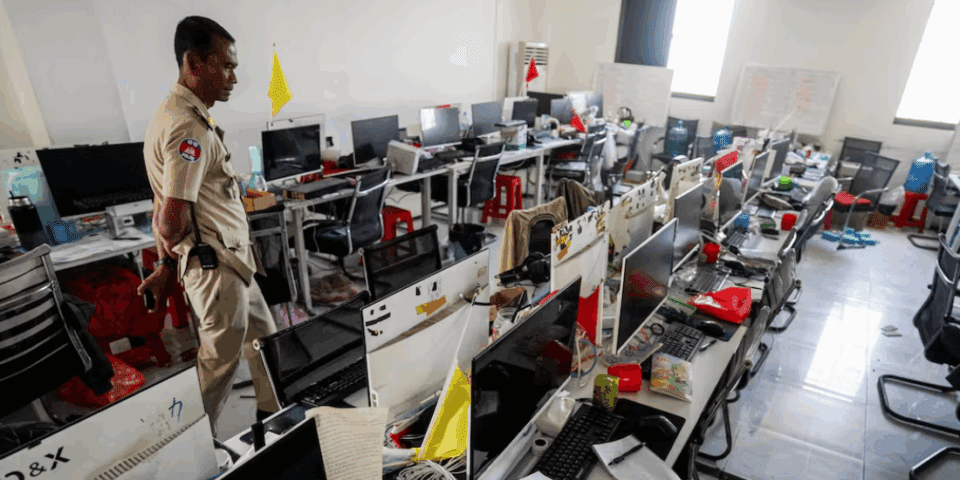
Prime Minister Hun Manet has publicly vowed to dismantle criminal networks and remove officials involved in illicit activities. However, some international analysts have questioned the long-term sustainability of the enforcement campaign.
Jacob Sims, a transnational crime analyst at Harvard University, has told local media that durable reform requires stronger accountability at senior levels and improved protection for trafficking victims and evidence preservation.
He cautioned that without systemic reforms, scam networks could re-emerge once international pressure diminishes.
As Thailand advances its asset seizure cases and Cambodia continues enforcement operations, the developments signal a tightening regional approach to financial crime. The outcomes of the court petitions in Thailand — and the durability of enforcement in Cambodia — are likely to shape cross-border cooperation and investor perceptions in the months ahead.