
By Botumroath Lebun
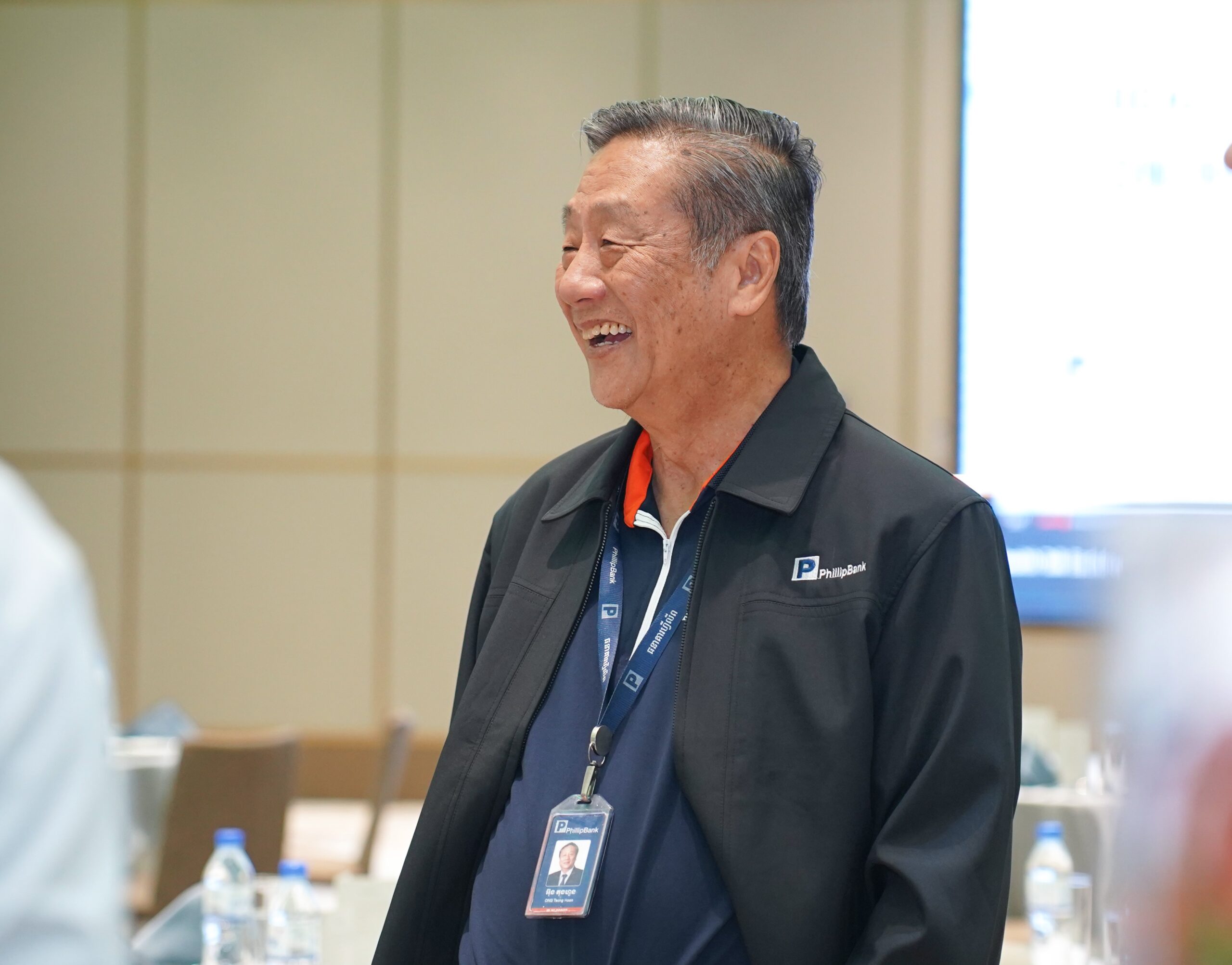
When Ong Teong Hoon first came to Cambodia in the early 1990s, the country was just emerging from conflict. UNTAC had arrived. There were no cheques and few systems people trusted. Money moved in cash, often kept at home — in tin cans or under mattresses.
More than three decades later, that shift shows in the numbers — nearly US$100 billion in banking assets, a surge in digital transactions, and a growing middle class entering the financial system for the first time.
But Ong, now 74, does not measure that change in scale. He measures it in trust.
“Banks are institutions of trust,” he said. “It takes time to build — but it breaks fast.”
A System Built on Confidence, Not Just Capital
PhillipCapital Group first invested in Cambodia in 2009 with US$100,000. Today, its shareholder funds exceed US$180 million. Phillip Bank operates 71 branches and employs over 1,700 Cambodian staff — across cities, towns, and provincial areas where formal banking once barely existed.
For Ong, the numbers matter less than what stands behind them.
“We came as investors,” he said. “We stayed as part of the system.”
Cambodia’s banking system did not grow in a straight line. In the 1990s, Ong watched banks collapse — First Overseas Bank, Cambodia Farmers Bank, Pacific Commercial Bank. Confidence was fragile. People kept their savings at home.
“People moved into banks slowly — first for safety, then for growth,” he said.
Phillip Bank entered Cambodia in 2014 and expanded in 2020 through a merger with Kredit Microfinance Institution, pushing deeper into provincial markets. Today, it sits within a wider ecosystem under PhillipCapital Group: insurance to protect assets, trustee services to manage wealth and succession, and regional links connecting Cambodian clients to Singapore.
Ong sees the system as interconnected. Banks competing alone, he argues, weaken the whole. Stronger interbank relationships would allow institutions to balance liquidity and build shared stability.
“Banks should not only compete,” he said. “They should support the system.”

He Started with a Bicycle. Phillip Bank Helped Him Build a School.
Dr. Bona Seng — educator, school founder, and holder of a PhD in Education — receives visitors in his office with the ease of someone who has nothing to prove.
He is 43, slight and trim in the way of a man who moves through life deliberately. An ivory-coloured tailored suit gives him the bearing of a CEO — which he is — but the melon slices and oranges arranged on the table, the porcelain cup of tea pushed toward his guest, and the easy laugh that arrives before the punchline tell a different story: a farmer’s son from Prey Veng who never forgot where he came from.
He did not set out to become a borrower. He set out to become a teacher.
“In my hometown, we lacked teachers,” he said. “And teachers looked professional. People called you teacher anywhere — even if you were not rich. That was enough for me.”
He grew up riding more than 30 kilometres to school each day. He came to Phnom Penh with no connections and no money, and lived in a church for four years while building both.
From teaching, he moved to founding. True Visions Education Group opened in 2013. The early years were hard. When money ran short, his mother sold her land to help him open a third campus.
He needed a financial partner. He had no assets to offer.
What he had was a dinner.
Through a friend in Singapore, Seng met Ong at a small restaurant in Phnom Penh. They spoke briefly. Ong ran out of name cards. Seng gave him his.
That night — around 11 PM — an email arrived.
Seng read it twice. At the bottom, he saw the title: Director.
“No wonder,” he said. “That’s why I tried to connect with him — to find support.”
The first loan application was rejected. No hard title. No collateral. Against policy.
Mr. Ong intervened.
“I saw him as an earnest young man, full of passion, with a tinge of integrity about him,” Ong said. “I thought he deserved support.”
The loan was approved.
It allowed Seng to purchase the shophouse where he and his family had been living and running a small restaurant called Mhoub Sre. The restaurant served affordable meals to university students. It also sustained the school. Students ate there. Revenue stayed in the system.
The school survived. Then it grew.
A year later, Seng borrowed again — this time USD1,100,000 to purchase a villa he converted into a school campus. Then again. And again.
Over time, he borrowed around US$2.5 million from Phillip Bank — always to build, never to speculate.
“They always come up with practical solutions to help me expand,” Seng said. “As long as you have a good partner like a bank, your business will grow.”
Today, True Visions Education Group runs 15 campuses across Phnom Penh with 1,008 employees — 40 per cent of them expatriate teachers — serving around 4,600 students across True Visions, BonaMary University, and Marywell International School Phnom Penh.
The partnership extends beyond lending. Phillip Bank funds full scholarships for the top student in every grade from one to eleven. It runs registration desks at school events and maintains an active presence in the school community.
It is a relationship, not a transaction.
In March 2026, Seng launched a joint venture in Adelaide, Australia — a high school campus with an exchange pathway for students in Cambodia.
He told his son, who studies in Melbourne: “Daddy came to school on a bike. You go on an airplane. What are you going to become?”
When asked what Phillip Bank gave him, he pauses. His hands rest on the dark wooden table. He folds them slowly.
“Trust,” he said. “Always trustable. Always.”
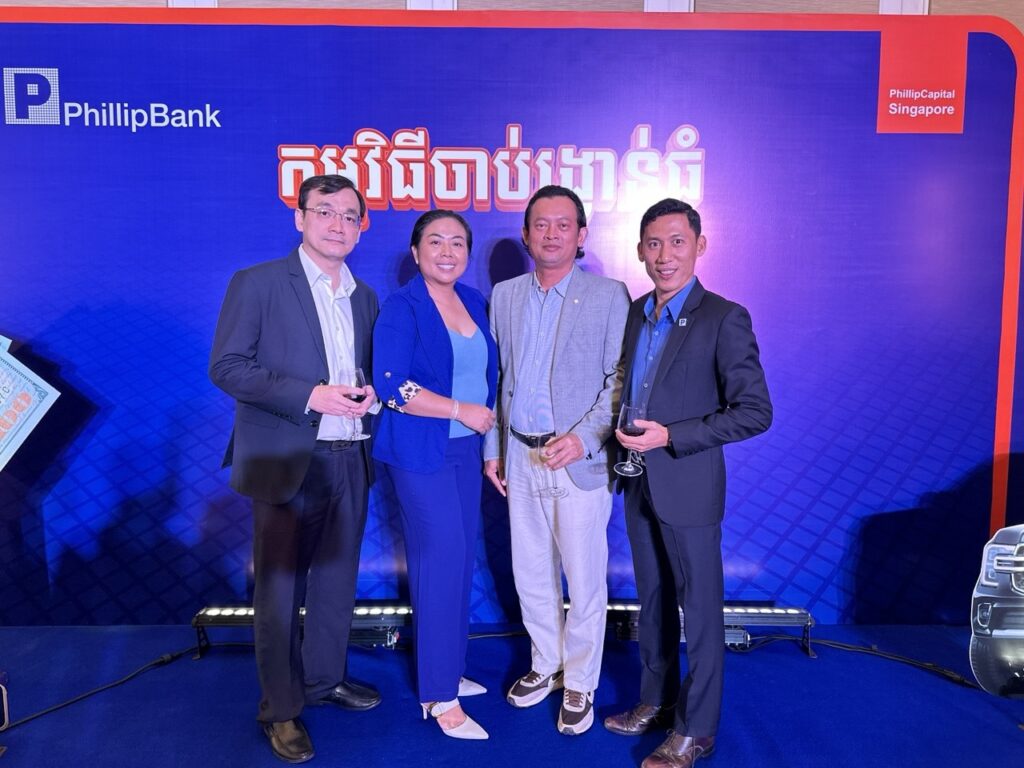
She Followed Her Banker — and Found a Long-Term Partner
At 47, Mao Thida carries herself with the composure of someone who has built something real and knows it. She is sophisticated and direct.
Her business began not in farming, but in trade.
She works directly with factories in the United States to produce vitamins she distributes across Cambodia and the region. She does not run a storefront. She sources, warehouses, and supplies — building a regional business from Phnom Penh, competing on quality in a market that often rewards price.
“I don’t produce cheap products,” she said. “I have a reputation to keep.”
Her first loan from Phillip Bank, in 2017, was for that import and distribution business — to build the infrastructure behind it. Warehousing. Supply. Scale.
But what brought her to the bank had less to do with rates and more to do with people.
A banker she trusted, told her he was moving to Phillip Bank. She followed.
That decision has held — even when it costs more. Phillip Bank’s rates are higher than some competitors. Thida stays.
“I can trust my money with them,” she said.
That trust is not abstract. She knows the people behind it — from the Group Chairman of PhillipCapital in Singapore, whom she has met over dinner, to Ong in Phnom Penh, who remains her point of contact. In a market of institutions, she chose a network of people she could call by name.
In 2019, she used profits from her import business to expand into agriculture — building a chicken operation that now cycles 108,000 birds every 38 days, sold directly to brokers without the overhead of packaging or retail. She launched just before the pandemic. The model held.
Phillip Bank’s collateral policy reflects the kind of partnership she was looking for. Unlike most banks, it allows borrowers to swap land titles of similar value as their businesses evolve — a flexibility that matters when a business is in motion.
“Other banks fix it and won’t change,” she said. “Phillip Bank is flexible.”
Today, both operations — import and agriculture — run on the same foundation: capital, flexibility, and a bank that operates as a partner.
Financial Literacy Reaches the Families Banks Often Miss
Growth without understanding creates risk.
Only 18 per cent of Cambodians have basic financial literacy. Without it, access to finance can turn into pressure — multiple loans, high interest, unstable repayment.
Phillip Bank has worked to address that gap. Through Koampia Phum Yeung (KPY), a Cambodian NGO it helped establish and register in 2019, the bank reaches vulnerable families in poor communities across Cambodia’s provinces — providing training in financial management, household planning, and community development.
To date, KPY has trained 944 teachers and trainers, reached over 10,800 adults applying financial practices in daily life, and helped more than 16,000 children build saving habits — across four provinces.
Chan Sokkhy, KPY’s Executive Director, brings more than a decade of field experience in rural Cambodia — first with World Vision International in Kampong Thom, then with Research Triangle Institute. He joined KPY to deepen that work.
“Financial education helps families make informed decisions,” he said.
For the bank, this is not separate from its business. It supports it. Trust built at the household level carries into the system.
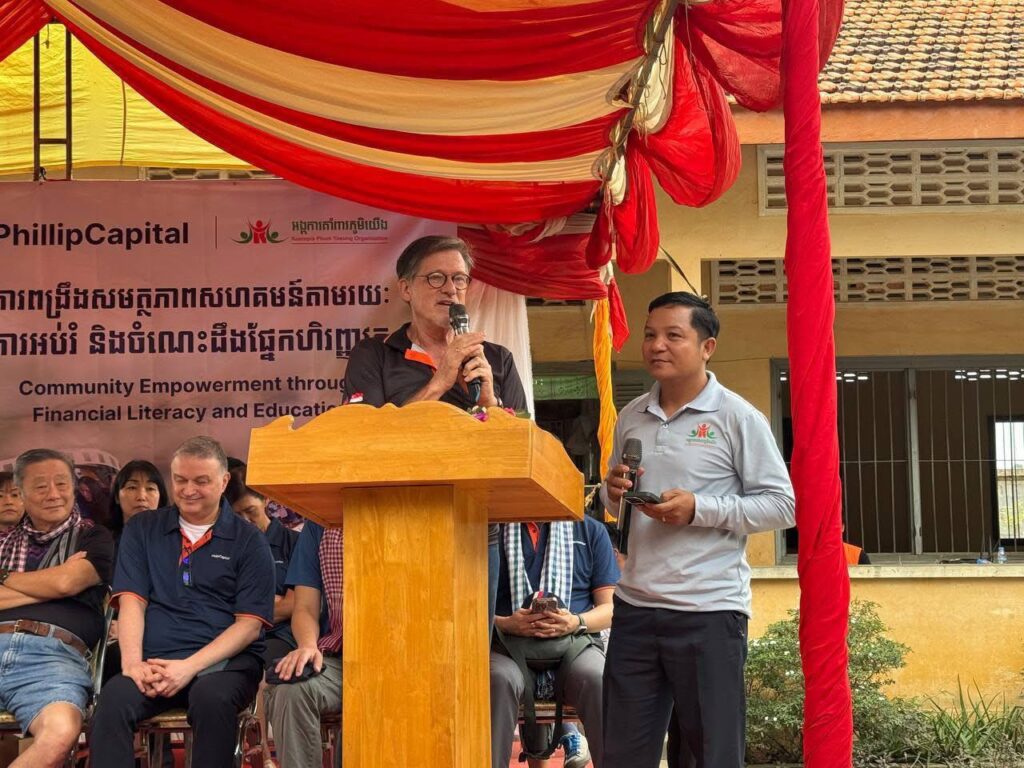
Three Decades In, He Remains Cautiously Optimistic
Mr. Ong does not speak in big claims. He speaks in observations.
He first came to Cambodia in the early 1990s, during UNTAC. The country was emerging from conflict. Banking barely existed. He stayed — first with Standard Chartered, then, when he saw something bigger taking shape, with Phillip Bank.
“There are always headwinds,” he said. “But I remain cautiously optimistic.”
What gives him confidence is not only data. It is the people.
He recalls a staff member who attended school at six in the morning while he was still asleep. His current personal assistant takes a Master’s degree in the evenings after work. And there was a young woman whose university fees he helped cover for one year — by the second, she had earned enough to pay for herself.
“Such motivation, drive for self-sufficiency, and hunger for success give me great assurance for the future of this country,” he said.
PhillipCapital’s investment has grown from US$100,000 to more than US$180 million. The system has grown. The tools have changed.
But what holds it together has not.
Trust.
Phillip Bank in Cambodia — A Timeline
- 2009 — PhillipCapital Group enters Cambodia with an initial investment of US$100,000.
- 2014 — Phillip Bank officially established in Cambodia, offering retail and commercial banking services.
- 2019 — Koampia Phum Yeung (KPY), a financial literacy NGO co-founded with Phillip Bank’s support, registered with the Ministry of Interior.
- 2020 — Phillip Bank merges with Kredit Microfinance Institution, extending its network deep into provincial markets.
- 2024–2025 — Deposits grow more than 60 per cent over four years. The bank operates 71 branches nationwide with 1,700 local staff.
- Today — PhillipCapital Group’s total shareholder funds in Cambodia exceed US$180 million.
The PhillipCapital Ecosystem in Cambodia
Phillip Bank is one part of a broader financial ecosystem that PhillipCapital Group has built for Cambodian customers. PhillipCapital Group holds over US$4 billion in shareholder equity globally — with more than US$180 million of that committed to Cambodia.
- Phillip Bank — Retail and commercial banking across 71 branches nationwide. Services include deposits, loans, trade finance, and digital banking.
- Insurance — Life and general insurance products designed to protect the assets and livelihoods of Cambodian families and businesses.
- Trustee Services — Wealth succession planning, estate management, and facilitation of foreign investment into Cambodia.
- Wealth Management — Connecting Cambodian clients to PhillipCapital’s investment and wealth management capabilities in Singapore.
- Koampia Phum Yeung (KPY) — A Cambodian NGO co-founded with Phillip Bank’s support, delivering financial literacy training to vulnerable families and communities across four provinces. To date: 944 trainers trained, 10,800 adults reached, and 16,000 children introduced to saving habits.