
Cambodia Investment Review
Cambodia’s garment industry must rapidly transition towards electrification and renewable energy if it is to remain competitive in global supply chains, according to a new report from EnergyLab Asia that warns international brands are increasingly demanding lower-carbon manufacturing from their suppliers.
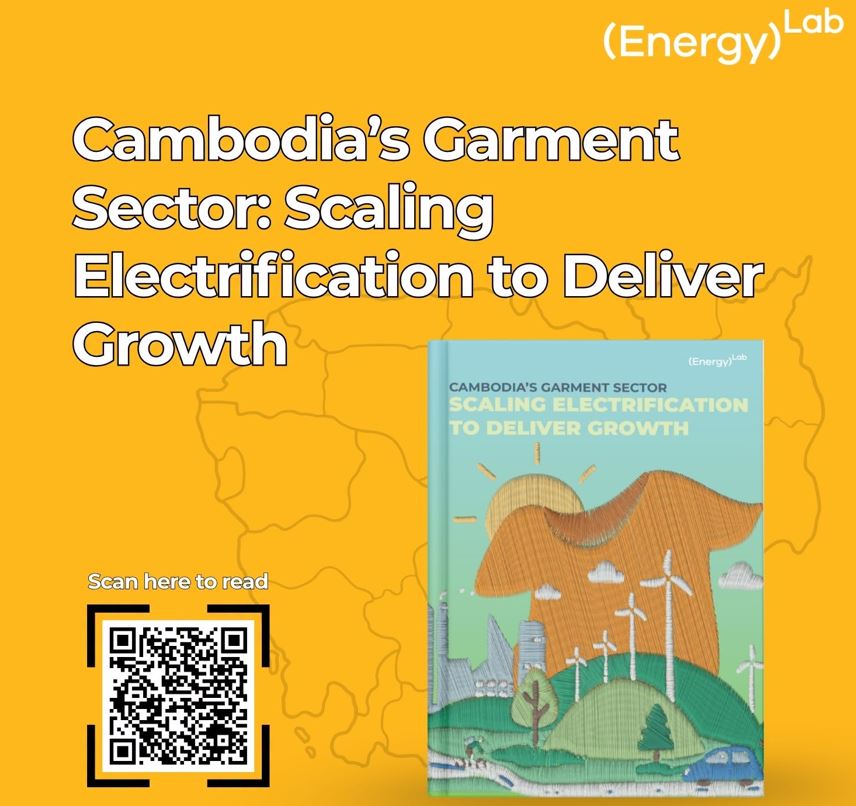
The report, Cambodia’s Garment Sector: Scaling Electrification to Deliver Growth, highlights both the opportunities and challenges facing one of Cambodia’s most important industries as global apparel companies move to meet ambitious climate commitments.
According to EnergyLab Asia, Cambodia’s garment, footwear and travel goods (GFT) sector generated $13.74 billion in export revenue in 2024, accounting for approximately 52 per cent of the country’s export GDP while employing nearly one million workers, the majority of whom are women.
However, the report argues that the industry’s long-term competitiveness can no longer rely solely on low labour costs and established compliance standards. Instead, access to affordable and verifiable renewable energy is emerging as a critical factor influencing where global brands place future manufacturing orders.
Global Brands Raising Sustainability Requirements
EnergyLab Asia notes that many of the world’s largest apparel brands have committed to major emissions reduction targets through initiatives including the United Nations Fashion Charter, the Science Based Targets initiative (SBTi) and RE100.
Several international brands have pledged to source 100 per cent renewable electricity by 2030 and are increasingly requiring suppliers to demonstrate measurable progress toward decarbonisation.

The report states that factories unable to verify renewable energy usage could face growing risks as international buyers seek suppliers capable of supporting their climate commitments.
“Factories that cannot produce using verified renewable energy will see orders migrate,” the report states.
EnergyLab Asia argues that this shift presents both a challenge and an opportunity for Cambodia. While the country faces growing pressure to modernise its energy systems, it also has the potential to differentiate itself as a renewable-powered manufacturing hub.
Electrification Seen As Key Pathway
A major focus of the report is Cambodia’s continued reliance on biomass, particularly wood-based fuels, for thermal energy used in garment production processes such as pressing, dyeing and finishing.
While wood has historically provided manufacturers with a low-cost energy source, the report warns that growing sustainability scrutiny and traceability requirements are making biomass increasingly difficult to justify within global supply chains.
EnergyLab Asia argues that electrification represents the most credible pathway forward.
“Cambodia has one of the cleanest electricity grids in Southeast Asia and rapidly growing solar capacity. With the right policy signals, the garment sector can electrify, and lead the world in decarbonisation.” said Dean Rizzetti, Regional Director – Energy Policy at EnergyLab Asia.
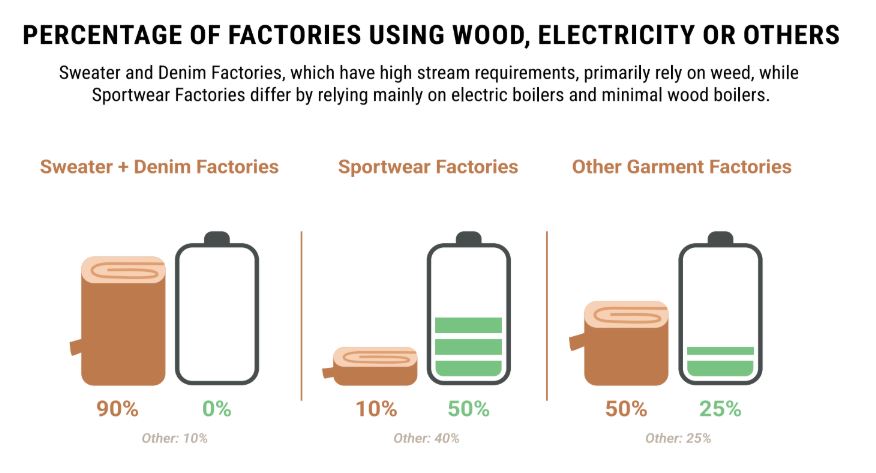
The organisation believes Cambodia could become one of the world’s first near-fully electrified garment manufacturing sectors if factories replace biomass boilers with electric alternatives powered by renewable electricity.
According to the report, a transition toward electric systems would not only help reduce emissions and deforestation risks but would also provide manufacturers with clearer and more verifiable sustainability credentials.
The report further notes that electrification would allow factories to demonstrate renewable energy sourcing through recognised certification mechanisms, helping satisfy international buyer requirements.
Expanding Value-Added Manufacturing
Beyond protecting existing export markets, EnergyLab Asia believes renewable energy could help support Cambodia’s ambitions to move further up the manufacturing value chain.
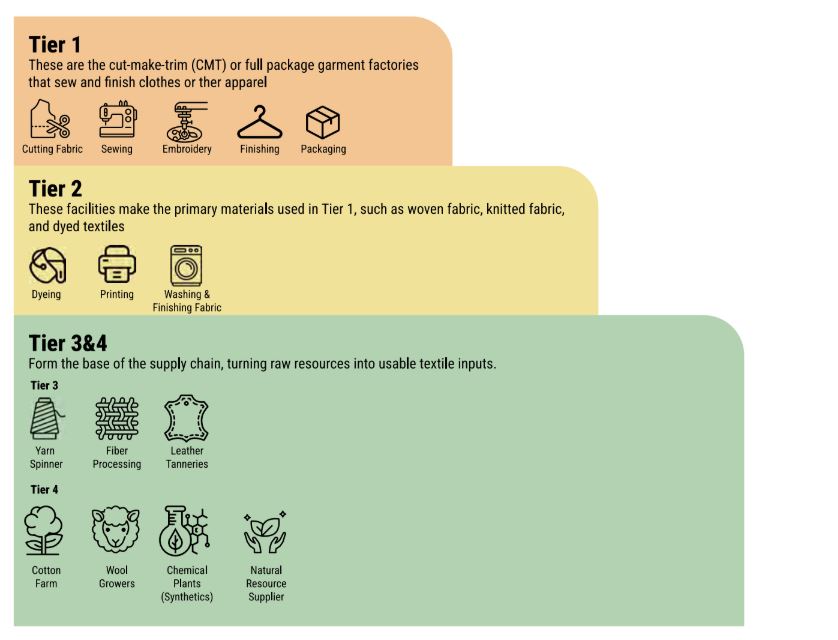
The report highlights significant opportunities to expand Tier 2 textile manufacturing, including fabric weaving, knitting and dyeing operations that currently remain limited within Cambodia.
Most raw materials used by Cambodia’s garment sector continue to be imported, particularly from China and Vietnam. Expanding domestic textile production could increase local value addition, shorten supply chains, reduce transport costs and improve responsiveness to global fashion trends.
However, EnergyLab Asia cautions that Tier 2 manufacturing facilities consume significantly more energy than traditional garment assembly operations, making future energy policy reforms increasingly important.
The report concludes that Cambodia’s garment sector remains well positioned to support economic growth as the country prepares for graduation from Least Developed Country (LDC) status. However, maintaining that momentum will require rapid progress on renewable energy access, electrification and policies that allow manufacturers to meet evolving international sustainability expectations.
“Maximising the potential of clean energy could directly protect Tier 1, and support Tier 2 production, moving Cambodia up the garment value chain, and continue to anchor the garment sector to the national economy for decades.” said Natharoun Ngo Son, EnergyLab Asia Regional Director – Energy & Economics.
EnergyLab Asia recommends continued development of renewable energy certificate systems, expanded rooftop solar opportunities and the future introduction of Corporate Power Purchase Agreements (C-PPAs) to help factories secure long-term access to certified renewable electricity.
“The garment sector can become a renewable-powered manufacturing hub,” the report concludes, but warns that immediate action is needed to ensure Cambodia remains competitive in an increasingly green global marketplace.