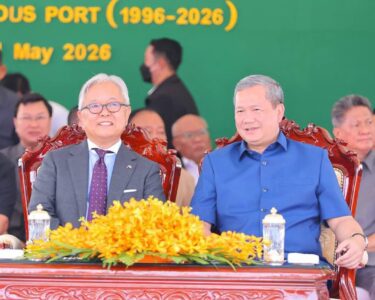

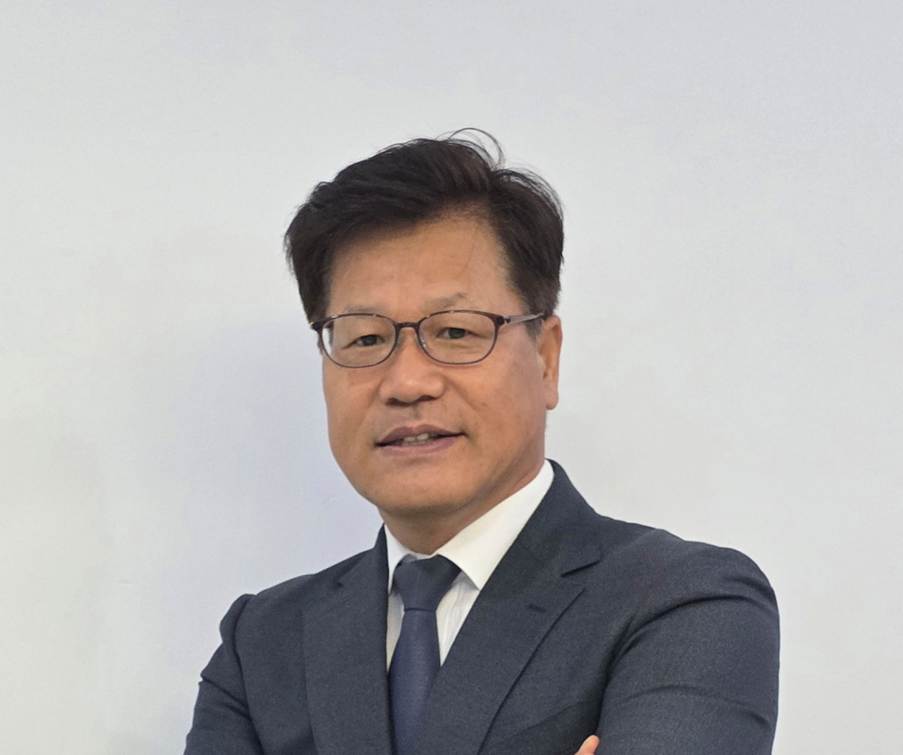
By Kim Seongsu
Cambodia’s economy is approaching an important turning point. The United Nations has decided that Cambodia will graduate from Least Developed Country (LDC) status in December 2029. For those of us who have long been accustomed to the image of Cambodia as one of the world’s least developed countries, this is a highly symbolic change.
However, from the perspective of someone running a business on the ground, LDC graduation is not simply about changing the country’s label. It means that the very way businesses compete in Cambodia will have to change.
First, it should be made clear that Cambodia’s graduation from LDC status is not bad news. On the contrary, it represents international recognition of the economic and social progress Cambodia has achieved over the past two decades. Cambodia met the criteria for LDC graduation in both 2021 and 2024 and has now entered the preparation period ahead of its scheduled graduation in 2029.
The real question is: How will Cambodia compete after graduation?
For many years, Cambodia has expanded its export industries by taking advantage of international support measures available to LDCs, including preferential tariffs and more flexible rules of origin. Labour-intensive manufacturing sectors, particularly garments, footwear and travel goods, have benefited significantly from these arrangements.
Following LDC graduation, this environment will gradually change. In particular, LDC-specific trade preferences that Cambodia has relied on in the European market, such as the Everything But Arms (EBA) scheme, will change after a transitional period following graduation. If Cambodia moves toward a new GSP or GSP+ framework, businesses will need to strengthen their capacity to comply not only with tariff requirements but also with rules of origin and increasingly demanding environmental, labour and supply-chain standards.
A policy report released in June by Cambodia’s Ministry of Labour and Vocational Training and the International Labour Organization (ILO) illustrates just how broadly these changes could affect the economy.
Under a hypothetical “full-shock” scenario, in which the estimated trade losses resulting from LDC graduation are transmitted throughout the economy without any mitigating measures, the report estimates that economic activity and production could each decline by around 10.4%, factor income by 9.4%, enterprise income by 8.4%, and household income by 8.5%. Around 11% of employment could also be affected.
Of course, this does not mean that Cambodia’s economy will actually contract by more than 10% after 2029. The figures come from a short-term shock simulation that does not take into account price adjustments, business responses, productivity improvements or market diversification. Rather, the message behind these figures is clear.
If Cambodia is not prepared, the impact will not be confined to exporters alone.
A decline in export orders would not affect factories only. The effects would spread to transport and logistics, wholesale and retail trade, finance, services and agriculture, and would eventually feed back into the domestic economy through lower employment and household incomes.
Employment deserves particular attention. According to the report, among the workers potentially affected, 52% are self-employed, 53% are women, 68% work in the informal sector, and as many as 86% are low-skilled workers. This is why LDC graduation should be understood not simply as a change in trade policy, but as a broader structural transition affecting Cambodia’s labour market and society as a whole.
So, what should Korean companies operating in Cambodia do to prepare?
Above all, I believe they must make the transition from “companies that benefit from preferential treatment” to “companies that possess genuine competitiveness.”
First, strengthen competitiveness through rules of origin
In the future, simply producing the final product in Cambodia may no longer be enough. Where raw materials and intermediate goods are sourced, and how much value is actually added within Cambodia, will become increasingly important.
In the textile and garment sector, for example, Cambodia needs to expand its upstream and downstream value chains so that more processes—including fabric production, dyeing, processing and packaging—can take place domestically.
This also presents a new opportunity for Korean businesses. Until now, Korean investment in Cambodia has often been viewed primarily in terms of finished-product manufacturing. Going forward, Korean companies should broaden their perspective to encompass the entire industrial ecosystem, including materials and components, machinery and equipment, logistics, energy and quality management.
Second, improve productivity
An economic model based primarily on low labour costs and preferential tariffs cannot remain competitive indefinitely. Businesses must improve productivity through automation, digitalisation, greater energy efficiency, stronger quality management and logistics innovation.
Global buyers are also imposing increasingly stringent requirements regarding carbon emissions, supply-chain traceability and labour conditions. For this reason, the green transition and digital transition should not be viewed merely as additional costs, but as investments necessary to maintain access to global markets.
Third, invest in people
If Cambodia is to move to the next stage of industrial development, it will need more than basic production workers. It will require skilled personnel capable of operating and maintaining machinery, managing quality, handling logistics and digital technologies, and serving as middle managers.
If Korean companies actively cooperate with vocational training institutions and universities to develop local talent, this will not only contribute to Cambodia’s economic development but also represent one of the most practical investments they can make in their own long-term competitiveness.
Fourth, diversify markets
Graduating from LDC status does not mean that Cambodia will lose preferential access to every market at the same time.
In particular, Cambodia and Korea have the Korea-Cambodia Free Trade Agreement (CKFTA), while Cambodia is also a party to the Regional Comprehensive Economic Partnership (RCEP) and other trade agreements. Market-access conditions under these agreements will continue to operate under separate frameworks even after Cambodia graduates from LDC status.
Companies should therefore design their supply chains and sales strategies more strategically, looking beyond traditional export markets such as Europe and the United States to Korea, China, ASEAN and the wider RCEP market.
This is precisely where I see opportunities for Korean businesses
Korean companies have participated in Cambodia’s economic development from an early stage, operating across a wide range of sectors including finance, construction, garments and manufacturing, agriculture, distribution and services.
Not all Korean businesses came to Cambodia simply because production costs were low. Companies that have operated here for many years possess a significant asset: a deep understanding of Cambodia’s institutions, markets, culture and human networks.
Now is the time to take that experience to the next level.
If Korean businesses continue to view Cambodia simply as a “low-cost production base,” LDC graduation will undoubtedly become a burden. But the picture changes if Cambodia is seen as a production, consumer and investment market connecting ASEAN and RCEP, and if companies are prepared to invest in local value chains, human resources and technology.
The role of government will also be critical. The Cambodian government needs to reduce structural business costs, including logistics and electricity costs, while making customs clearance and administrative procedures more transparent and efficient. At the same time, it must prepare for new market-access frameworks such as GSP+ and establish labour, environmental and rules-of-origin systems that meet international standards.
The Korean government and Korean business organisations should also provide stronger support to help Korean companies adapt to the changing trade environment, particularly in areas such as rules-of-origin consulting, FTA utilisation, workforce development, digital and green transformation, and supply-chain development.
Small and medium-sized enterprises deserve particular attention, as they often lack the specialised personnel and information needed to respond to new regulations compared with larger corporations.
2029 is still more than three years away
From a business perspective, however, that is not a long time. Building factories, restructuring supply chains and developing skilled workers all require years. Preparation therefore cannot begin in 2029. It must begin now.
Cambodia’s graduation from LDC status signals that its economy is moving from an era shaped by protection and preferential treatment toward one driven increasingly by competition and productivity.
There will undoubtedly be difficulties for some industries and businesses during this transition. But wherever industrial structures change, new business opportunities inevitably emerge.
Over the past several decades, economic cooperation between Korea and Cambodia has largely been about Korean companies participating in Cambodia’s growth. The next stage of cooperation should be different.
Korean businesses should become partners in building Cambodia’s next stage of growth.
Rather than fearing LDC graduation, we should use it as an opportunity to strengthen both Cambodia’s economy and the competitiveness of Korean businesses operating here. That, I believe, is the path toward ensuring that Korean companies remain competitive in Cambodia beyond 2029 while taking economic cooperation between our two countries to the next level.
The author, Kim Seongsu, serves as Chairman of the Korea Chamber of Commerce in Cambodia (KOCHAM Cambodia) and President of the Korean Committee in Cambodia. This column reflects solely the personal views of the author and does not represent the official position of any institution or organisation with which he is affiliated or which he represents.