

Cambodia Investment Review
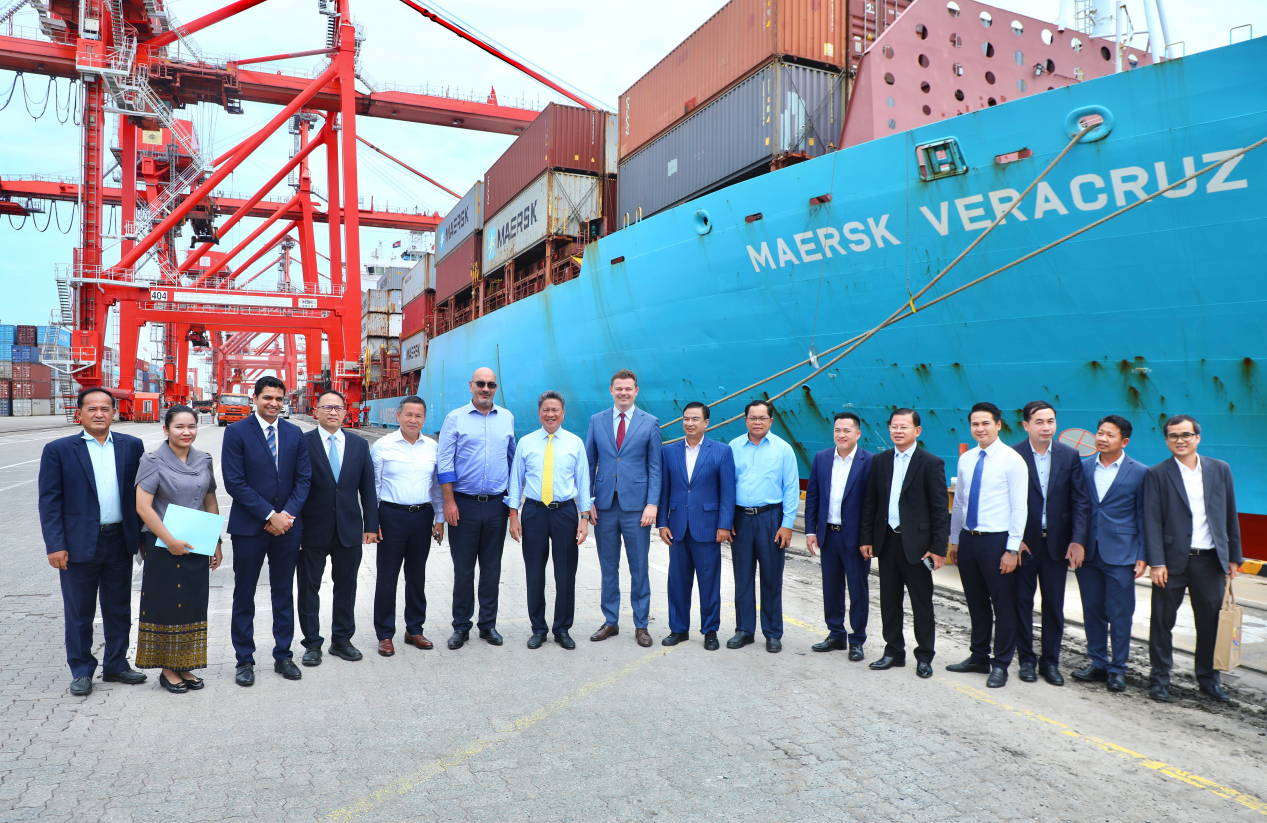
The European Chamber of Commerce in Cambodia (EuroCham) and the Council for the Development of Cambodia (CDC) have reaffirmed efforts to improve Cambodia’s logistics competitiveness following a joint site visit to the Sihanoukville Autonomous Port (PAS), with both sides highlighting the introduction of 24/7 customs operations as a key outcome of ongoing public-private dialogue.
The July 7 visit brought together Deputy Prime Minister and First Vice-Chairman of the CDC H.E. Sun Chanthol, EuroCham Cambodia Chairperson Tassilo Brinzer, senior officials from the Sihanoukville Autonomous Port, the General Department of Customs and Excise (GDCE), the Ministry of Public Works and Transport, representatives from the Phnom Penh–Sihanoukville Expressway, and 12 EuroCham member companies from the Transport and Logistics Committee.
The delegation reviewed ongoing reforms aimed at improving port efficiency, reducing logistics costs and strengthening multimodal transport connections between Cambodia’s largest deep-sea port and the rest of the country.
24/7 Customs Operations Now in Place
A key development highlighted during the visit was the implementation of round-the-clock customs operations at the Sihanoukville Autonomous Port.
Under the new arrangement, the General Department of Customs and Excise now operates 24 hours a day, allowing cargo trucks to arrive and depart at any time rather than being limited to traditional operating hours.
The reform is expected to ease congestion during peak periods, particularly between Thursday and Sunday, while providing transport operators with greater flexibility to move cargo during overnight and off-peak periods.
EuroCham described the measure as a practical example of how sustained dialogue between government agencies and the private sector can translate into operational improvements for Cambodia’s supply chain.
Brinzer said Cambodia’s port infrastructure has expanded rapidly alongside growing trade volumes, adding that continued cooperation between government and industry will be important to ensure the country remains competitive in regional logistics.
He said lowering logistics costs would benefit transportation companies, manufacturers and international customers while helping Cambodia compete with neighbouring markets.
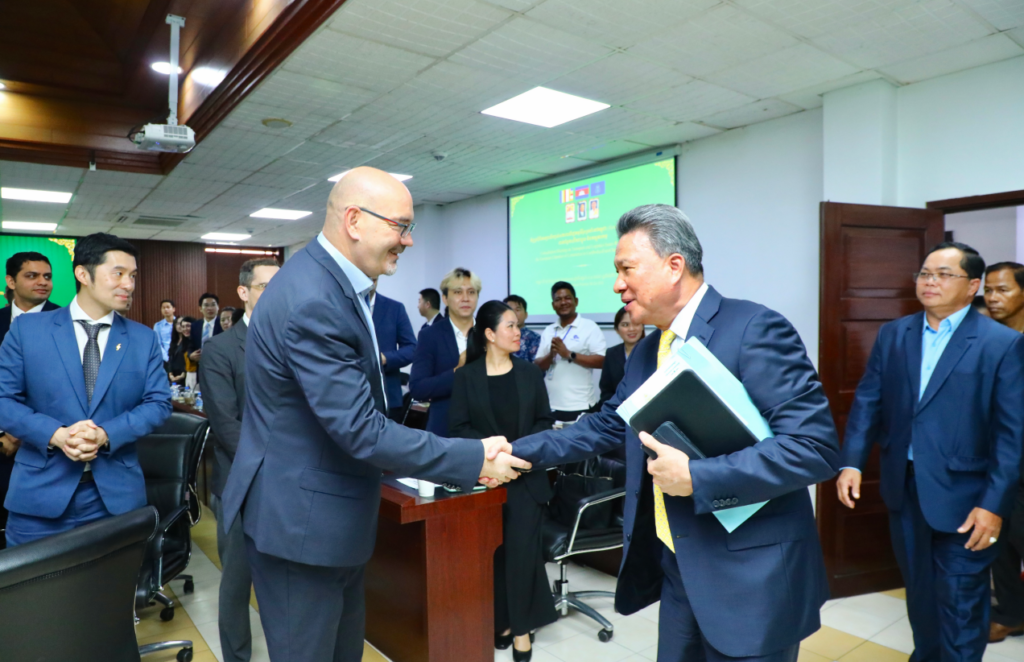
Building on Long-Term Reform Discussions
The visit forms part of a broader series of discussions between EuroCham and the Royal Government of Cambodia on improving the country’s logistics sector.
Many of the recommendations have previously been included in EuroCham’s White Book and were further discussed during the Conference on Delivering Logistics-Led Growth, jointly organised by EuroCham and the CDC in April 2026.
Logistics reforms have also featured prominently during the Cambodia-Europe Public-Private Sector Dialogue (PPSD), which continues to serve as a platform for discussions between European investors and Cambodian authorities on improving the business environment.
Digitalisation and Port Efficiency
During the visit, PAS also presented updates on PASNet, its digital platform introduced in 2023 to improve communication between the port, cargo owners, trucking companies and other logistics operators.
EuroCham said further integration of digital systems could allow fleet operators to reserve truck entry times in advance, helping distribute vehicle arrivals more evenly throughout the day and reducing congestion at the port gates.
The chamber said it would continue encouraging logistics companies to adopt the platform as part of broader digitalisation efforts across Cambodia’s transport sector.
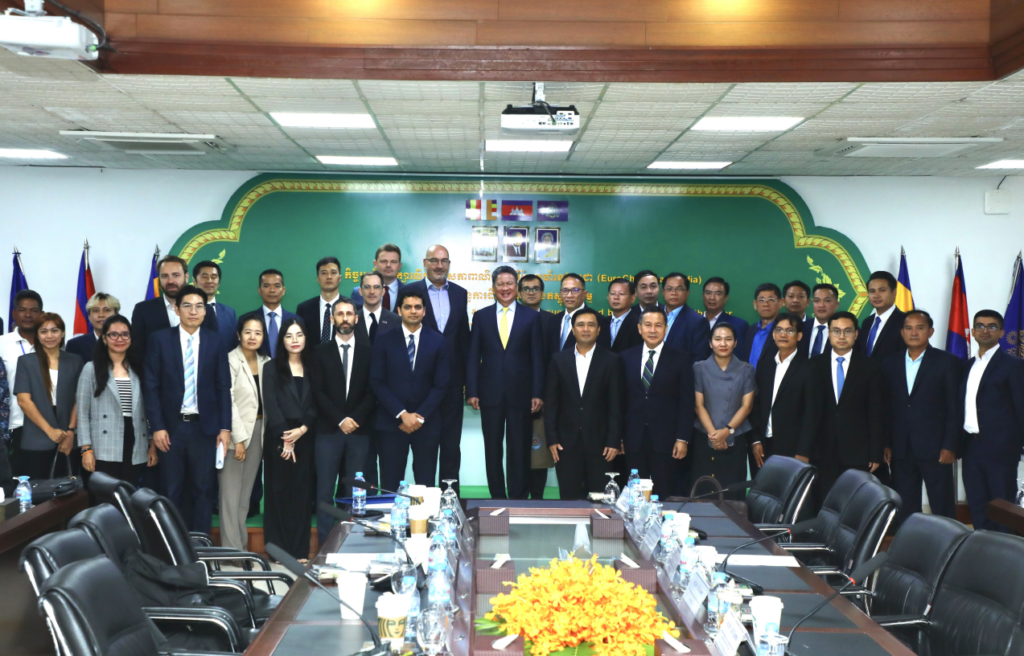
Lowering Logistics Costs
Discussions also focused on broader opportunities to reduce transport costs across Cambodia’s logistics chain, including administrative procedures, road transport efficiency and increased use of both highway and rail connections linking Phnom Penh with Sihanoukville.
Rutger Heijsteeg, Vice-Chairperson of EuroCham’s Transport & Logistics Committee and Managing Director of Maersk Cambodia, said the discussions provided useful insights into the port’s ongoing digital improvements while confirming the introduction of 24-hour customs operations, bringing Sihanoukville more closely in line with other major regional ports.
Meanwhile, Kaushall Rohilla, Vice-Chairperson of EuroCham’s Transport and Logistics Committee and General Manager of CMA CGM Cambodia, said benchmarking Cambodia’s logistics costs against regional competitors would help identify practical reforms to improve efficiency, reduce overall trade costs and strengthen the country’s attractiveness for investment.
The latest discussions reflect Cambodia’s broader ambition to position itself as a regional logistics hub by improving trade infrastructure, reducing supply chain costs and supporting export-led economic growth.


