

Cambodia Investment Review
Cambodia’s automotive industry is expanding rapidly, but industry leaders are warning that the country’s current tax structure risks undermining more than US$217 million in local manufacturing investment by making imported electric vehicles significantly cheaper than assembling them domestically.
Speaking at EuroCham Cambodia’s Automotive Sector Outlook for 2026 and Beyond breakfast in Phnom Penh on June 30, the European business community called for reforms to vehicle taxation, stronger market regulation and greater policy certainty as Cambodia’s vehicle market enters a new phase of growth.
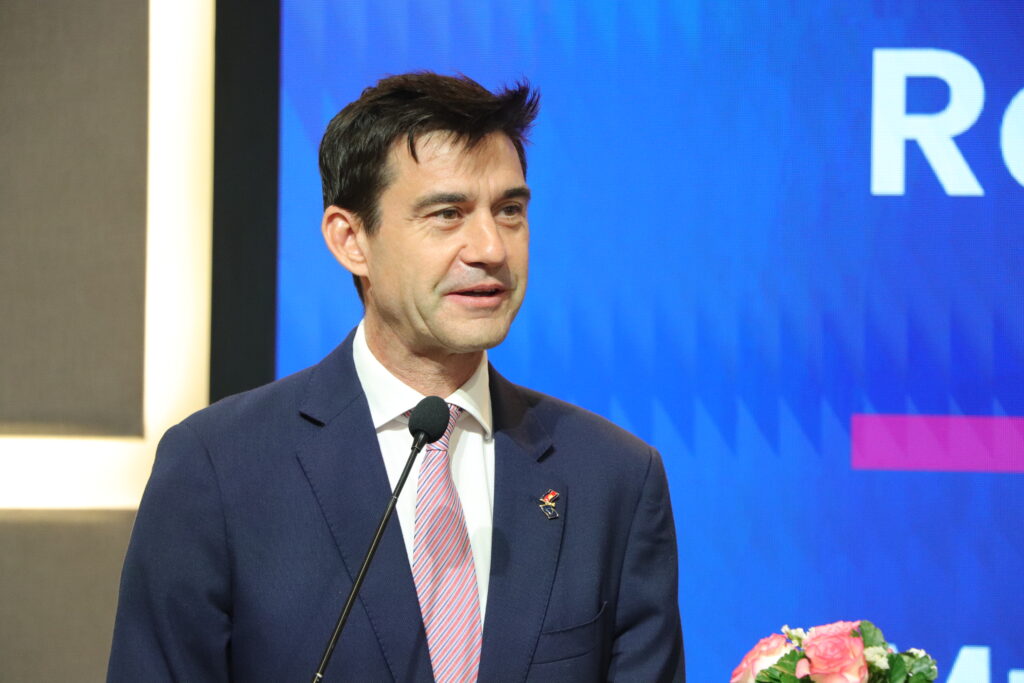
The event, held at Novotel Phnom Penh BKK1, brought together government officials, automotive manufacturers, investors and industry representatives to examine the sector’s outlook. Opening remarks were delivered by Martin Brisson, Executive Director of EuroCham Cambodia, and Bryan Fonari, Head of Cooperation at the Delegation of the European Union to the Kingdom of Cambodia.
Cambodia’s Automotive Market Continues to Expand
Makara Chhoeurn, Chairperson of EuroCham Cambodia’s Automotive Committee and Project Manager at RMA Cambodia, said Cambodia sold approximately 82,000 vehicles across around 100 represented brands in 2025, while passenger vehicle sales increased 35% year-on-year during the first five months of 2026.
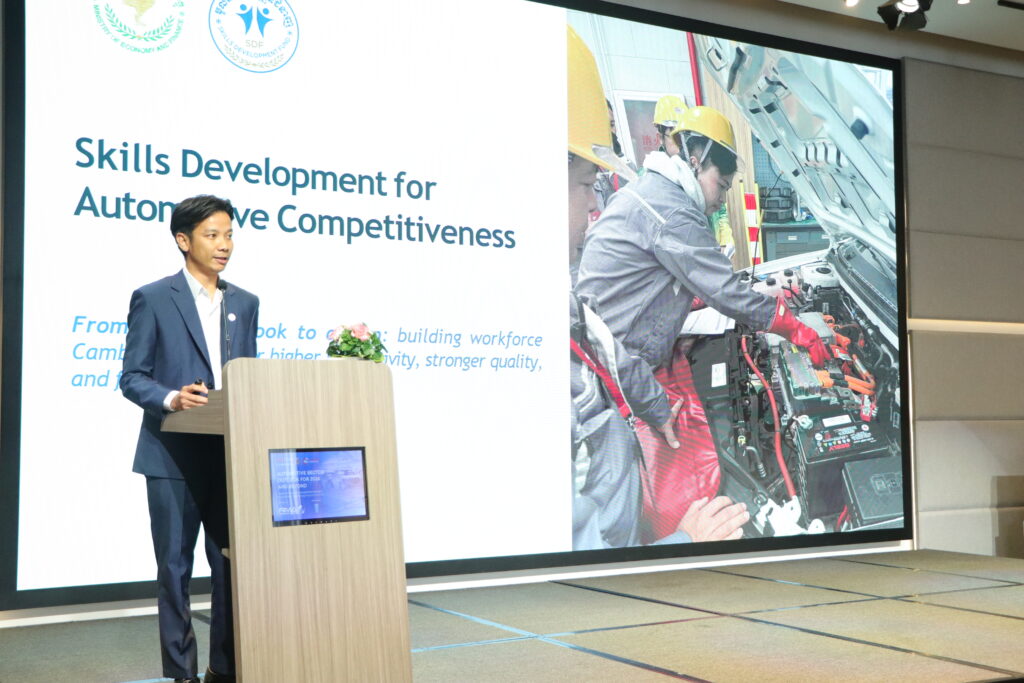
He said new vehicles now account for 66% of the market, compared with just 28% in 2020, with that share expected to reach between 80% and 90% by 2028 as consumers increasingly shift away from used imports.
The market’s expansion has also attracted US$217.7 million in investment into 13 vehicle assembly plants since 2011, including recent investments by BYD and TH Automotive Cambodia, highlighting growing confidence in Cambodia’s potential as a regional automotive manufacturing base.
Industry Says Current EV Tax Policy Discourages Local Manufacturing
Despite growing investment in assembly facilities, Chhoeurn argued that Cambodia’s current tax framework is discouraging manufacturers from producing battery electric vehicles (BEVs) locally.
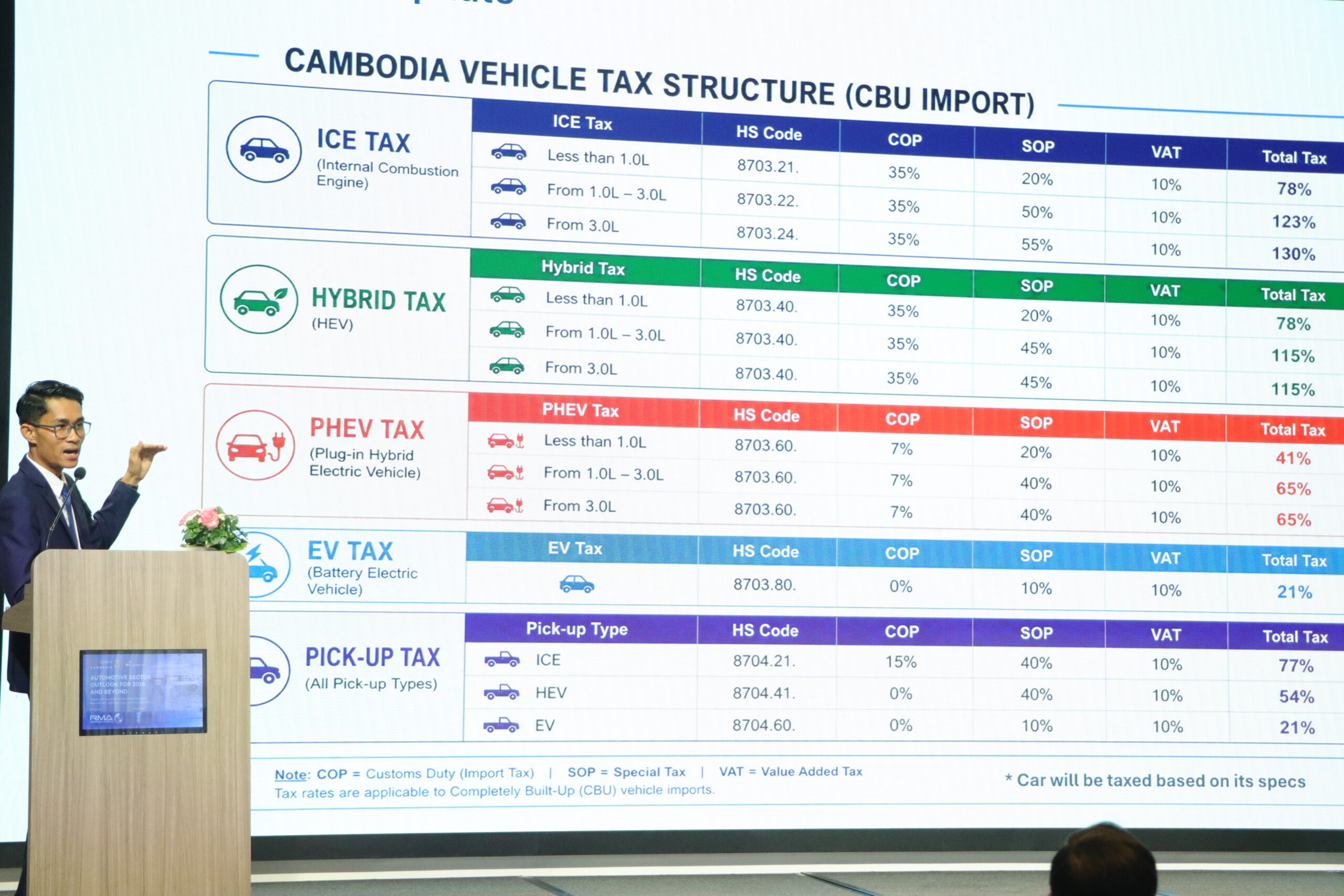
According to figures presented during the forum, importing a fully built battery electric vehicle carries a total tax burden of around 21%, while importing a fully built internal combustion engine vehicle can attract taxes of up to 130%.
He estimated that assembling a BEV in Cambodia currently costs roughly US$4,000 more per vehicle than importing a finished electric vehicle, although the exact cost difference varies depending on the value of the vehicle.
As a result, despite Cambodia’s growing number of assembly plants, no manufacturer is currently assembling BEVs domestically.
Chhoeurn said Cambodia’s vehicle market continues to expand but remains affected by grey-market imports, low-priced vehicle imports and online vehicle sales operating outside authorised distributor networks.
He warned that unless the government reviews and rebalances the current vehicle tax and policy framework, local assembly plants may struggle to compete with imported electric vehicles, placing both existing operations and future manufacturing investment at risk.
Beyond taxation, EuroCham’s Automotive Committee also called for greater policy predictability, a clearer licensing framework for assembly plants, stronger protection for authorised distributors and tighter enforcement against grey-market imports, unlicensed dealers and weak warranty and after-sales standards.
Skills Development Positioned as Competitive Advantage
The forum also highlighted Cambodia’s efforts to build the skilled workforce needed to support a growing automotive manufacturing sector.
Chantheara Lay, Engagement Team Leader at the Skills Development Fund (SDF), said the fund has supported US$2.19 million in automotive training for 2,799 trainees since 2018, covering approximately half of participating companies’ training costs. Female participation has reached 23%.
The SDF has also launched “Training the Trainer” programmes for Cambodian instructors, including electric vehicle training conducted in China, while identifying five priority areas for future workforce development: EV readiness, diagnostics, maintenance, productivity and trainer development.
Eligible companies can also claim tax deductions of up to 200% on qualifying training expenditure.
Ky Sokkim, Chief Executive Officer of the Skills Development Fund, said industry-led workforce development would be essential if Cambodia is to build a competitive automotive manufacturing sector.
Building a Long-Term Automotive Ecosystem
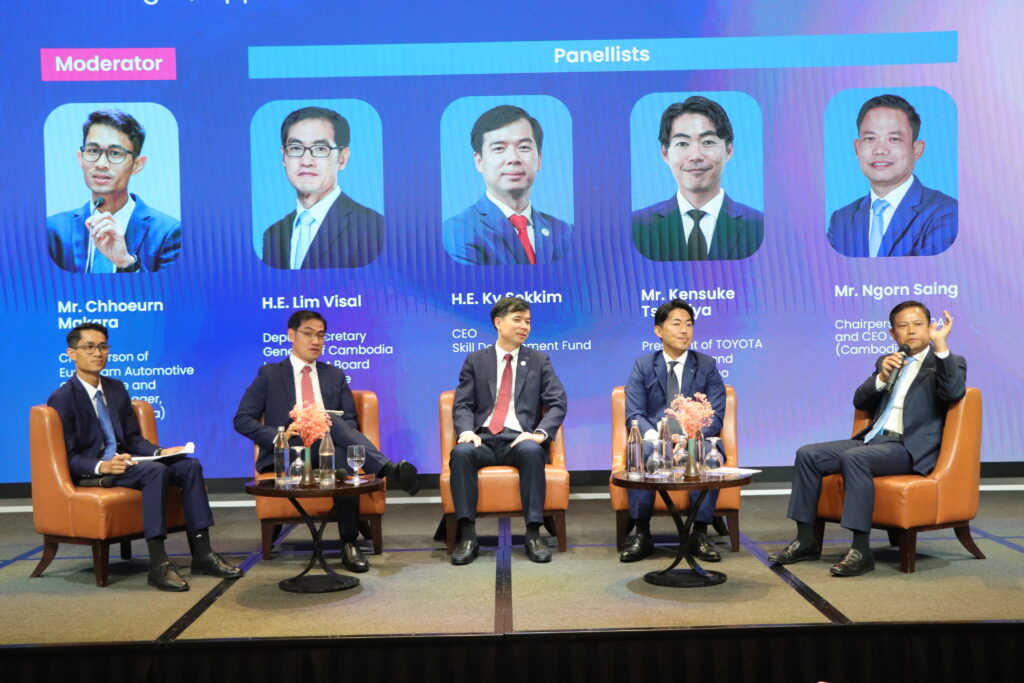
The event concluded with a panel discussion moderated by Chhoeurn featuring H.E. Lim Visal, Deputy Secretary General of the Cambodia Investment Board (CDC); H.E. Ky Sokkim, Chief Executive Officer of the Skills Development Fund; Kensuke Tsuchiya, President of Toyota Cambodia and Toyota Tsusho Manufacturing (Cambodia); and Ngorn Saing, Chairperson of the Cambodia Automotive Industry Federation (CAIF) and Chief Executive Officer of RMA Cambodia.
Tsuchiya said Cambodia’s automotive market is entering an important stage of development, supported by rising incomes, a young population and increasing demand for personal mobility. However, he noted that sustained industry growth would depend on establishing a balanced policy framework capable of encouraging local assembly, developing skilled workers, attracting component manufacturers and ensuring fair competition across the sector.
Audience questions during the discussion focused on strengthening enforcement against grey-market imports, improving vehicle safety standards and the future pace of electric vehicle adoption in Cambodia.
As Cambodia seeks to position itself as a regional automotive manufacturing hub, industry representatives argued that aligning tax policy with the country’s industrial ambitions will be critical to ensuring recent investment translates into long-term production, employment and supply chain development.


