
Cambodia Investment Review
Cambodia’s central bank has released its first official framework defining which investments and loans can be classified as environmentally sustainable, marking a significant step in the country’s efforts to build a credible green finance market and attract climate-focused capital.
The National Bank of Cambodia (NBC) this month published the Sustainable Finance Taxonomy for Cambodian Banking Sector – Version 1, a 110-page document that establishes clear criteria for what qualifies as “green” finance in the Kingdom. The framework is designed primarily for banks, but NBC said its use is encouraged across the wider financial sector, including investors, companies and policymakers.
The taxonomy functions as an official rulebook that gives financial institutions a common language when assessing environmentally sustainable projects. It aims to reduce confusion, improve transparency, and help prevent “greenwashing” — where environmental claims are exaggerated or misleading.
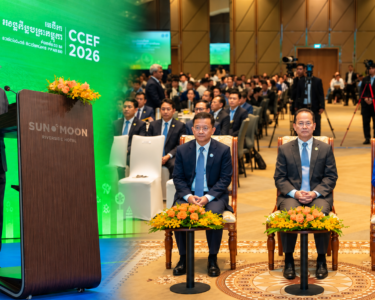
NBC Governor Chea Serey described the framework as a landmark development that places the financial sector at the center of Cambodia’s transition toward sustainable growth and climate resilience. In the foreword, she said the taxonomy is intended to align financial flows with environmental and social objectives while supporting the country’s goal of carbon neutrality by 2050.
Focus on Three Core Sectors
The first version of the framework focuses on sectors seen as having strong potential to lower emissions and attract private capital: energy, transport, and buildings & construction. These sectors were selected based on their greenhouse gas reduction potential, economic importance, and investment needs.
Eligible activities include solar power, wind energy, hydropower, battery storage, electric mobility, low-emission transport systems, new green buildings, and renovation of existing buildings to improve efficiency.
NBC said future editions of the taxonomy are expected to expand into additional sectors and incorporate climate adaptation and resilience criteria.
Traffic Light System for Finance
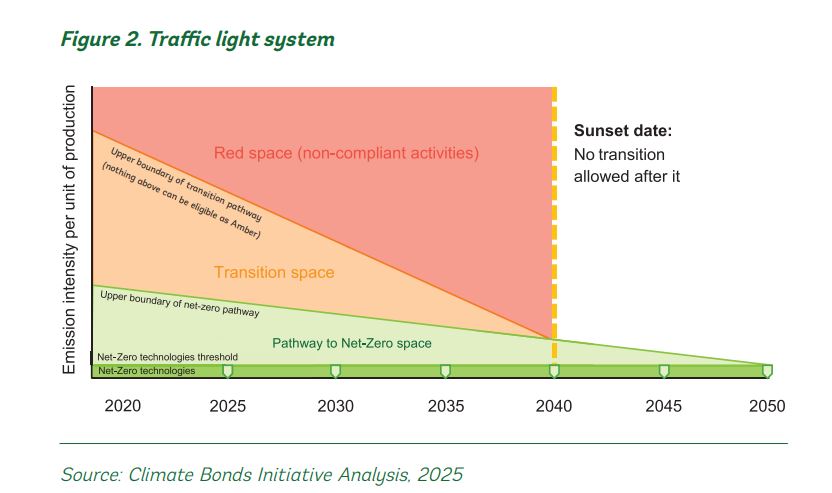
One of the central features of the framework is a traffic-light classification model:
- Green: Activities already aligned with low-carbon or near net-zero goals
- Amber: Transitional activities that reduce emissions but must improve over time
- Red: Ineligible activities inconsistent with Cambodia’s climate trajectory
Coal-fired power generation is cited as an example of red or stranded activity under the framework. Amber classifications are temporary and generally sunset by 2040.
Why It Matters for Cambodia
The release comes as Cambodia seeks to strengthen its position with international investors increasingly focused on ESG and sustainable finance standards.
A clear taxonomy can help domestic banks develop green lending products, support issuance of sustainability-linked debt or bonds, and provide foreign investors with greater confidence over how climate-related capital is being deployed.
The framework also aligns Cambodia more closely with regional developments such as the ASEAN Taxonomy for Sustainable Finance and similar systems in markets including Singapore, Australia and the European Union.
Investment Signal
For Cambodia’s economy, the launch sends a broader signal that financial regulation is evolving alongside global capital trends. As infrastructure, energy and real estate financing needs continue to rise, clearer standards around sustainable investment may become increasingly important in unlocking new sources of long-term funding.
While implementation will depend on how quickly lenders and corporates adopt the system, the inaugural taxonomy gives Cambodia its first formal benchmark for defining what truly counts as green finance.