
By Sokkong Kanchana
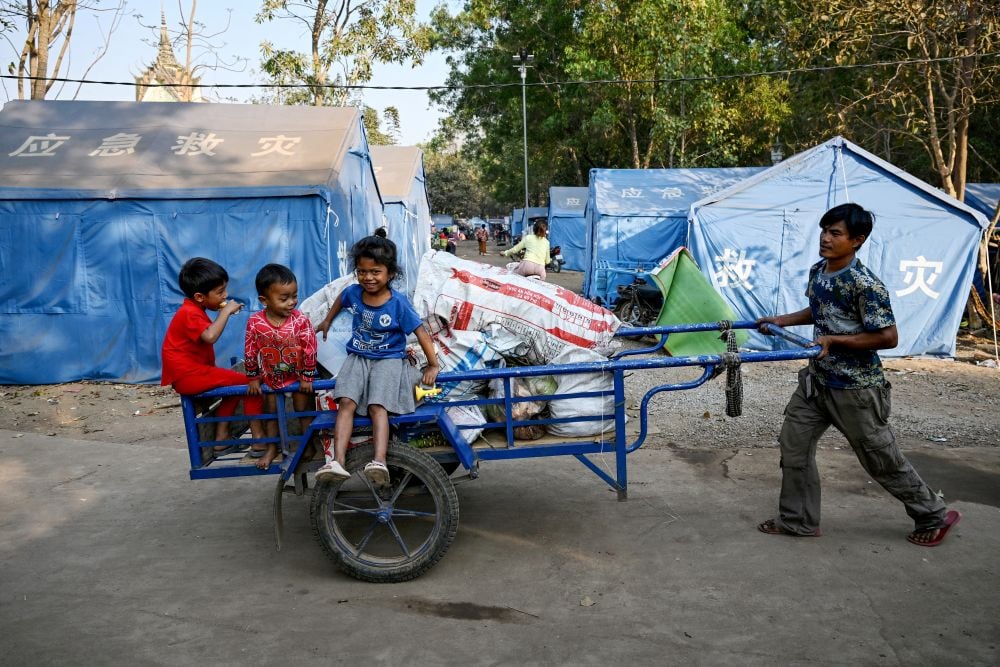
Before dawn breaks in many Cambodian villages, some children are already at work—lifting bricks, casting fishing nets, or walking busy streets to sell what they can. Their classrooms sit empty, not because they don’t value education, but because survival often comes first.
Child labor laws exist across the world to protect children’s safety and guarantee their right to education. Cambodia is no exception. Yet thousands of underage children continue to work instead of attending school.
According to analyses of economic activity and employment, about 7.1 percent of Cambodian children are engaged in labor, particularly in rural areas such as Mondulkiri (Kaoh Nheaek), Preah Vihear (Tbeng Mean Chey), Stung Treng (Sesan), Prey Veng (Me Sang), as well as in urban Phnom Penh.
This reality raises a difficult but necessary question: If child labor laws matter, why do children still choose work over school?
The truth is, for most working children, there is no real choice. Poverty, family pressure, inequality, and weak enforcement of the law leave them with few alternatives.
The Purpose of Child Labor Laws
Child labor laws are designed to protect children physically, mentally, and psychologically. At their core, these laws aim to eliminate all forms of child labor—especially work that is hazardous, exploitative, or disruptive to education.
International frameworks, like the UN Convention on the Rights of the Child emphasize that no child should be forced into labor that harms their health, development, or future. Education is not only a right, but a protective shield, one that is meant to keep children safe from exploitation and long-term harm.
Why Do Children Enter the Workforce?
Poverty remains the most powerful driver of child labor. In Cambodia, many families live day to day, where immediate income outweighs long-term aspirations. According to UNICEF, of the 3 million children in Cambodia 300,000 of them are out of school because work provides money for food, rent, and medical costs—needs that education cannot meet in the short term. Faced with hunger or debt, learning becomes a luxury they cannot afford.
The work these children take on is often physically exhausting and emotionally draining: brick kilns, night fishing, street vending, garbage collection, begging, and labor in rice fields.
These environments expose children to injury, long hours, and stress that can permanently affect their physical health and brain development. Without intervention, child labor does not simply interrupt education—it traps children in cycles of vulnerability that can last a lifetime.
Family Pressures and Hidden Burdens
In many Cambodian households, children become breadwinners not by choice, but by necessity. Parents may be unable to work due to disability, chronic illness, or mental health conditions linked to trauma, substance abuse, or prolonged economic hardship. When adults are incapacitated, responsibility quietly shifts to children.
In the early 2000s, extreme poverty pushed some families toward desperate and devastating decisions, including selling their own children to repay debts or survive financially. These cases, documented in investigative films and reports, reveal the harshest edges of inequality—where children are reduced to assets in moments of crisis.
Though less visible today, the pressures that drove such actions have not fully disappeared.
Inequality Inside the Classroom
For many disadvantaged children, school itself can be an unwelcoming place. Discrimination, bullying, and corporal punishment remain significant barriers. Children from poor backgrounds often face humiliation—both physical and emotional—that erodes their confidence and sense of belonging.
At the same time, many adolescents juggle both school and work. When they struggle academically or socially, peers who earn money can appear successful and independent. The promise of immediate income becomes seductive. Gradually, school feels less relevant, attendance drops, and work takes over—pulling children further from education and deeper into labor.
Weak Enforcement, Limited Accountability
Cambodia has ratified key international conventions setting minimum ages for work and prohibiting the worst forms of child labor. On paper, protections exist. In practice, enforcement remains inconsistent.
Investigations and prosecutions are rare, particularly in cases involving hazardous labor such as brick kilns or commercial exploitation. As a result, large numbers of children—especially in rural areas—continue to work in dangerous conditions. Older adolescents are particularly exposed, with many engaged in jobs that threaten their safety and long-term well-being. Laws without enforcement offer little protection to children who need it most.
What Has Been Done So Far
In recent years, the government has taken steps to address school dropout rates and child labor. National education campaigns aim to keep children in school and improve learning outcomes, emphasizing not just access to education, but completion and quality.
At the same time, partnerships with international organizations have strengthened social services and child protection systems. New training programs for social workers mark an important shift toward professional, standardized child protection. School feeding initiatives have also shown promise, helping reduce hunger while improving attendance and concentration—especially in poorer provinces.
These efforts matter. But progress remains uneven, and too many children are still slipping through the cracks.
The Way Forward
Regular education campaigns—led by schools, local leaders, and civil society—can help parents understand the long-term value of keeping children in school. Incentives such as food support or small stipends can encourage participation, particularly among the poorest families.
Social protection systems must become more accessible.
Equity cards have transformed access to healthcare and assistance for millions, yet hundreds of thousands of people remain excluded due to administrative barriers. Simplifying enrollment and expanding coverage would ease household financial pressure—reducing the need for children to work.
Child protection laws must be enforced without exception
Stronger inspections, real penalties, and accountability for officials who enable exploitation are essential. At the same time, expanding school feeding programs nationwide can make schools safer, more welcoming spaces—places children want to return to.
Child labor is not just a legal issue. It is a moral one
As long as children are forced to trade classrooms for construction sites or markets, the promise of equal opportunity remains unfulfilled. Ending child labor in Cambodia will require not only laws, but compassion, enforcement, and sustained investment in children’s futures—so that no child has to choose survival over schooling again.
Every child must be guaranteed full protection from violence, exploitation, and all forms of abuse or threat. The government and non-governmental organizations have a critical responsibility to enforce child labor laws rigorously. When these laws are applied effectively, the exploitation of child labor can be significantly reduced.
In April 2025, the Korea International Cooperation Agency (KOICA) and the World Food Programme launched a $10 million initiative to strengthen Cambodia’s national homegrown school feeding programme. The initiative has benefited 133,300 pre-primary and primary students across 428 schools in five provinces—Kampong Chhnang, Kampong Thom, Pursat, Oddar Meanchey, and Siem Reap.
In addition, the Ministry of Education, Youth and Sport should work closely with KOICA to expand this program to all public schools nationwide, including those in Phnom Penh. Such expansion would play a vital role in increasing school attendance, reducing dropout rates, and fostering a sense of belonging by encouraging children to see schools as safe and supportive environments.
Sokkong Kanchana is an undergraduate currently pursuing a bachelor’s degree in international relations from the Institute for International Studies and Public Policy. Her research interests lie in Cambodia’s political economy and development issues. This article was fist published in Cambodianess.