

Cambodia Investment Review
With 87 percent of Cambodian adults now using mobile internet, Cambodia’s next digital priority should be turning widespread connectivity and emerging 5G infrastructure into greater productivity, investment and economic value, according to the GSMA.
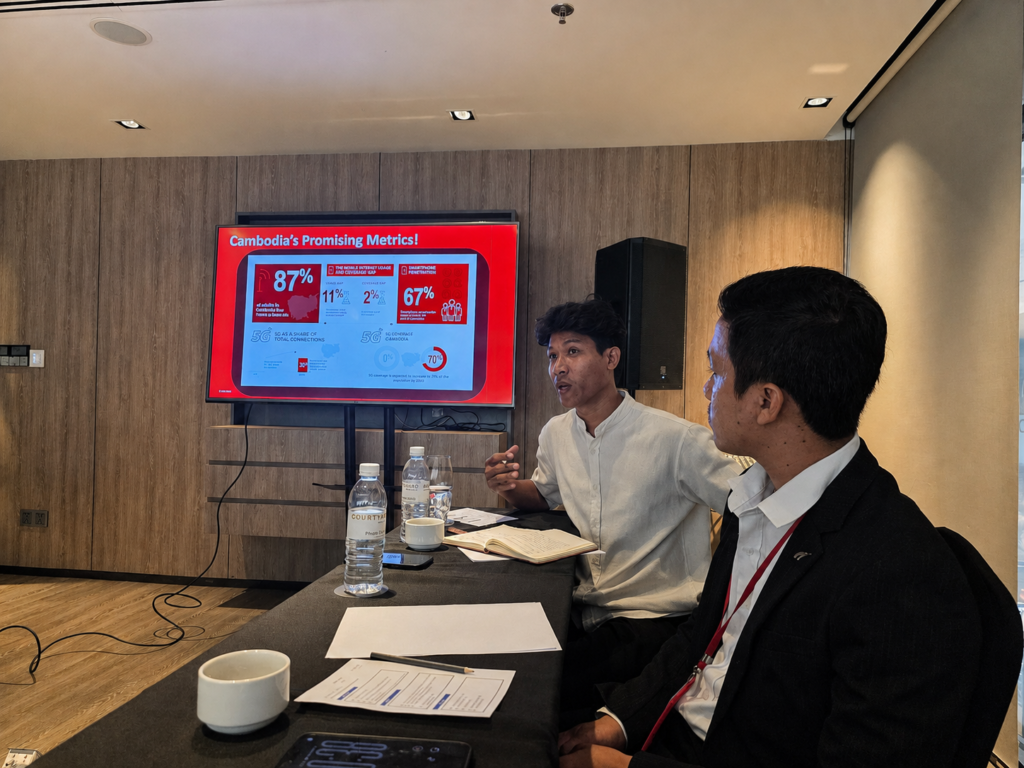
Julian Gorman, Head of Asia Pacific at GSMA, outlined the sector’s priorities during an industry briefing with Cambodian media and business stakeholders on August 21. Drawing on the Mobile Economy Asia Pacific 2026 report, he discussed the technologies, policies and investment conditions expected to shape Cambodia’s next stage of digital development.
The report estimates that mobile technologies and services generated approximately $1 trillion in economic value across Asia-Pacific in 2025, equivalent to 5.9 percent of regional GDP, while supporting around 18 million jobs. This contribution is projected to reach $1.4 trillion by 2030.
Economic Value Becomes the Central Priority
Cambodia has already established a strong connectivity foundation. GSMA data shows that 87 percent of adults use mobile internet, while only two percent of the population remains outside mobile internet coverage.
However, an 11 percent usage gap remains, meaning some people live within areas covered by mobile networks but do not actively use mobile internet. Device and data affordability, limited digital skills, online safety concerns and a lack of relevant services remain among the main barriers.
GSMA said the priority should now move beyond expanding coverage towards helping individuals, companies and government institutions make more productive use of connectivity.
For businesses, this means progressing from basic communications and digital payments to e-commerce, cloud computing, data services and artificial intelligence-enabled applications. Agriculture, tourism, logistics, manufacturing, healthcare and public services were identified as areas where technology could improve productivity and service delivery.
Affordable devices, practical digital skills and relevant Khmer-language applications and content will also be important for ensuring that rural communities and less digitally experienced users are not excluded.
5G Must Support Business Productivity
Cambodia commercially launched 5G services in January 2026 through Smart Axiata, Metfone and Cellcard. By June 8, the three operators had deployed 2,091 5G base stations, according to the Telecommunication Regulator of Cambodia.
GSMA projects that 5G will represent 39 percent of Cambodia’s mobile connections by 2030, with coverage reaching approximately 70 percent of the population.
The briefing stressed that faster speeds alone will not determine whether Cambodia’s 5G rollout is successful. The more important measurement will be whether companies and public institutions use the technology to lower costs, improve productivity and introduce better services.

This will require greater collaboration among operators, technology providers, educational institutions, businesses and government agencies to develop practical uses for 5G, AI, cloud computing and data services.
A predictable policy environment will also be necessary to maintain private investment. GSMA highlighted the importance of a transparent spectrum roadmap, investment-friendly licensing conditions, efficient infrastructure approvals and long-term regulatory certainty.
Digital Skills, Security and Trust
Digital trust was identified as another major priority for Cambodia. As financial transactions, government services and commercial activity increasingly move online, scams, fraud and cyber threats could weaken public confidence and discourage digital adoption.
GSMA said continued coordination among telecommunications operators, banks, technology platforms, regulators and law-enforcement agencies would be essential as online threats become more sophisticated and international.
Network resilience will be equally important. Mobile connectivity increasingly supports businesses, financial services, government platforms and emergency communications, meaning reliable networks—particularly in rural areas—are becoming an economic and public-service requirement.
Gorman said GSMA would continue supporting Cambodia by sharing international experience and industry practices covering spectrum policy, digital inclusion, digital trust, investment frameworks and emerging technologies.
The overall message to media and industry stakeholders was that Cambodia has largely addressed the first stage of digital transformation by extending network access across most of the country. Its next priorities must be improving digital skills, strengthening security, encouraging technology adoption and creating the regulatory conditions needed to convert connectivity into inclusive economic growth.