
By Kashif Hasan Khan
East Asia offers an important lesson for the global economy: countries do not need identical political systems or deeply integrated political institutions to build strong economic relationships.
Over several decades, the region has developed extensive trade and production networks despite differences in national priorities and development strategies.
Unlike Europe, where integration has involved substantial transfers of authority to supranational institutions, East Asia has followed a more flexible path. Governments have retained considerable policy autonomy while supporting industrial development, investment and trade.
Japan and Korea, the newly industrialised economies and China all contributed to this process at different stages, while the United States and European markets have provided important destinations for exports and links to investment and technology.
Yet economic integration raises a further question: How can participation in regional production networks translate into lasting improvements in living standards?
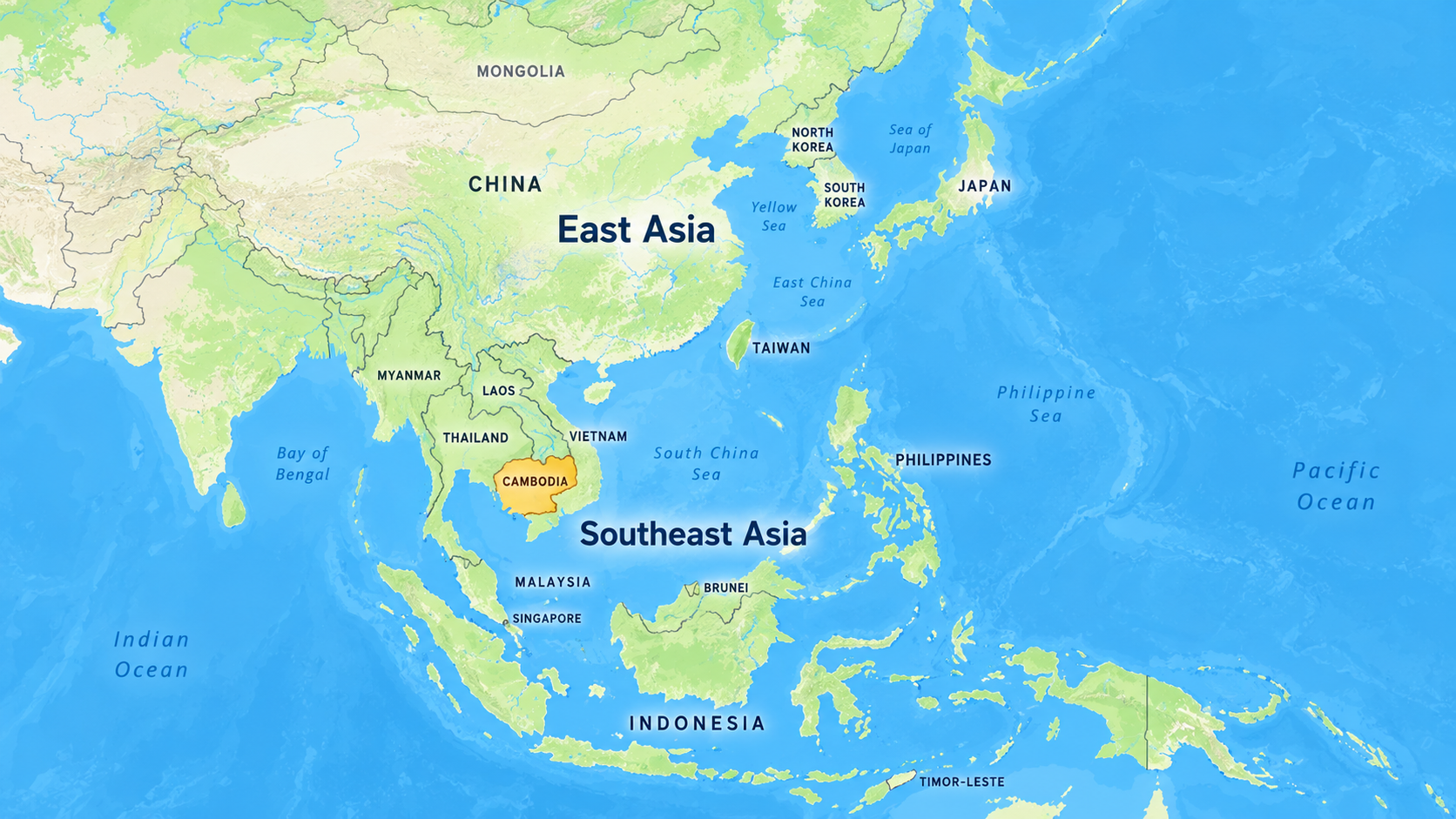
Cambodia provides a useful example. Its export industries have created employment and attracted investment but challenges involving labour conditions, domestic industrial capacity and the distribution of economic benefits demonstrate that integration alone does not guarantee inclusive development.
How East Asia Built Its Economic Order
East Asia’s transformation was not driven by markets alone. Government policies helped direct investment, develop industries and connect national economies to international markets.
Japan’s post-war industrial expansion established an early foundation for regional production networks. Under the Flying Geese Model, industrial activities and technologies spread to economies including South Korea, Singapore, Taiwan and other parts of Southeast Asia.
Read More:
South Korea’s subsequent industrial upgrading demonstrated how investment in education, technology and productive capacity could support a transition towards higher-value industries.
China’s opening-up strategy, initiated in 1979, reshaped the region by attracting foreign investment and becoming a major manufacturing centre.
Production became increasingly interconnected. One country might supply components, another assemble products, and another provide technology, logistics or access to consumer markets. These arrangements enabled economies to specialise while benefiting from regional trade.
Cambodia illustrates how this model can support development. Its garment, footwear and travel goods industries have connected local factories to international brands and consumer markets.
The World Bank has identified these export industries as important contributors to Cambodia’s economic activity. Yet Cambodia’s participation also highlights a limitation. Assembling imported materials for export does not necessarily create strong domestic capabilities in design, technology, branding or marketing.
The World Bank has identified limited diversification and upgrading within global value chains as continuing development challenges.
Regional institutions have helped sustain these economic connections. The Asia-Pacific Economic Cooperation forum (APEC) promotes trade facilitation and technical cooperation, while the East Asia Summit and ASEAN-led mechanisms provide platforms for dialogue.
Their flexible structures allow governments to cooperate on practical economic interests without requiring extensive transfers of national authority.
The broader lesson is that economic order can emerge through state-led development, commercial relationships and flexible institutions. However, the quality of that development depends on what countries learn, produce and retain within their own economies.
The long-term value of integration depends not only on expanding trade, but also on strengthening domestic productive capacity and ensuring that its benefits reach workers and local businesses.
From Export Growth to Better Development
Cambodia’s garment sector illustrates both the benefits and the limitations of export-led industrialization. The industry employs hundreds of thousands of workers, predominantly women, and provides incomes to households that might otherwise have fewer formal employment opportunities.
International production networks have therefore contributed to industrialization and household livelihoods.
Nevertheless, employment creation is only one measure of development. Workers also need safe workplaces, fair wages, reasonable working hours and meaningful opportunities to raise concerns. Labour conditions matter not only for social welfare but also for the long-term sustainability of export industries.
The International Labour Organization’s Better Factories Cambodia program works with the garment industry to improve working conditions and labour standards.
In September 2025, the ILO also highlighted collective bargaining agreements as a means of improving wages, working conditions and cooperation between workers and employers.
These initiatives demonstrate that participation in international supply chains can create opportunities to strengthen labour protections, provided that monitoring and enforcement remain effective.
The development challenge extends beyond factories. Cambodia needs stronger domestic suppliers, more technically skilled workers and businesses capable of moving into higher-value activities.
If local firms remain concentrated in basic production while imported inputs, technology and commercially valuable functions are controlled elsewhere, the benefits of export growth will remain limited.
This is where industrial policy and regional cooperation become especially important. Governments can support vocational education, improve infrastructure, simplify customs procedures and help domestic firms meet international quality standards.
Regional partners and international investors can contribute through technology transfer, management training and stronger links between foreign-owned factories and local suppliers.
Cooperation among China, Japan, South Korea, the United States, the European Union and ASEAN members can support these objectives through investment, technical expertise and access to markets.
The aim should be to help Cambodia participate in supply chains not merely as a low-cost production location, but increasingly as a source of skilled labour, specialised components and higher-value goods and services.
Flexible Cooperation for a More Inclusive Region
The 1997 Asian Financial Crisis demonstrated that economic interdependence also creates vulnerabilities. Its aftermath encouraged regional financial cooperation through mechanisms such as ASEAN+3 and the Chiang Mai Initiative.
The response reflected East Asia’s preference for practical arrangements that address shared problems while preserving national policy autonomy.
Today, changing supply-chain requirements, technology restrictions and new digital trade rules present additional challenges.
Governments may reasonably seek to reduce dependence on individual suppliers and protect sensitive technologies. However, poorly coordinated requirements can raise costs and place smaller economies at a disadvantage.
Digital trade illustrates the issue. Advanced economies may be better equipped to implement sophisticated data governance, cybersecurity and automated customs systems than developing countries.
Without suitable infrastructure, trained personnel and appropriate legal frameworks, new standards can create barriers rather than facilitate trade. Agreements such as the Digital Economy Partnership Agreement offer a framework for cooperation, but developing economies also need support to participate effectively.
For Cambodia and its neighbours, regional cooperation should therefore focus on practical priorities: improving logistics, strengthening labour protections, building digital capabilities and helping local firms enter higher-value segments of international production.
Cooperation among China, Japan, the European Union, US and other partners could also combine infrastructure investment, technology and technical expertise to support these objectives.
East Asia does not need to follow Europe’s institutional model. Its experience demonstrates that flexible institutions and national development strategies can sustain substantial economic integration. But the next stage must be judged by more than export volumes and investment figures.
Cambodia’s experience makes the central point clear: successful integration should create productive domestic businesses, decent employment and opportunities for workers to acquire new skills. The region’s long-term prosperity will depend not only on how efficiently its economies trade with one another, but also on how effectively they turn those connections into broad-based development.
Kashif Hasan Khan is Dean, School of Graduate Studies at Paragon International University.