
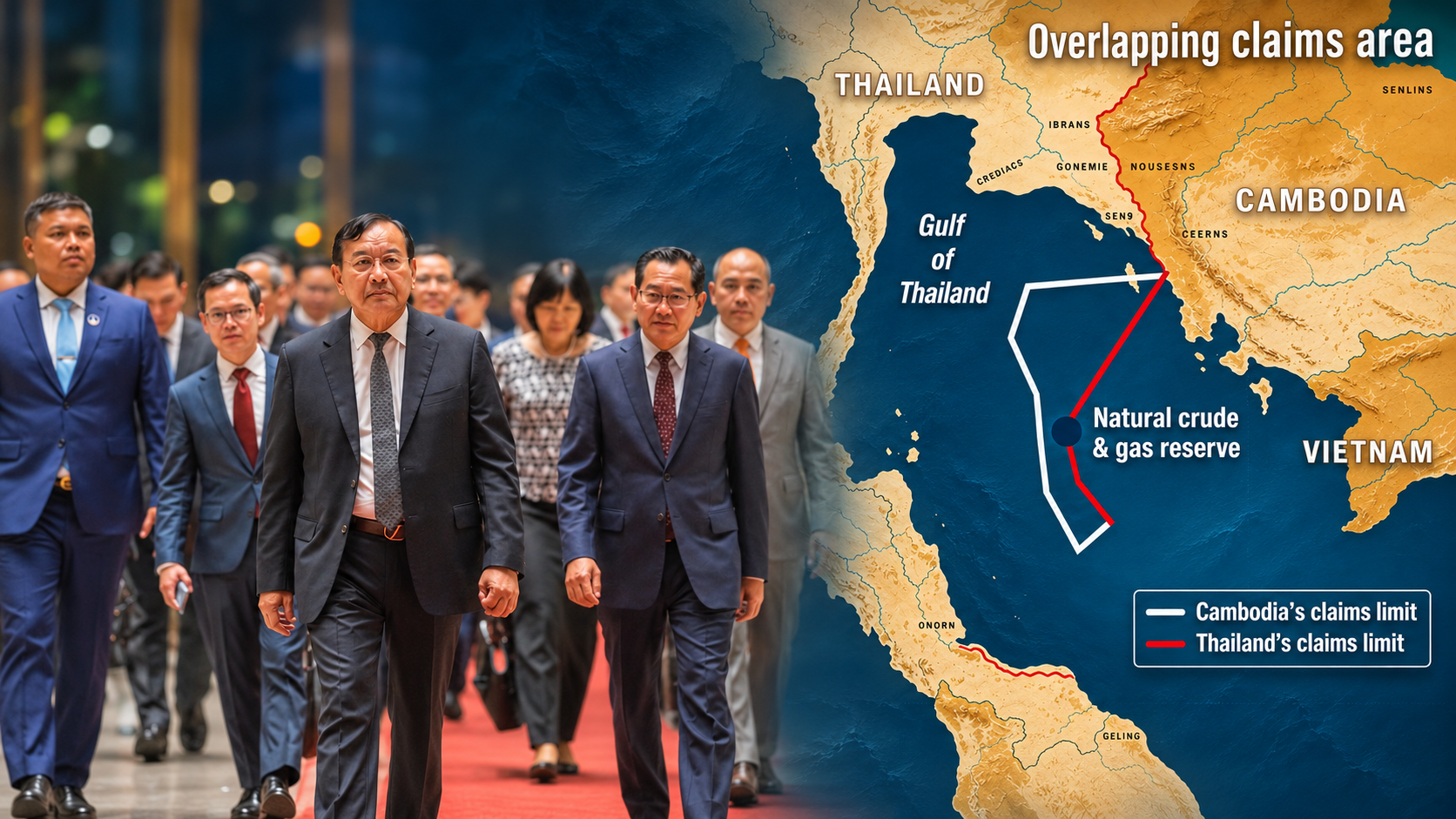
The Gulf of Thailand area could hold up to 12 trillion cubic feet of natural gas, but the two countries remain divided over how to open it up for development.
Cambodia Investment Review
Cambodia and Thailand began a third round of maritime conciliation talks on November 24, as rising fuel costs renewed pressure to develop a disputed stretch of the Gulf of Thailand that could hold up to 12 trillion cubic feet of natural gas.
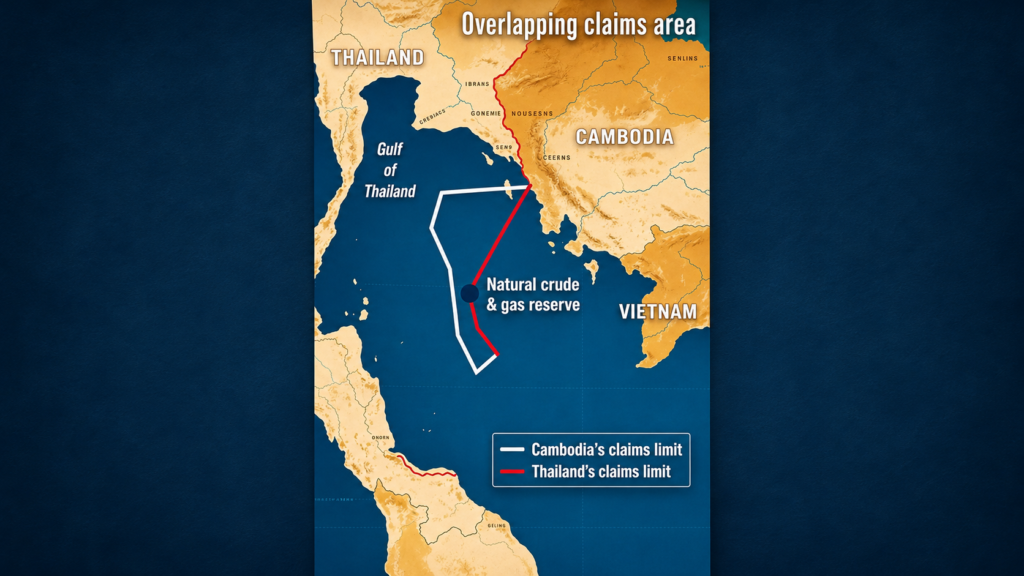
The talks, held under the United Nations Convention on the Law of the Sea, center on a roughly 10,000-square-mile area claimed by both countries. The dispute has kept the area off-limits to drilling for decades, despite interest from U.S. energy companies Chevron and ConocoPhillips.
Cambodia has proposed developing the resources jointly with Thailand. Thai officials have taken the position that the countries must first agree on their maritime boundary before discussing joint development, Politico reported, citing a Thai oil and gas industry veteran familiar with the government’s position.
Rising Fuel Costs Add Pressure
Disruptions to energy shipments through the Strait of Hormuz have pushed up fuel costs across Asia. Spot prices for liquefied natural gas have tripled over the past year, according to Politico. Cambodian Prime Minister Hun Manet has said his government spent $500 million on energy subsidies to cushion the impact. In Thailand, transport operators protested rising diesel prices outside the Ministry of Energy earlier this month.
The price increases come as both countries look to meet growing electricity demand from data centers, advanced manufacturing and wider use of air conditioning. Developing offshore gas could give them another source of fuel as they seek to limit their exposure to volatile LNG import prices.
Thailand already produces gas in nearby Gulf waters and has a joint development agreement with Malaysia. That project produces about 700 million cubic feet of gas per day, Politico reported, citing a Thai energy company official.
Oil Majors Are Watching the Talks
Chevron continues to list interests in the disputed area in its U.S. securities filings and already operates in nearby Thai waters. ConocoPhillips told Politico it has a longstanding interest in the area and hopes the conciliation process will produce a lasting agreement.
Cambodia initiated the process after Thailand canceled a decades-old memorandum of understanding on the maritime dispute earlier this year. The talks come amid strained relations following deadly clashes along the countries’ land border last year.
Wood Mackenzie researcher Simran Gwari said both countries have economic reasons to reach a deal, but drilling remains a longer-term prospect. With Cambodia seeking joint development and Thailand insisting on a boundary agreement first, the immediate question is whether the talks can establish a path to exploration.