

Cambodia Investment Review
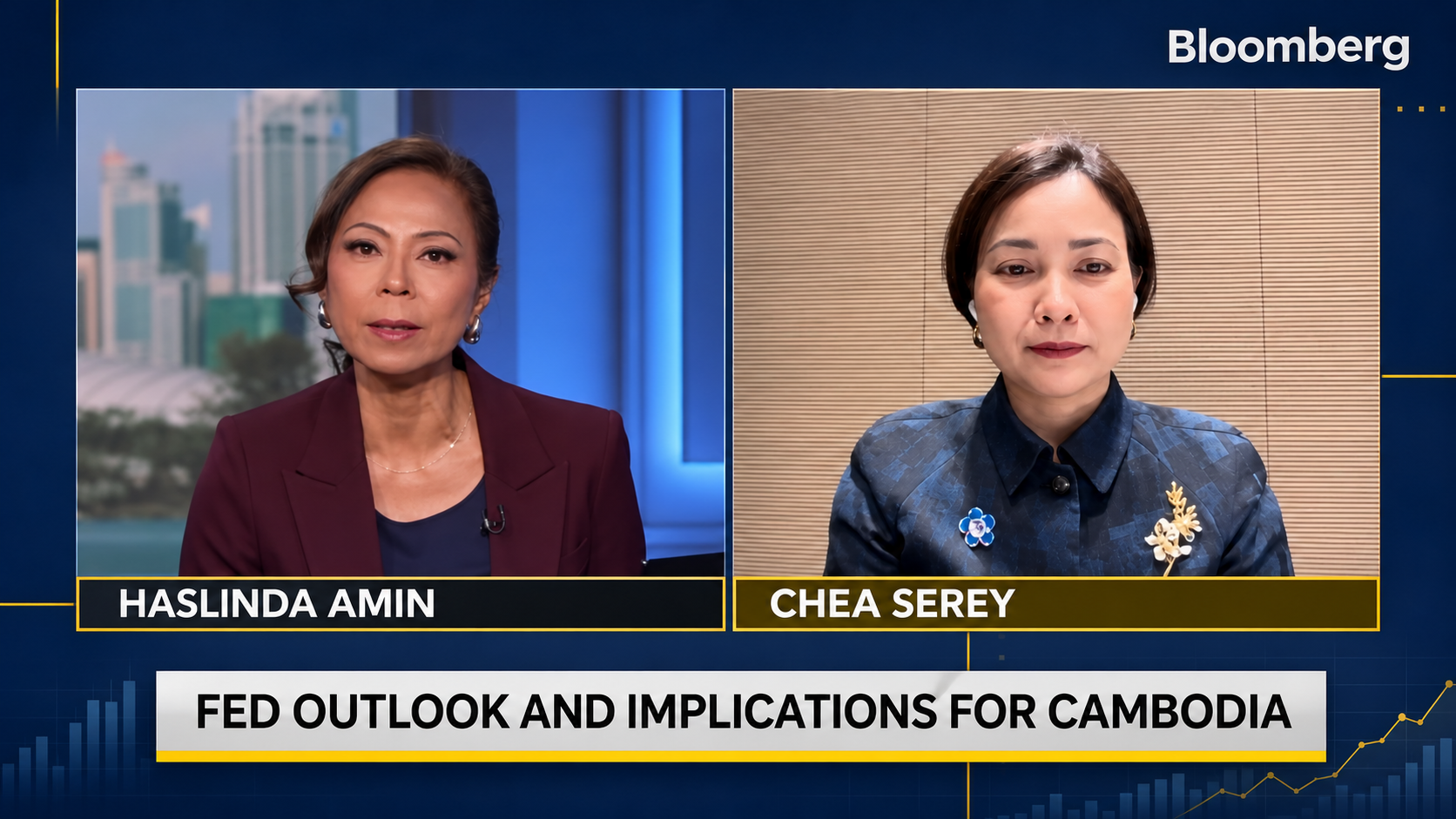
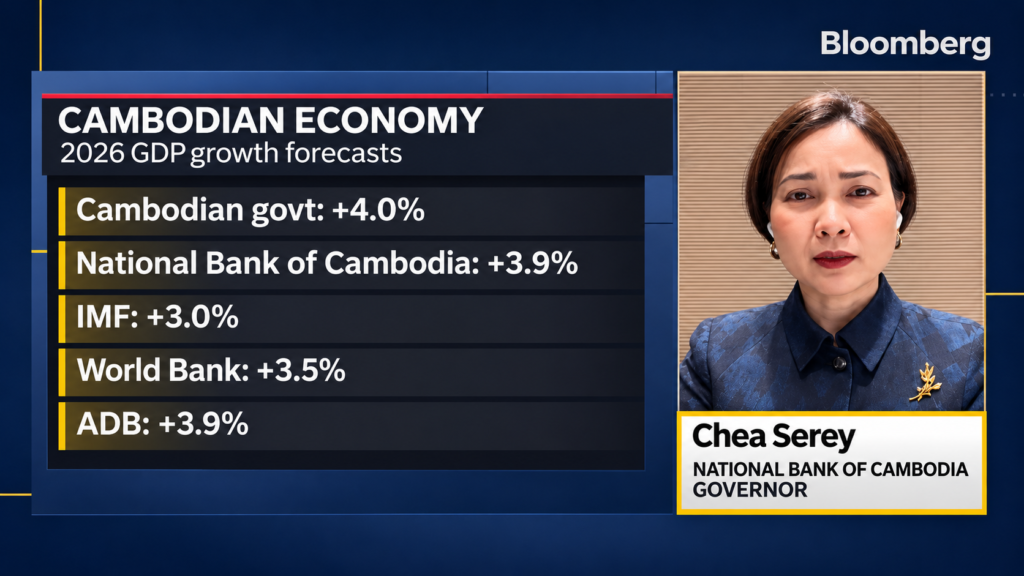
Cambodia’s government expects the economy to grow 3.9% in 2026, compared with a 3% forecast from the International Monetary Fund, as it bets on easing inflation and a recovery in tourist arrivals by year-end, National Bank of Cambodia Governor Chea Serey said in an interview with Bloomberg Television.
Speaking with Haslinda Amin, an anchor and editor-at-large for Bloomberg Television in Singapore, Serey said the outlook remained sensitive to developments overseas. Higher US interest rates could make dollar funding more expensive for Cambodian banks, while another rise in oil prices could keep inflation elevated in a country that imports refined fuel.
Why Cambodia Expects Faster Growth Than the IMF
Serey attributed the 0.9 percentage-point gap between the government’s projection and the IMF’s forecast to different assumptions about inflation and tourism. She said Cambodian authorities expect inflation to ease by the end of the year, while the IMF assumes price pressures will stay higher. The government is also more optimistic about a year-end improvement in tourist arrivals and Cambodia’s ability to reduce some of its reliance on oil.
The governor said exports to the United States and European Union continued to strengthen, alongside shipments to other markets. On tourism, she pointed to the recent Francophonie Summit and Black Swan Summit as opportunities to raise Cambodia’s profile with international visitors and investors. A pickup in arrivals by year-end would support the government’s growth projection.
Oil remains a risk to that outlook. Serey said the path of the conflict in the Middle East would influence energy prices and inflation, making growth harder to forecast. Cambodia is investing in solar and battery storage as part of a longer-term effort to reduce its reliance on imported fuel. Serey said renewables accounted for about 63% of the country’s energy mix, with the government aiming to increase that share to about 72% by 2030. She said the shift would take time, leaving Cambodia exposed to swings in global fuel prices in the near term.
US Rates Raise Funding Costs as Cambodia Defends Riel Stability
Asked how a possible Federal Reserve rate hike in December could affect Cambodia, Serey said tighter US monetary policy would be felt through the cost of dollar funding. Inflation in Cambodia had reached 5.3%, she said, and higher funding costs had already contributed to slower loan growth.
Cambodia’s widespread use of the US dollar limits the central bank’s ability to steer domestic borrowing costs through a policy rate, Serey said. Reserve requirements and other prudential measures give the National Bank some room to respond. She cautioned that tightening too aggressively could further weaken demand when much of the inflation pressure stems from supply disruptions.
Amin also asked whether Cambodia’s foreign exchange reserves could withstand another oil price spike. Serey said reserves covered about eight months of imports and that the central bank uses them to help maintain exchange rate stability. She estimated that around 10% of the economy operates in local currency and said a stable riel was especially important in rural areas, where more people use it.
Under Cambodia’s managed float, the National Bank generally allows the riel to move with the market and can intervene when it sees unusual fluctuations, Serey said. She said the exchange rate had fluctuated within a 2% band over the past 25 years. Beyond the central bank’s tools, she said Cambodia could improve the investment environment and diversify what it exports and where it sells those goods.
Scam Crackdown and Virtual Asset Oversight
Asked what the central bank could do about the economic impact of scam operations, Serey said its priority was to protect the integrity of Cambodia’s financial system. She said the regulator had revoked licences of banks involved in such activities, frozen accounts of individuals involved and strengthened requirements for financial institutions to verify their customers’ identities.
Serey said the cross-border nature of scam operations made cooperation with overseas authorities essential. She also said she hoped Cambodia would enact a virtual asset law by the end of 2026. The proposed law would give the National Bank greater visibility into activity that had previously taken place outside its oversight, she said.


