
Cambodia Investment Review
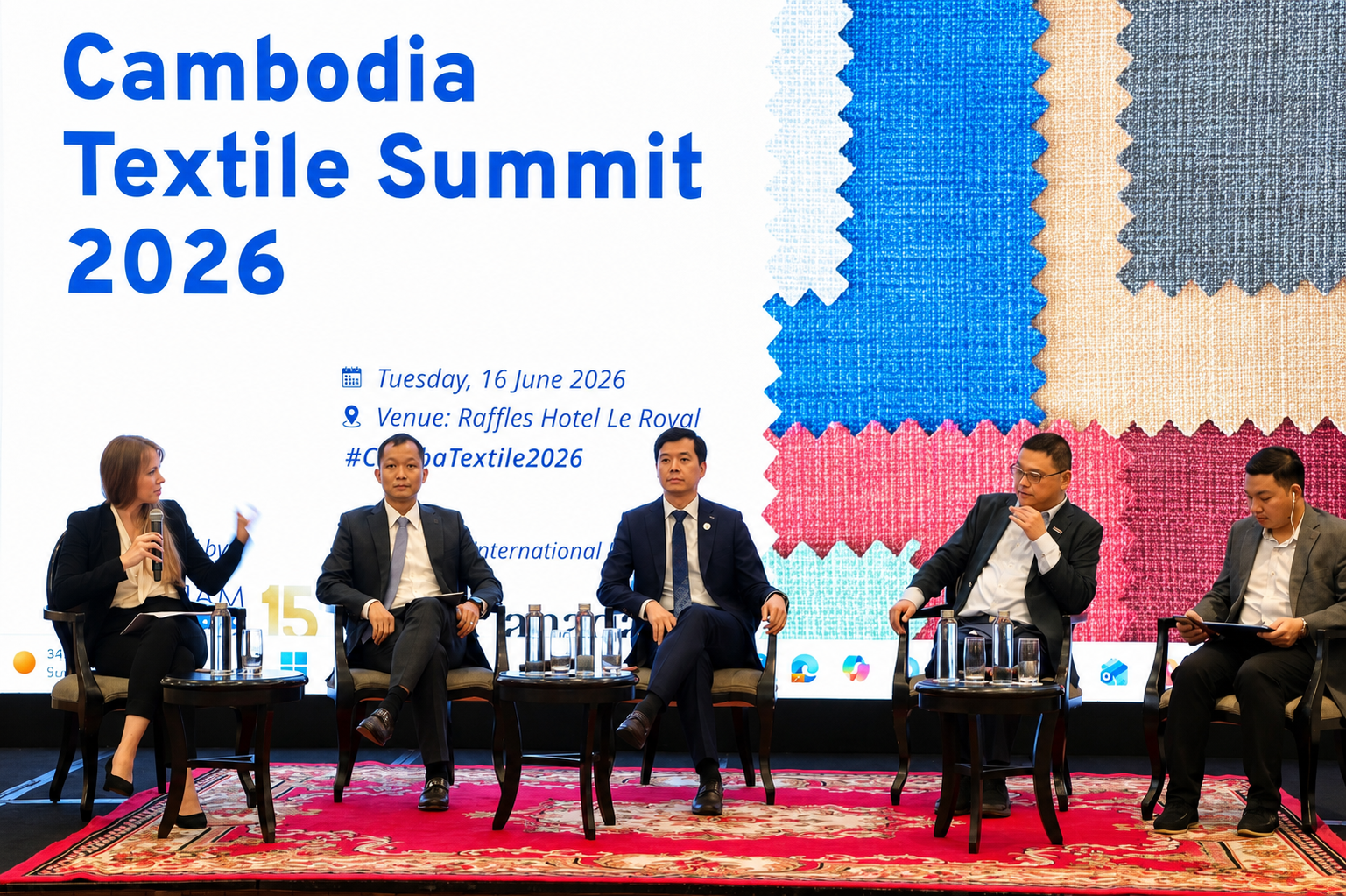
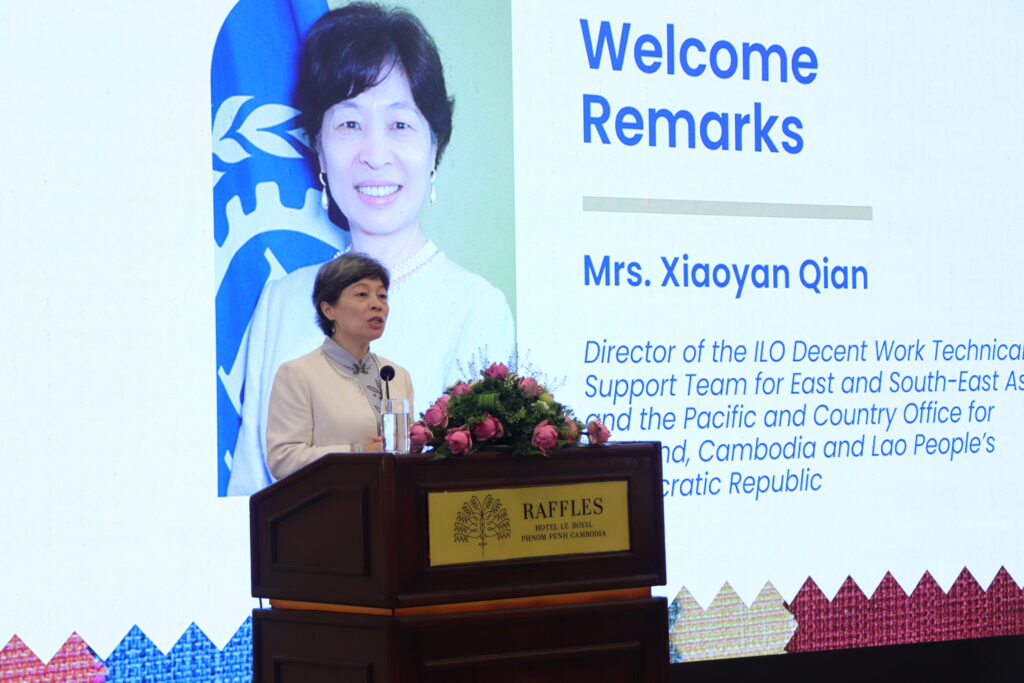
Cambodia’s garment, footwear and travel goods (GFT) industry is preparing for a more competitive global environment, with business leaders, policymakers and international partners calling for greater investment in workforce skills, supply chain resilience and sustainable manufacturing at the Cambodia Textile Summit 2026.
Held in Phnom Penh, the summit brought together nearly 300 participants from government, industry, trade unions and development organisations to examine the future of one of Cambodia’s most important export sectors amid rising geopolitical uncertainty, higher logistics costs and the country’s upcoming graduation from Least Developed Country (LDC) status.
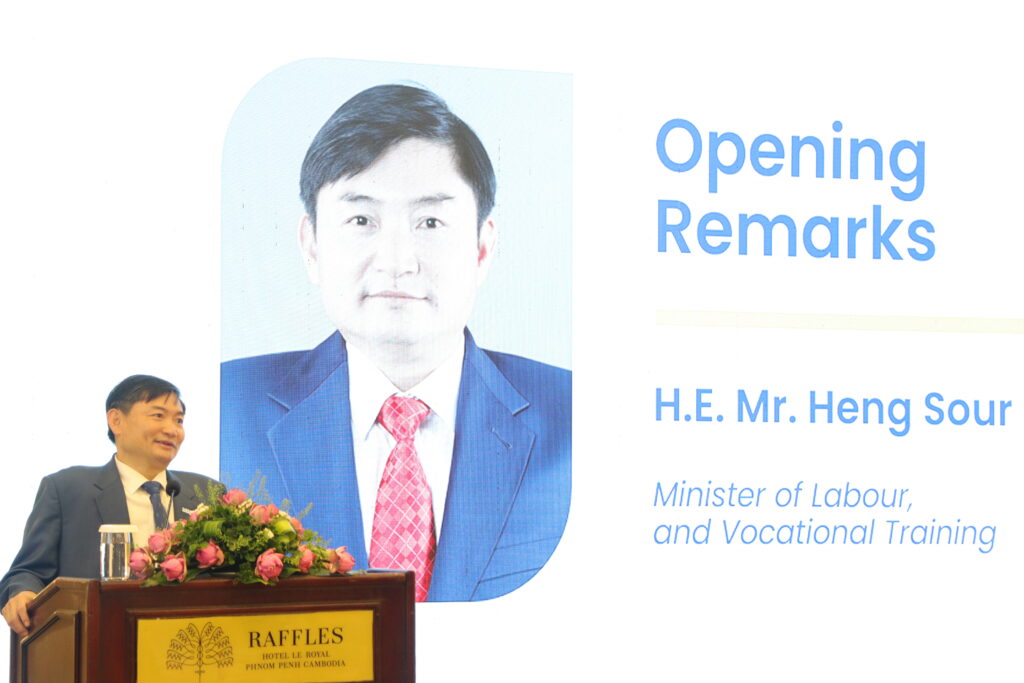
Opening the event, Minister of Labour and Vocational Training H.E. Heng Sour said the sector is navigating a combination of trade headwinds, energy price volatility and global economic instability that are placing pressure on manufacturers and exporters. He stressed the importance of strengthening Cambodia’s competitiveness through effective policy and operational reforms.
Skills and Productivity in Focus
A recurring theme throughout the summit was the need to move beyond competing primarily on low labour costs.
Dr. Ken Loo, Secretary General of the Textile, Apparel, Footwear and Travel Goods Association of Cambodia (TAFTAC), highlighted the newly developed Cambodia Skills Framework as an industry-led initiative designed to improve workforce capabilities and create clearer career progression within factories. The framework is expected to support higher productivity and help manufacturers shift toward more value-added production as preferential trade advantages gradually diminish.
Industry experts noted that strengthening technical skills and management capacity will be increasingly important as Cambodia seeks to retain its position within global supply chains following LDC graduation.
Global Risks Add Pressure to Supply Chains
Presentations at the summit also underscored mounting external risks facing exporters.
Martin Brisson, Executive Director of EuroCham Cambodia, pointed to overlapping challenges including regional border disruptions, uncertainty surrounding U.S. trade policy and conflict in the Middle East, all of which are contributing to higher production costs and supply chain complexity.
Despite these pressures, Cambodia’s GFT exports have continued to expand and diversify beyond traditional garments into footwear and travel goods, demonstrating resilience amid a volatile global environment, according to speakers at the event.
Meanwhile, Rutger Heijsteeg, Managing Director of Maersk Cambodia, argued that reducing administrative barriers and improving customs efficiency could further strengthen Cambodia’s attractiveness as a sourcing destination by enhancing logistics reliability and lowering costs.
Circular Economy Seen as Investment Opportunity
Sustainability and circular manufacturing emerged as another major focus of the summit.
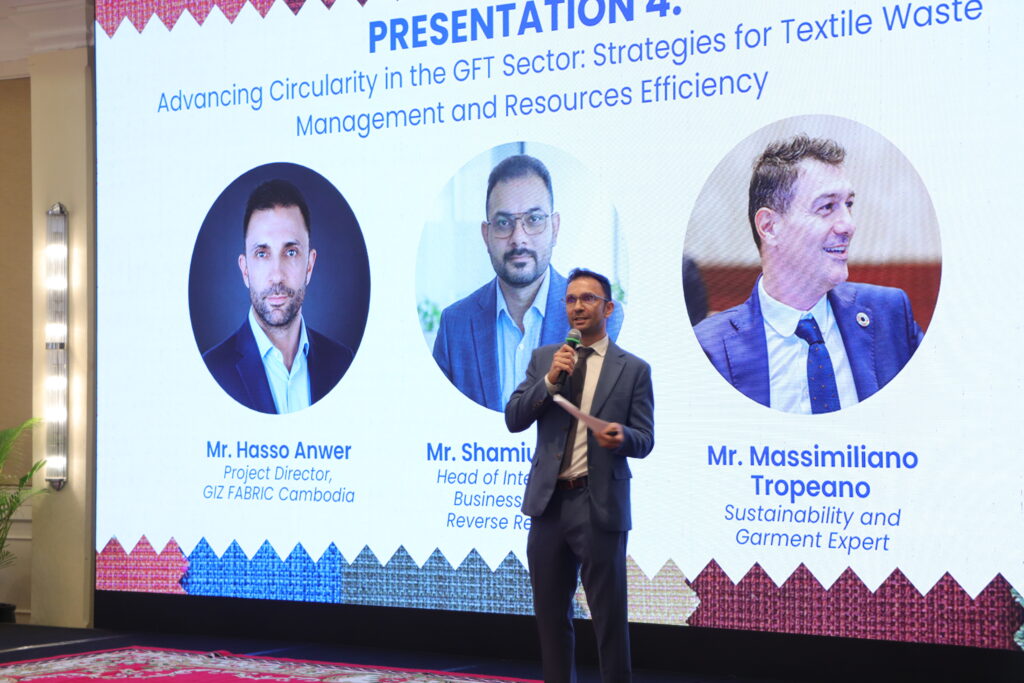
Organisers launched a new investor guide on textile waste management and recycling, highlighting opportunities to develop domestic recycling infrastructure as international demand grows for recycled materials in apparel production.
Speakers noted that Cambodia currently generates significant textile waste but has limited local recycling capacity, creating potential opportunities for private investment in sorting, recovery and recycling facilities while supporting the industry’s environmental transition.
Worker Safety and Long-Term Competitiveness
Panel discussions also examined occupational safety, including the growing challenge of heat stress in factories and the development of Cambodia’s forthcoming occupational safety and health legislation.
The summit concluded with calls for continued collaboration between government, manufacturers, buyers, labour representatives and development partners to ensure Cambodia’s GFT sector remains competitive while improving productivity, sustainability and working conditions.
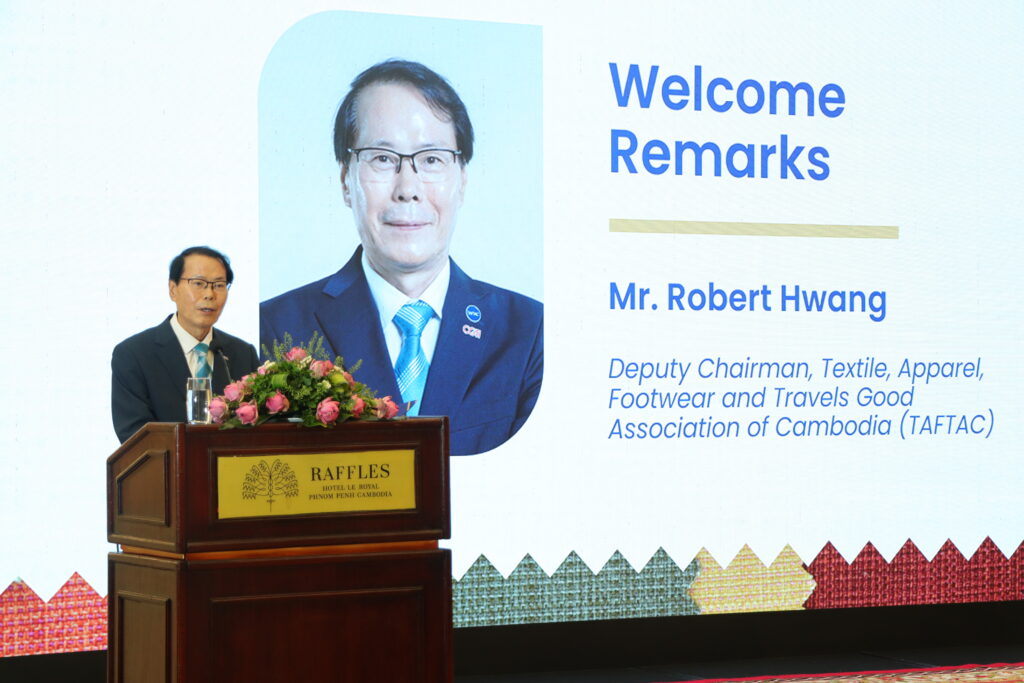
Co-hosted by TAFTAC, the International Labour Organization, Better Factories Cambodia and GIZ, with support from EuroCham Cambodia and Canada as an international partner, the Cambodia Textile Summit 2026 reflected a broader shift in industry priorities—from cost competitiveness alone toward resilience, skills development and sustainable growth as Cambodia prepares for its next phase of economic development.