
Cambodia Leadership Review
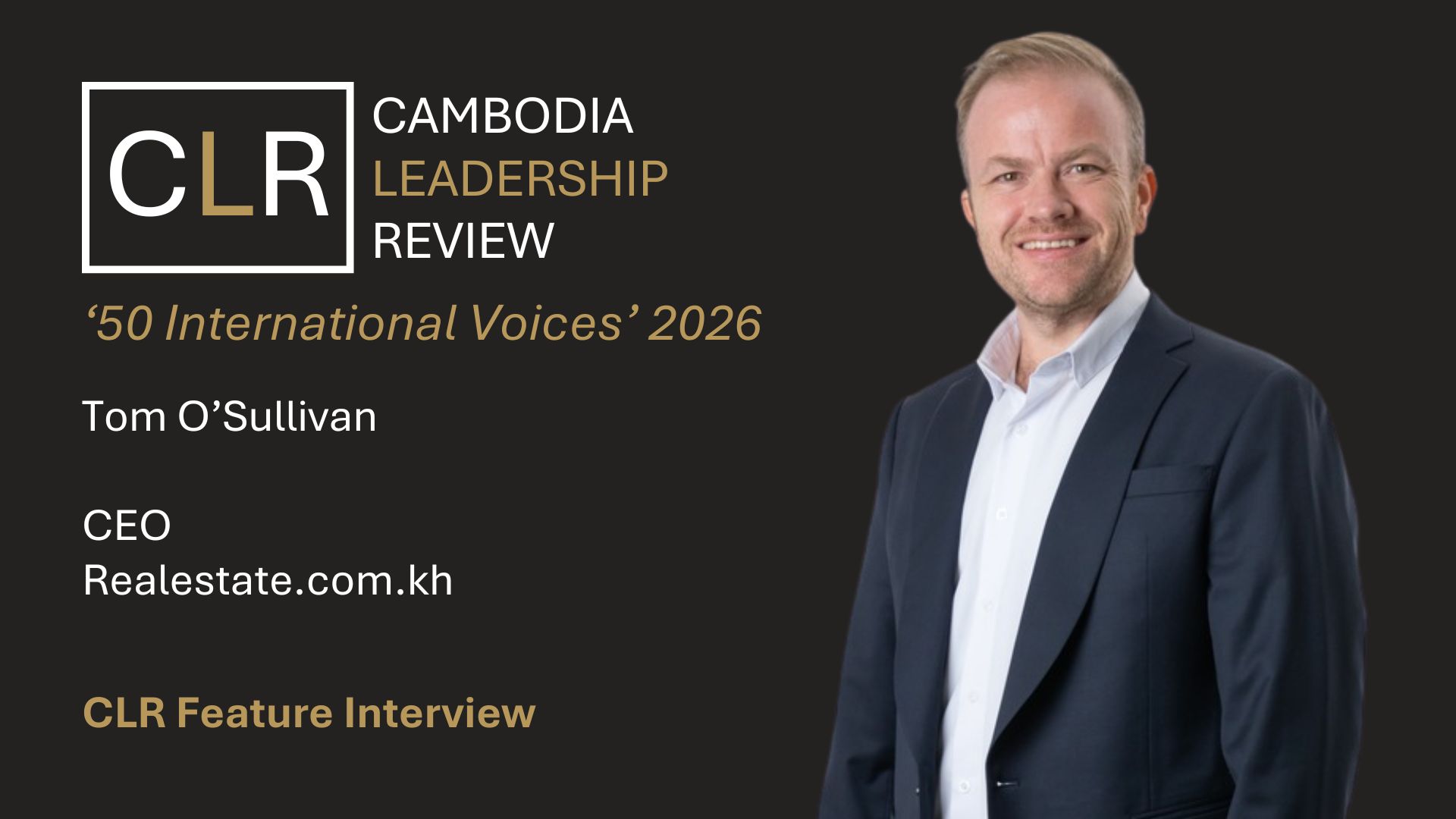
Tom O’Sullivan is the Chief Executive Officer of Realestate.com.kh (REKH), one of Cambodia’s leading digital property platforms. Since entering a market that was once dominated by newspapers, billboards, and showroom-driven sales, he has helped transition Cambodia’s real estate sector toward a more transparent, data-driven, and technology-enabled ecosystem.
Under his leadership, REKH has evolved beyond a listings portal into a broader property platform combining digital infrastructure, physical engagement spaces, agent development, market analytics, and investor education. In this interview, he reflects on leadership in a traditionally offline market, the role of PropTech in building trust, and how quality-led demand is reshaping Cambodia’s property landscape.
Leadership in a Digital Property Platform
CLR: As CEO of REKH, you have led the development of one of Cambodia’s leading digital real estate portals. How would you describe your leadership approach in building a technology-driven property business? What lessons have you learned about leading innovation in a traditionally offline real estate market?
When the business first launched, Cambodia’s real estate market was heavily offline. Property advertising relied largely on newspapers, billboards and extravagant showrooms.
Rather than pushing digital alone, an integrated offline-to-online strategy proved far more effective. Alongside the platform, we operated a printed magazine for several years and organised large-scale property expos that attracted tens of thousands of attendees. This helped introduce the platform, build credibility, and bridge the gap.
Even in a digital-first business, offline still plays an important role today. Physical events and in-person touchpoints help humanise the brand, build trust, and create confidence. Particularly in property, where decisions are high-value.
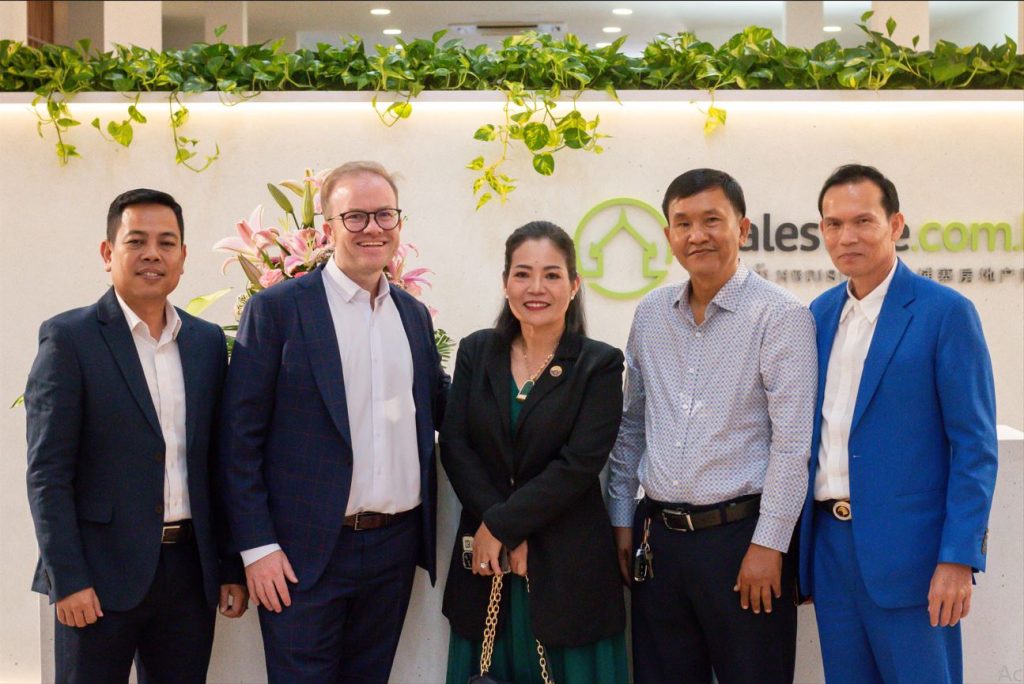
For example, two years ago we launched the Connect Center as a physical space for buyer education seminars, agent training and networking events. It provides a place where clients can engage, ask questions, and better understand the market in a tangible way, while remaining connected to the digital platform.

Don’t copy-paste a foreign playbook. One of the earliest lessons was that success models from Australia, Singapore, or even as close as Vietnam don’t automatically translate to Cambodia. Strategies that work well in mature or even (assumed) similar markets can fall flat if applied without adapting to the local market. Building a technology-driven property business here requires localisation, an understanding how people actually search for property, how trust is built, and how decisions are made. Innovation comes from adapting global best practices to local realities, not forcing them onto the market.
Back local talent. Don’t underestimate young Cambodian professionals. They’re smart, driven, and have a deep understanding of the local market and consumer behaviour. For example, understanding how consumers use technology, access information, and engage with content. While many foreigners access information via Google search, Cambodian consumers predominantly access information through Native Apps, Facebook, Telegram, TikTok, and large social media group chats. In many cases, we see Cambodia leapfrog traditional tech habits, with locals embracing mobile apps and digital platforms faster and more instinctively than in some developed markets.
When we started, our team was mostly foreign, and there’s absolutely value in experienced international talent. But over time, we learned that young, determined Cambodian staff can match or outperform expats. They bring cultural understanding, loyalty, and a real hunger to grow. Today, we have a far more balanced team that reflects the best of both local and international strengths.
Don’t hire cheap, hire right. Pay based on ability, not nationality.
PropTech, Data, and Market Transparency
CLR: Digital platforms are reshaping how buyers, renters, and developers engage with property markets. From your perspective, how is PropTech changing Cambodia’s real estate landscape, and what role does data, transparency, and user experience play in building trust during a market downturn?
In emerging markets like Cambodia, PropTech platforms that generate a high volume of transactions often accumulate deeper and more comprehensive datasets than any single developer, agency, or institution. This places realestate.com.kh in a unique position, and with that, a responsibility within the ecosystem. Not only as a brokerage and marketplace, but as a source of information and market education.
We play an important role in developing the market as a whole. We do this by publishing data-rich market reports, buying guides, and providing free property seminars that help buyers and renters make more informed decisions. This becomes even more important during market downturns, when uncertainty increases and trust becomes fragile.
Our reports and analytics empower our agents to better advise their clients. Instead of relying on opinion or anecdotal experience, they can reference real transaction trends, pricing shifts and rental yields. This leads to more accurate valuations, clearer investment comparisons, and more transparent conversations.
In practical terms, data gives our agents confidence. It allows them to explain why a property is priced a certain way, whether rental expectations are realistic, and how market cycles are evolving. That professionalism builds trust.
Quality-Led Demand in a Softer Market
CLR: Despite broader headwinds in the property sector, REKH has seen renewed interest in well-located, high-quality condominium projects that appear to be bucking wider market trends. What are you seeing in terms of buyer and renter behaviour today, and how is quality and location reshaping demand?
While the broader market remains soft and most segments face oversupply, our data-driven insights and deep market knowledge has allowed us to work with developers to launch projects with confidence rather than assumptions. By aligning pricing, product mix, and positioning with real demand, these projects have performed exceptionally well despite challenging conditions.
What this has demonstrated is a clear imbalance in the market: there is an oversupply of overpriced lower-quality stock, alongside an undersupply of well-located, well-designed, and realistically priced developments.
Another important shift has been the strength of local demand. The condominium market today is not driven solely by international buyers. There is a healthier mix of Cambodian buyers purchasing to live, alongside international investors, compared to the pre-COVID period. This more balanced demand base is helping create a more stable and sustainable market moving forward.
Looking Ahead: Expansion and the Future of Property Portals
CLR: With the opening of REKH’s new office in Siem Reap and continued investment in platform innovation, how do you see the future of real estate portals in Cambodia evolving, and what new services, technologies, or market segments do you believe will define the next phase of REKH’s growth?
While geographic expansion and increasing reach remain important in helping our clients sell and rent property, the next phase of growth is centred as much on people as it is on technology and visibility.
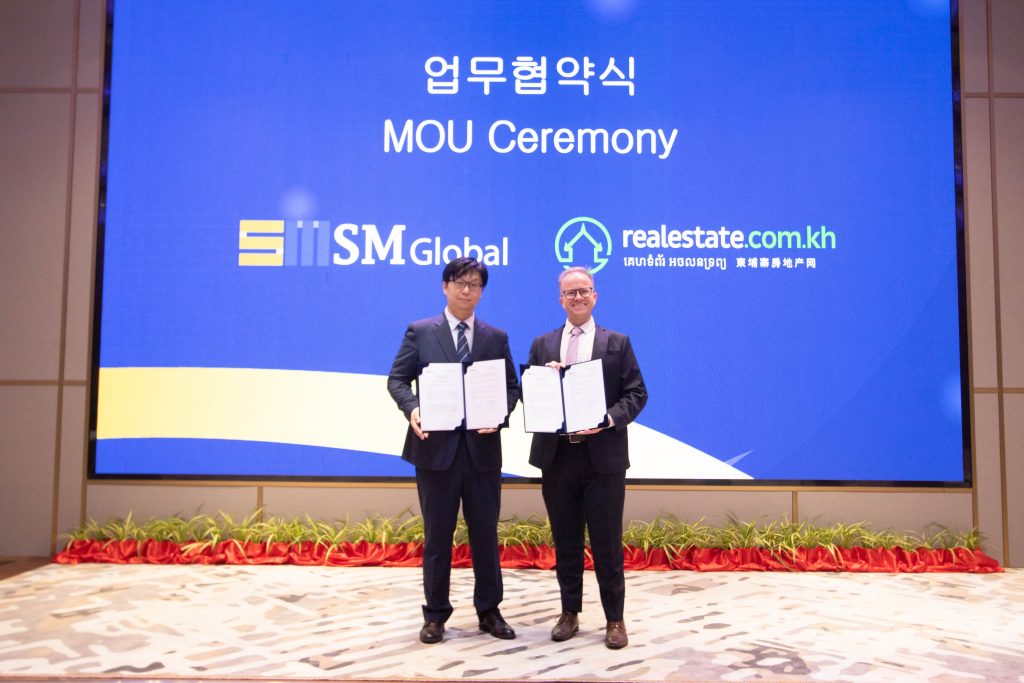
Recently joining SEA Connect Ventures, the region’s largest PropTech group, significantly increases exposure, website traffic, and buyer reach. Just as importantly, it provides the resources to continue investing in agent growth. This includes market-leading training, increased lead flow, marketing support, and purpose-built tools that help teams advise clients confidently and represent developers accurately.
Technology plays a supporting role. It improves efficiency, transparency, and access to information. However, long-term success comes from combining skilled agents, reliable data, and strong operational processes.
A good example of this integration is the support structure behind the agents. Dedicated teams handle key parts of the transaction process, including in-house legal support, unit handovers, and rental management. This allows agents to focus on advising clients, while ensuring buyers are supported well beyond the point of sale.
At realestate.com.kh, the focus goes beyond property transactions. The business is committed to developing people, building the strongest professional agents in the market, and facilitating millions of dollars of investment into the Cambodian economy each year.
Broader PropTech innovation
Cambodia’s PropTech sector is still in an early but promising stage, and it’s encouraging to see more local entrepreneurs building solutions for specific market needs. Founders like Rothsethamony Seng, the founder of Bamnang, which focuses on student accommodation, is a good example of how PropTech can address real, clearly defined challenges within the property market.
This kind of specialised innovation strengthens the market as a whole. As the sector matures, the future of PropTech in Cambodia will be shaped by collaboration and integration between platforms, agents, developers, and niche technology providers.
See the full list and download the magazine here: https://cambodiainvestmentreview.com/2026/03/02/50-international-voices-2026/