

By David Van
The Quiet Crisis
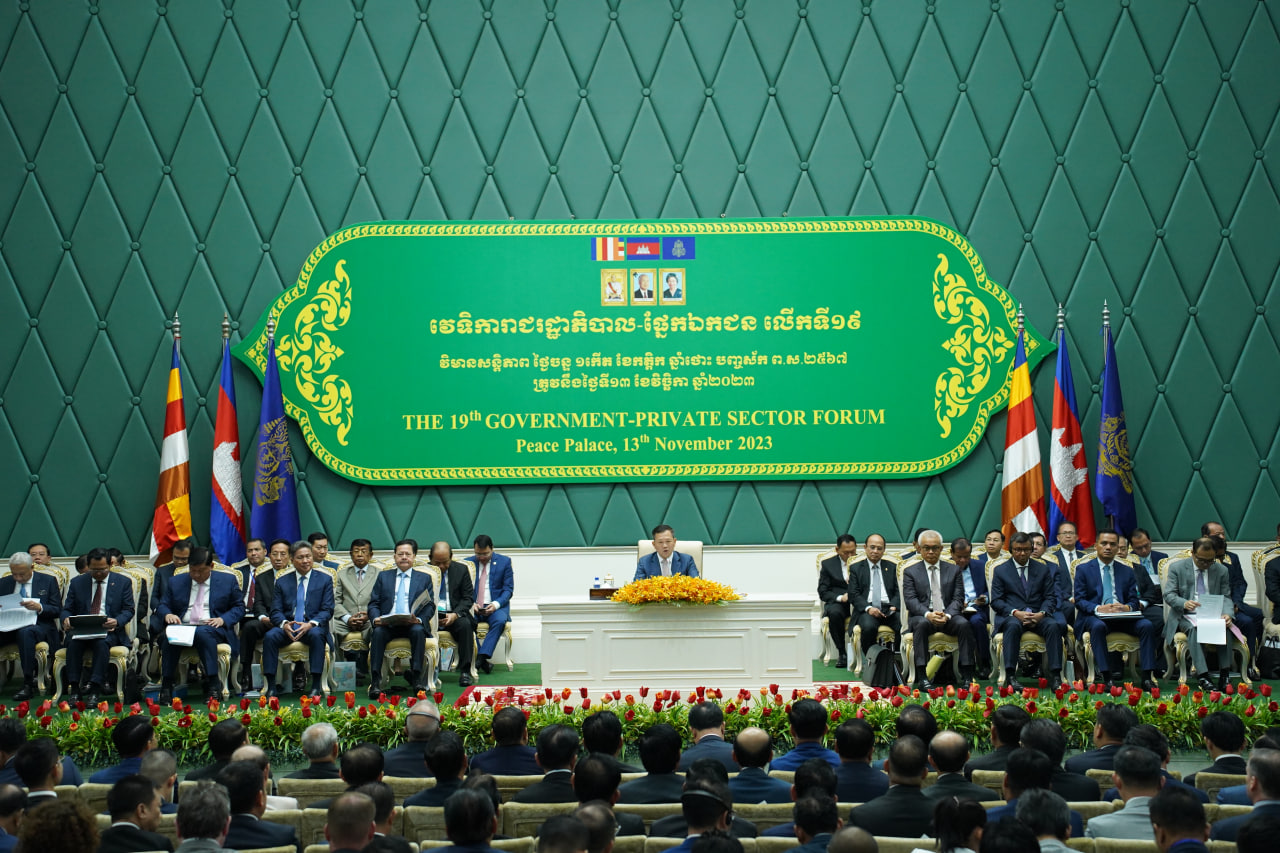
Cambodia stands at a peculiar moment with the Government-Private Sector Forum (GPSF). What began as a promising dialogue mechanism has arrived at a critical inflection point. The danger isn’t dramatic—no scandals, no headlines—but something more insidious: a gradual dissipation of purpose.
The country currently lacks a clear GPSF agenda, institutional understanding of how it should function, private sector preparedness, and government clarity on its strategic role. Stakeholders don’t know what to prepare, how to engage, or how to follow through. The forum risks becoming reactive rather than strategic—a place people attend because they must, not because they’re building something together.
By September next GPSF, this must change. The immediate priority: deliver a fully agreed national agenda, secure genuine government buy-in at the secretary level, and establish a twelve-month implementation roadmap with execution tracking. Transform the GPSF from an event into a functioning system.
Read More: Government–Private Sector Forum Marks 25 Years Of Dialogue, Partnership & Reform
The Missing Architecture
What Cambodia lacks is a cohesive system linking agenda setting to implementation, implementation to monitoring, and monitoring back to feedback loops. This isn’t about more meetings or reports. It’s about a formalized framework that defines priorities, tracks progress through a management information system with a dashboard, and enables continuous iteration—the difference between a library and a pile of books.
A Product, Not a Project
The thinking must shift fundamentally. The GPSF must become a government-owned national product –not a donor project, not a temporary initiative, but permanent national infrastructure.
Its components: an MIS system with dashboard and website, institutional processes that outlast any individual leader, a public-private engagement model, and a reproducible governance methodology.
The Council for the Development of Cambodia (CDC) must fully own the intellectual property, recognize its strategic value, and take responsibility for long-term operation. Development partners funded the creation, but ownership must transfer—mentally and institutionally—to government. This is not a gift to be displayed; it is a tool to be used, maintained, and improved.
Why This Matters Beyond Borders
Properly positioned, the GPSF becomes more than a domestic reform tool. It attracts investment by demonstrating transparency, structured dialogue, and reform capability. More strikingly, it becomes an exportable governance model—a “Cambodian model” for other emerging markets. The integrated dashboard, cross-ministerial coordination, and structured feedback loops are uncommon in developing economies. Cambodia has the pieces for global best practice, but only if it treats the GPSF with the seriousness it deserves.
The Drift That Threatens Everything
Development partners like CAPRED have shifted to purely technical and IT support. They no longer provide strategic leadership. This creates a dangerous vacuum if government isn’t ready to step in.
Without that leadership, the system risks becoming fragmented, politicized, and non-strategic. It is not broken—it is worse: not progressing. A broken thing can be fixed. A thing that merely exists without purpose slowly becomes invisible.

Capabilities Cambodia Must Build
The CDC needs three capacities. First, technical: managing the database, maintaining the system, extracting insights. Second, strategic: defining future agendas, identifying support needs, mobilizing partners from the World Bank to the ADB to bilateral donors. Third, and hardest, an operational ownership mindset.
The GPSF is like a new car you must learn to maintain yourself. You cannot call the dealership forever. At some point, you pop the hood, read the manual, and take responsibility.
Breaking the Restart Cycle
Cambodia suffers from a vulnerability common to developing nations: loss of institutional memory. Each new leadership cycle brings a tendency to restart rather than continue. New ministers want new initiatives. The result is perpetual motion without forward movement.
The antidote is two-layer documentation. First, the Standard Operating Procedure—a blueprint already ninety-five percent complete covering structure, processes, and system setup. Second, ongoing articles documenting progress, capturing milestones, lessons learned, challenges, and political dynamics. Just two articles per year creates a “living institutional memory” so future leaders continue rather than restart.
These articles are not public relations. They are thought leadership—fact-based, system-focused, neutral but candid, insight-driven. Over time, they demonstrate the GPSF is not a black box but a transparent, evolving system that can be studied, questioned, and improved. This builds credibility, policy influence, and institutional legitimacy.
The Long Horizon
The ultimate vision is threefold: an engine of governance reform driving transparency and accountability; an institutional anchor stabilizing policy continuity across leadership changes; and a generational platform enabling the transition to modern governance practices.
This is not hyperbole. It is the natural consequence of building systems that function, documenting them, owning them, and continuously improving them.
What Success Requires
Six conditions: government ownership with full IP recognition; a clear, agreed, forward-looking agenda; an execution system with functional MIS and tracking; internal technical and strategic capacity building; continuous documentation through SOPs and longitudinal articles; and strategic positioning as both domestic reform tool and international showcase.
None are impossible. None require unattainable technology or funding. They require sustained attention, institutional discipline, and the willingness to treat the GPSF not as a favor from development partners but as a national asset Cambodia builds for itself.
The Choice
The GPSF can become a globally recognized governance model—a system other countries study, investors trust, citizens benefit from, and future leaders inherit with pride. Or it can become a technical system without strategic impact: another dashboard displaying data no one acts upon, another forum meeting because it is on the calendar rather than driving change.
The deciding factors are not mysterious. They are government ownership, agenda clarity, institutionalization, and documentation of evolution. These are choices. They require decisions, resources, and sustained commitment. But they are within reach.
What happens next is not predetermined. It will be determined by whether Cambodia’s leaders recognize that the GPSF is not a project to be completed but a product to be owned, maintained, and continuously improved. The threshold is there. The question is whether they will step across it together.
April 21, 2026
David VAN