

Cambodia Investment Review
Cambodia’s digital economy has reached a significant milestone, with mobile banking users surpassing 10 million and KHQR payment transactions exceeding $105 billion annually, underscoring the country’s rapid transformation into one of Southeast Asia’s most digitally connected and mobile-first economies.
While much of the regional attention remains focused on larger ASEAN markets such as Indonesia, Thailand, and Singapore, Cambodia has quietly built one of the region’s most comprehensive digital payment ecosystems, driven by widespread smartphone adoption, low-cost internet access, and strong support from the National Bank of Cambodia (NBC).
Sharing the latest figures Sharing the background information with Cambodia Investment Review the Association of Banks in Cambodia (ABC), suggest the country has moved well beyond the early stages of digital adoption. Instead, digital banking and payments are increasingly becoming core infrastructure supporting economic activity across the Kingdom.
A Mobile-First Economy Takes Shape
Unlike many developed economies that transitioned gradually from desktop computers to laptops and eventually smartphones, Cambodia largely bypassed traditional fixed-line internet infrastructure.
The combination of affordable smartphones, widespread 4G coverage, and some of the region’s lowest mobile data costs has allowed millions of Cambodians to access digital services directly through mobile devices.
Today, mobile phones serve as the primary gateway to banking, commerce, communication, and government services for much of the population.
This mobile-first approach has enabled Cambodia to rapidly expand financial inclusion while avoiding many of the legacy infrastructure challenges faced elsewhere.
The result is a digital economy where consumers increasingly expect instant payments, QR transactions, and mobile financial services as part of everyday life.
Digital Finance Reaches Critical Mass
According to the latest available data, Cambodia now has more than 10 million mobile banking users and approximately 17.9 million e-wallet accounts.
Bakong, the NBC’s blockchain-based payment platform, has grown to approximately 750,000 users and continues to serve as a key component of the country’s digital payment infrastructure.
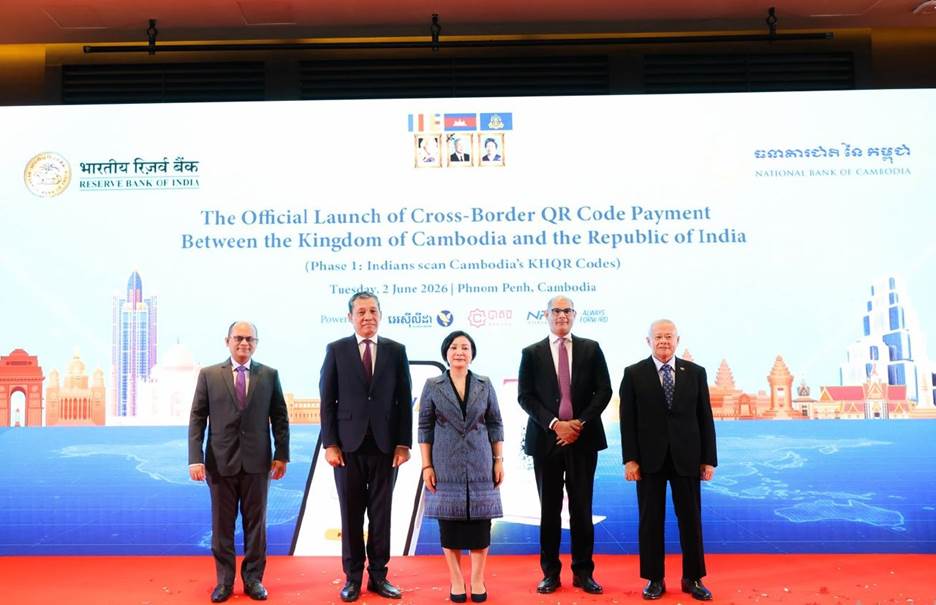
Meanwhile, KHQR, Cambodia’s interoperable QR payment standard, has become one of the strongest indicators of digital adoption across the economy.
Merchant acceptance has expanded rapidly nationwide, with approximately 4.5 million merchants now able to accept KHQR payments.
From traditional markets and roadside vendors to restaurants, retailers, hotels, and transportation providers, QR code payments have become increasingly embedded in daily commercial activity.
The scale of adoption suggests Cambodia’s transition toward a cash-lite economy is already well underway.
Transaction Volumes Reflect Structural Change
The most telling sign of Cambodia’s digital transformation may be the sheer volume of transactions now moving through digital channels.
During 2025, Bakong processed approximately 1.33 billion transactions across Khmer riel and US dollar accounts, representing transaction values exceeding KHR 285.9 trillion and US$152.8 billion.
Mobile banking channels recorded more than 1.57 billion transactions, with combined transaction values surpassing US$226 billion and KHR 138 trillion.
Internet banking platforms facilitated more than 20 million transactions with combined values exceeding US$33 billion.
KHQR remained one of the dominant payment channels, processing approximately 1.48 billion transactions worth KHR 422.48 trillion, equivalent to roughly US$105.6 billion.
These figures indicate that digital payments are no longer a niche financial service but a central pillar of Cambodia’s financial system.
Cambodia’s Quiet Digital Success Story
The growth of digital payments has been supported by a combination of public and private sector initiatives.
The introduction of Bakong and KHQR helped establish interoperability across banks, microfinance institutions, and payment service providers, reducing friction for consumers and merchants.
The COVID-19 pandemic further accelerated adoption as businesses, consumers, and government agencies increasingly relied on digital platforms for communication, transactions, and service delivery.
What initially emerged as a convenience has evolved into a fundamental shift in consumer behaviour.
Industry observers increasingly view Cambodia as one of ASEAN’s most successful examples of central-bank-led digital payment transformation.
Although larger regional economies continue to record higher transaction volumes in absolute terms, Cambodia’s growth rate and QR payment penetration rank among the strongest in Southeast Asia.
The Next Chapter
The country’s digital transformation is not without challenges.
Digital literacy gaps remain between urban and rural communities, while remote areas continue to face connectivity constraints compared with major centres such as Phnom Penh and Siem Reap.
Read More: Opinion – We Can’t Ignore the Urban-Rural Digital Divide Widening in Cambodia
As transaction volumes continue to rise, cybersecurity, fraud prevention, digital identity verification, and consumer protection are expected to become increasingly important priorities for both regulators and financial institutions.
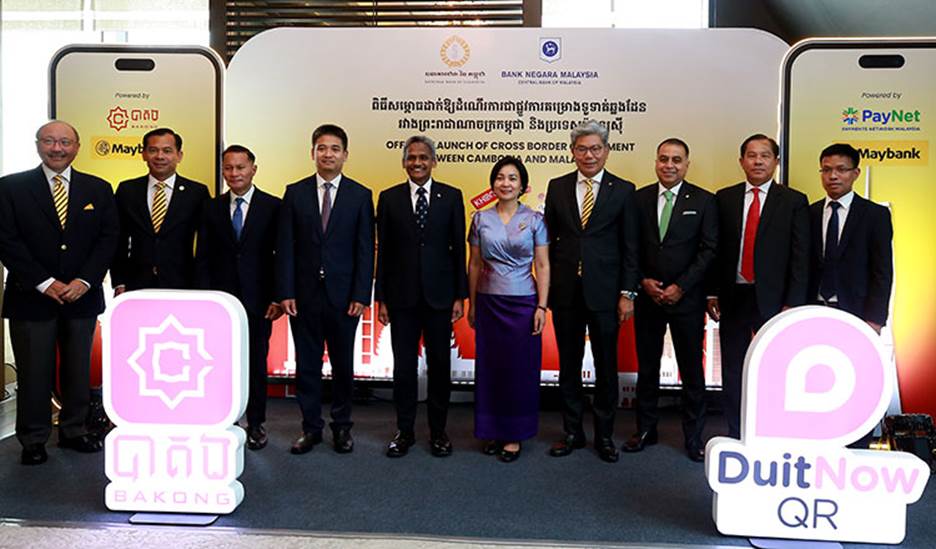
Looking ahead, industry stakeholders expect continued growth in KHQR adoption, expansion of cross-border QR payment connectivity, increased financial inclusion, and the emergence of more data-driven financial services.
The broader significance, however, may extend beyond payments alone.
Just as roads, ports, and airports helped underpin Cambodia’s economic development over previous decades, digital financial infrastructure is increasingly becoming a critical foundation for future growth.
For investors, businesses, and policymakers, the latest figures suggest Cambodia has entered a new phase of development where digital finance is no longer an emerging trend but an essential component of the country’s economic architecture.