
By Edwin Vanderbruggen
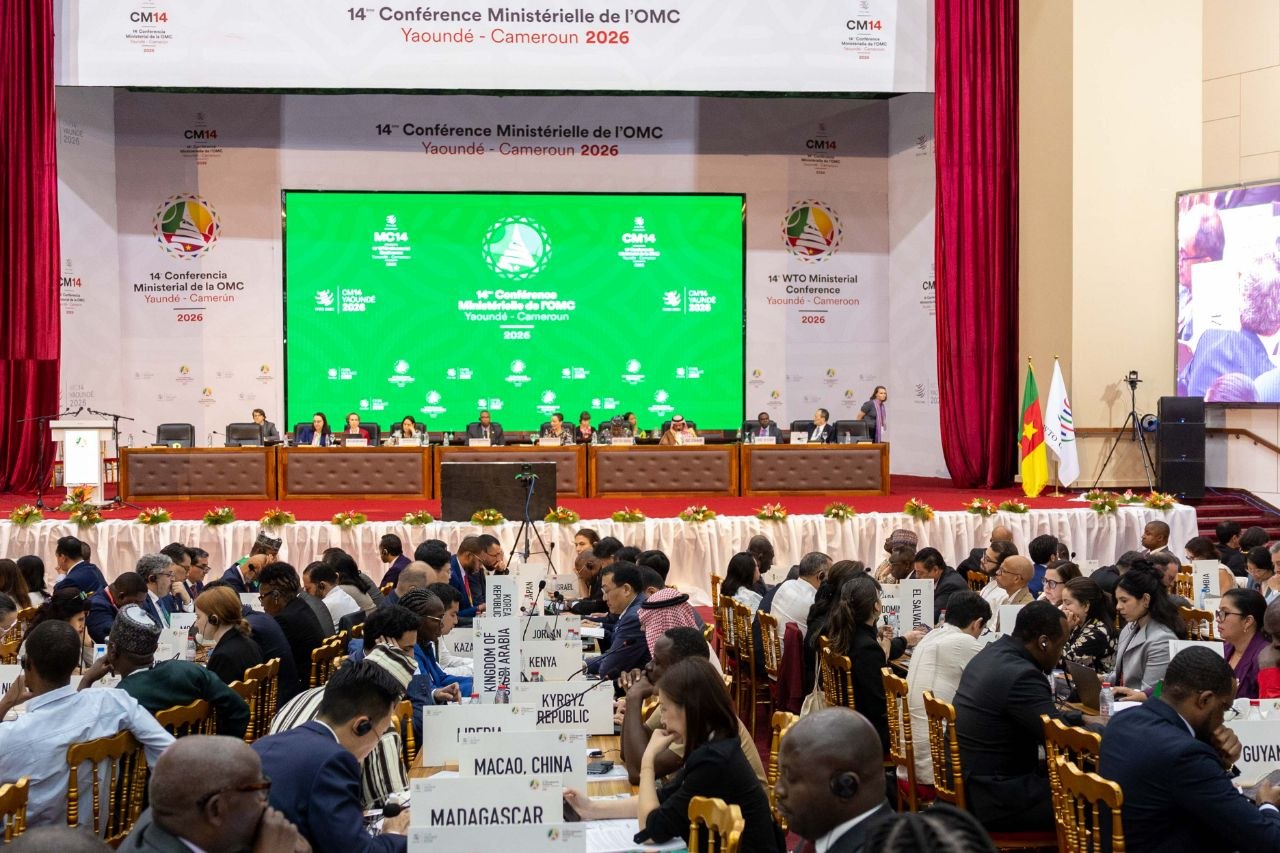
Since its adoption at the Second WTO Ministerial Conference in 1998, the WTO has agreed to a temporary moratorium for customs duties on electronic transmissions, which has served as a cornerstone of the multilateral framework for digital commerce.[1] Originally conceived when the digital economy was nascent, the moratorium has been extended on multiple occasions, most recently, for a final renewal, through the Ministerial Decision of 2 March 2024.[2] With the moratorium due to lapse at the recent WTO Ministerial Conference MC14 in Yaoundé, Cameroon in March 2026, WTO Members faced a pivotal choice: whether to convert this temporary exemption into a permanent rule or to allow it to expire, thereby restoring Members’ discretion to impose tariffs on electronic transmissions. The frantic last-minute negotiations in Cameroon notwithstanding, no agreement was reached and the moratorium lapsed on 31 March 2026.
For developing countries such as Cambodia, the decision carries particular weight. Cambodia’s economy has undergone rapid digital transformation, yet it remains heavily reliant on trade preferences and foreign investment.
The WTO moratorium prohibits the imposition of customs duties on electronic transmissions, a term understood to encompass both the medium of transmission and, in some interpretations, the digital content itself.[3] The central question for Cambodia is straightforward: should it support or oppose the permanent exemption of customs duties on electronic transmissions at the multilateral level?
Is levying customs duties on digital goods and services even possible?
Evidently, digital goods and services do not pass borders in the same way physical goods do. Nevertheless, in principle countries retain the technical capacity to impose customs duties on digital goods and services. Data packets, transmitted as electronic impulses, possess a physical dimension that could, under traditional customs rules, be treated as an importable good. The downloading of a book, for example, might be classified as the importation of a good, a service, or a hybrid of both. The 1998 moratorium was adopted precisely because such classification questions were unresolved at a time when digital trade volumes were negligible.
Thus, in theory at least, Cambodia could regard the passing of the border by this data, or the contents, as a dutiable import. Obviously, this would require various legal and administrative adjustments, for example for the collection of duties by the Cambodian receiver of the information. At the very least, this would require novel enforcement regulations and mechanisms outside of the traditional field of operations of the Cambodian customs authorities.
In this context it is important to note that digital trade is no longer marginal to Cambodia’s economy. Between 2017 and 2023, digital imports rose from USD 333 million to USD 568 million, while exports of digitally delivered services nearly tripled from USD 146 million to USD 426 million.[4] These figures underscore the growing integration of Cambodia into global digital value chains. Maintaining an open, duty-free environment for electronic transmissions supports export growth, attracts foreign investment in digital services, and facilitates technology transfer—priorities explicitly aligned with Cambodia’s development strategy.
The rise of Digital Service Taxes
The practical relevance of this theoretical option has diminished sharply. Technological evolution and the proliferation of alternative revenue mechanisms—most notably Digital Service Taxes—have rendered customs duties on electronic transmissions largely redundant. WTO Members, including Cambodia, have increasingly turned to consumption-based taxation rather than border tariffs for the digital economy.
In 2021, Cambodia introduced a VAT reverse-charge mechanism for digital goods and services at a rate of 10 per cent, modelled on the European Union’s 2006 VAT Directive. The system operates through a two-pronged approach: (i) non-resident suppliers serving Cambodian residents without full VAT registration (B2C transactions) must obtain a simplified VAT registration, charge VAT on supplies, and remit it to the General Department of Taxation (GDT); and (ii) in B2B transactions, the Cambodian recipient accounts for the VAT via reverse charge. Major platforms such as Facebook, Google, and Microsoft have duly obtained Cambodian VAT numbers and currently collect and remit 10 per cent VAT on supplies to Cambodian customers.
Across Southeast Asia, similar DST regimes now range between 5 and 12 per cent: Indonesia (12 per cent VAT on digital services, effective January 2025), the Philippines (12 per cent VAT on non-resident providers), Singapore (9 per cent GST), Malaysia (8 per cent service tax), Thailand (7 per cent VAT), and Vietnam (1.5–5 per cent combined VAT and corporate income tax). These instruments have largely displaced the need for border tariffs on electronic transmissions.
However, Cambodia’s DST regime operates under an important caveat. Article 3.1 of the Cambodia–US Reciprocal Trade Agreement prohibits “digital services taxes, or similar taxes, that discriminate against U.S. companies, in law or in fact.” Given the predominance of US-based digital service providers in many market segments, Cambodia’s existing 10 per cent VAT could be challenged as de facto discriminatory. This creates a latent risk to a significant portion of Cambodia’s DST revenue.
Mega-Regional Free Trade Agreements
Regional trade agreements are already moving decisively toward duty-free digital trade. Under the Regional Comprehensive Economic Partnership (RCEP), to which Cambodia is a party, Members undertake not to impose customs duties on electronic transmissions.[5] While RCEP does not explicitly reference “content transmitted electronically,” the provision nonetheless signals a regional consensus against border duties.
By contrast, the Comprehensive and Progressive Agreement for Trans-Pacific Partnership (CPTPP)—to which Cambodia is not a party—contains more expansive language: “no Party shall impose customs duties on electronic transmissions, including content transmitted electronically.”[6] Vietnam’s participation in CPTPP further illustrates the direction of travel in Southeast Asia. These mega-regional instruments reinforce the multilateral trend and reduce the practical utility of retaining the option to impose tariffs.
Cambodia’s 2025 bilateral commitment to the United States
A decisive constraint on Cambodia’s negotiating flexibility arises from its 2025 Agreement on Reciprocal Trade with the United States, concluded in the wake of the Trump Administration’s so-called ‘reciprocal tariff’ increases. Article 3.5 of that Agreement expressly provides:
“Cambodia shall not impose customs duties on electronic transmissions, including content transmitted electronically, and shall immediately and unconditionally support multilateral adoption of a permanent moratorium on customs duties on electronic transmissions at the WTO.”
This provision appears to bind Cambodia not only to refrain from imposing such duties bilaterally but also to advocate actively for a permanent multilateral moratorium. The language is unambiguous and leaves little, if any, room for Cambodia to oppose or even abstain from supporting permanence at MC14. Any deviation would risk breaching the bilateral agreement, with potential consequences for Cambodia–US trade relations, investment flows, and access to the US market, for example by the reinstatement of exorbitant tariffs on the import of Cambodian goods into the US well in excess of the US’s WTO commitments. Politically and legally, therefore, Cambodia’s decision space may already be markedly circumscribed.
A pragmatic stance
Cambodia’s possible position on the proposed permanent moratorium may be influenced by its 2025 bilateral commitment to the United States. As was explained above, article 3.5 of the Reciprocal Trade Agreement effectively pre-commits Cambodia to support permanence at the WTO, limiting its multilateral manoeuvrability. At the same time, the global shift toward DSTs has rendered customs duties on electronic transmissions increasingly obsolete as a revenue tool. Cambodia’s own 10 per cent VAT reverse-charge regime already captures significant value from digital supplies, while the economic data demonstrate that digital trade is a dynamic and growing component of its economy. In this context, the revenue forgone by forgoing (novel and untested) tariffs on electronic transmissions appears at best modest relative to the gains from enhanced digital connectivity and the revenue stability provided by existing DST mechanisms.
Furthermore, mega-regional agreements that already bind Cambodia, such as RCEP, indicate that the region is converging on a duty-free approach. Although the United States could potentially challenge Cambodia’s DST as discriminatory under the bilateral agreement—whether that may be legally justified is another matter—Cambodia appears to have accepted this risk when it concluded the 2025 Agreement.
In sum, a permanent moratorium on customs duties on electronic transmissions would impose minimal additional constraints on Cambodia while aligning its trade policy with the realities of the contemporary digital economy and certain (rare) pre-existing legal commitments. Such a stance would not sacrifice tax revenue which is already assured through DSTs, but it would reinforce Cambodia’s credibility as a rules-based trading partner and support the continued expansion of its digitally delivered exports.
Edwin Vanderbruggen is the Senior Partner of Andersen in Cambodia and Vietnam. He specializes in the public international law of tax, trade, and investment.

[1] WTO Ministerial Conference, ‘Declaration on Global Electronic Commerce Adopted on 20 May 1998’ (25 May 1998) WT/MIN(98)/DEC/2.
[2] WTO Ministerial Conference, ‘Work Programme on Electronic Commerce – Ministerial Decision Adopted on 2 March 2024’ (4 March 2024) WT/MIN(24)/38 and WT/L/1193.
[3] The precise scope remains subject to ongoing debate in WTO bodies; see generally the Work Programme on Electronic Commerce.
[4] WTO Trade Policy Review of Cambodia (2025).
[5] Regional Comprehensive Economic Partnership (signed 15 November 2020, entered into force 1 January 2022) (RCEP) art 12.11.
[6] Comprehensive and Progressive Agreement for Trans-Pacific Partnership (adopted 8 March 2018, entered into force 30 December 2018) (CPTPP) art 14.3(1).