
Cambodia Leadership Review
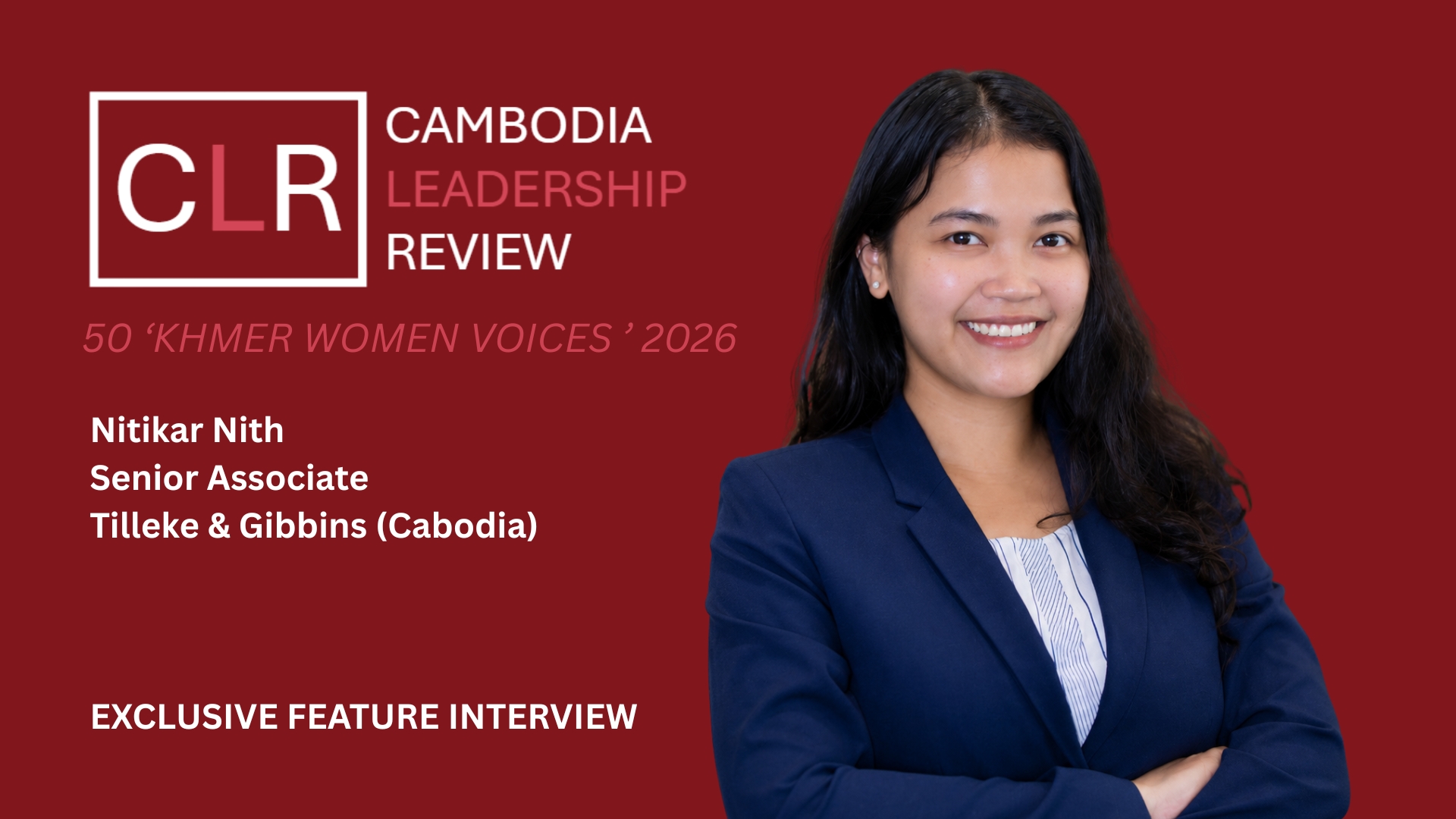
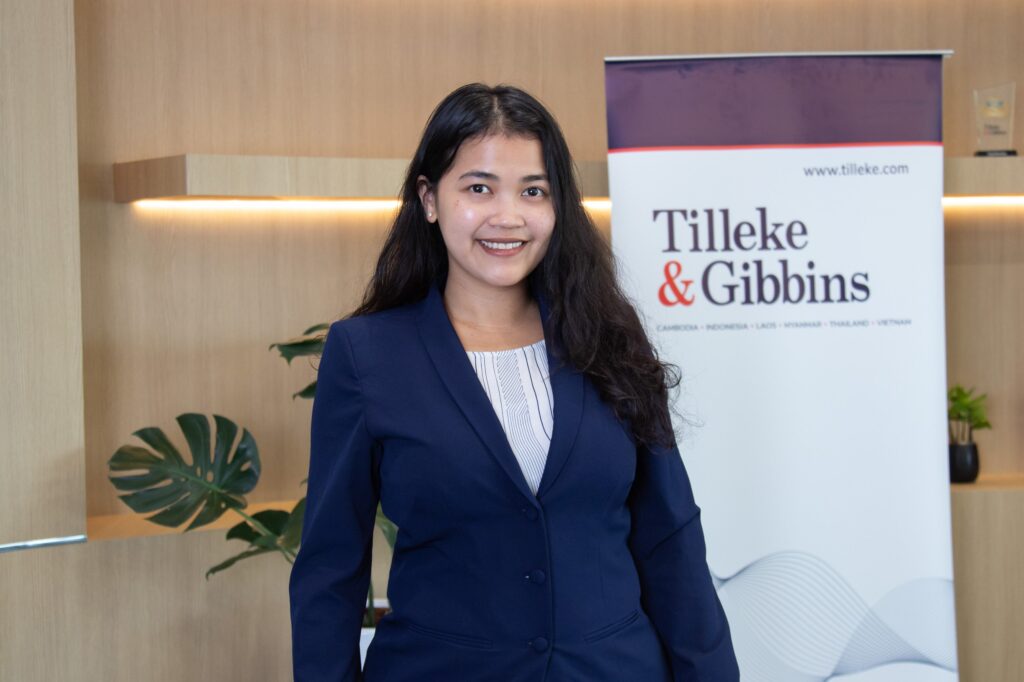
Nitikar Nith has built a distinguished legal career at the intersection of Cambodian and international business law. As a Senior Associate at Tilleke & Gibbins Cambodia, a Legal 500 Asia Pacific-ranked practitioner, certified arbitrator and mediator, and Vice-President of the Association Franco-Cambodgienne des Avocats et Juristes (AFCAJ), she combines private practice with legal education, mentorship, and advocacy for the next generation of professionals.
Beyond advising local and international businesses on corporate, commercial, employment, intellectual property, and dispute resolution matters, Nitikar is deeply committed to strengthening Cambodia’s legal profession through teaching, professional associations, and community initiatives. Her work reflects a belief that education, opportunity, and strong professional networks are essential to building a more inclusive and internationally competitive legal sector.
In this edition of 50 Khmer Women Voices 2026, Nitikar shares her journey as a Cambodian lawyer, the growing opportunities for women in the legal profession, the importance of legal education and public awareness, and why she believes Cambodia’s next generation of women professionals is well positioned to help shape the country’s future.
On the Evolving Role of Women in Cambodia’s Legal Profession
CLR: As a young Cambodian legal professional working with both local and international businesses, how have you seen opportunities for women within Cambodia’s legal sector evolve in recent years?
Nitikar: When I was admitted to the Bar in 2018, Cambodia’s legal landscape was still quite traditional—especially in litigation and dispute resolution, where women were underrepresented.
Today, I see real change. More women are pursuing advanced legal education, joining the Bar, and stepping into leadership roles. This progress is real, and it is accelerating. At Tilleke & Gibbins, I practice corporate and commercial law; at Nith & Associate, I built the dispute resolution and litigation practice. The profession is becoming more receptive to women leading in areas once considered male domains.
My recognition as a Leading Associate by Legal 500 Asia Pacific 2025 reflects not just a personal milestone but a broader industry shift. That gives me hope.
International platforms have amplified this momentum. In 2019, the French Embassy nominated me to represent Cambodia, along with other inspiring Cambodian women leaders, at the Women Forum Asia in Singapore—a proud moment that showed Cambodian women professionals belong on the regional stage. As Vice-President of the Association Franco-Cambodgienne des Avocats et Juristes (AFCAJ), I see a growing cohort of young Cambodian women entering legal practice and building networks that will sustain this progress.
Through my work on the AmCham Women Steering Committee—collaborating with the UN and other Chambers of Commerce on diversity initiatives—I have seen the conversation move beyond celebrating individual achievements. We are now building systems that will open doors for the next generation. Most recently, I attended the IBA Global Women Lawyers Conference in Lisbon. Hearing senior women leaders share their challenges, breakthroughs, and persistence reinforced my belief in the power of women’s leadership. If they can do it, so can we. I am deeply optimistic about Cambodia’s future.
On Legal Education and Public Awareness
CLR: Legal literacy and regulatory understanding are becoming increasingly important as Cambodia’s business environment continues to develop. How important is improving legal education and awareness among the wider Cambodian public, particularly for young women entering professional careers or business?
Nitikar: Legal education is foundational to Cambodia’s development. As a part-time lecturer at the Royal University of Law and Economics, I witness firsthand how a strong legal foundation empowers young professionals—especially women—to engage meaningfully in our growing business environment. Cambodia has few internationally recognized training programs for young professionals and students, and registration fees for those that exist often remain out of reach. This makes domestic legal education efforts critical.
Through Sala Traju, a Cambodian legal association I help lead, we mobilize professionals to strengthen the sector—organizing educational training, internships for students, and events, and collaborating with public and private organizations to improve legal knowledge across Cambodia.
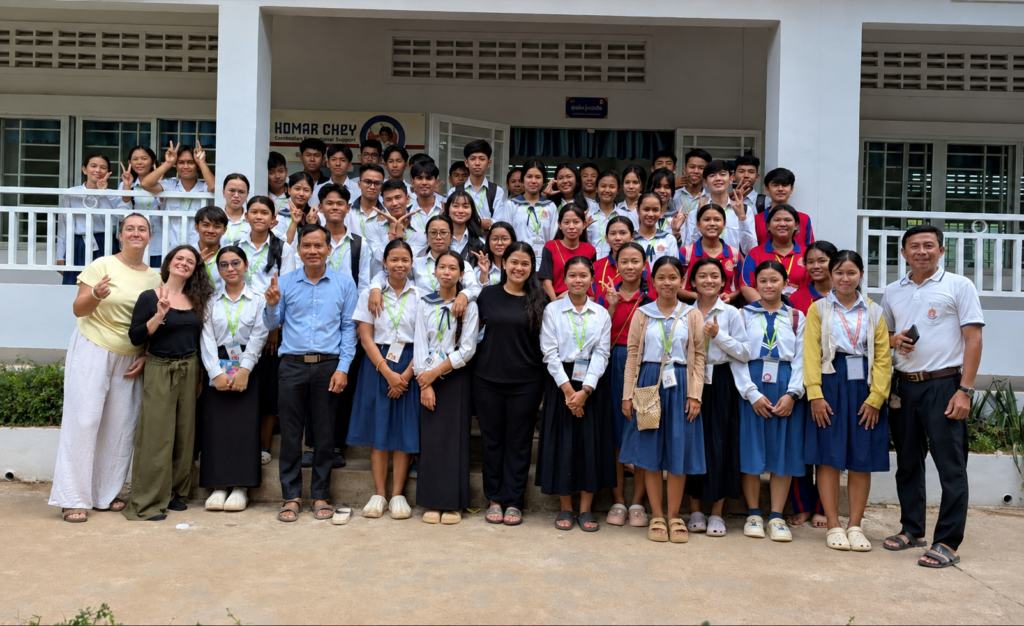
For young women, legal literacy opens doors. Understanding contracts, regulations, and dispute resolution equips them to enter professional careers on equal footing. I organize forums, career days, and mentoring programs for underprivileged students, including those in francophone bilingual programs. As Vice-President of Komar Chey, a French humanitarian association, I help rural students in Banteay Meanchey Province learn French and gain access to higher education. Education should never be limited by geography or economics.
On Supporting Business Growth in Cambodia
CLR: You work closely with companies navigating market entry, corporate setup, and regulatory requirements in Cambodia. What are some of the most important legal or regulatory areas businesses should better understand when operating in the Kingdom?
Nitikar: I assist local and international clients with market entry, corporate setup, licensing, commercial transactions, employment, energy, real estate, and intellectual property. From this experience, I would highlight several key areas:
• Regulatory and licensing: Cambodia’s framework requires intensive engagement with multiple agencies, and requirements vary significantly by sector—energy, manufacturing, education, pharmaceuticals. I regularly coordinate with regulatory bodies and ministries on compliance and market entry.
• Intellectual property: IP protection presents both significant risk and opportunity. Businesses should invest in trademark enforcement and anti-counterfeiting strategies early—not reactively.
• Employment law: Termination procedures, severance calculations, and employee rights require careful planning—especially for companies restructuring or exiting the market.
• Dispute resolution: Cambodia’s National Commercial Arbitration Centre (NCAC) is growing in importance. Familiarity with litigation, arbitration, and mediation is increasingly essential.
On Building Confidence for the Next Generation
CLR: Many young professionals find the legal profession highly competitive and demanding. What advice would you give to young Cambodian women who may be interested in pursuing careers in law, corporate advisory, or regulatory fields?
Nitikar: First, step into challenging matters before you feel ready. Some of my most formative experiences came from handling complex litigation early in my career. When I first appeared before the Supreme Court, I was nervous but determined—and I received commendations for my defense in my very first case at that level. That moment remains one of my proudest achievements.
Second, never stop learning. I pursued my Master’s in France on an Eiffel Excellence Scholarship and continue developing through professional training programs, including IPBA, the International Bar Association, Lex Mundi Institute, and my recent NCAC mediator and arbitrator certification. In Cambodia, you must be proactive about your growth.
Third, cultivate relationships. Professional relationships, patiently nurtured, open doors you cannot anticipate. Participating in professional associations or commercial chambers helps build your network and professional relationships.
Fourth, give back. Mentoring junior colleagues and teaching law students strengthens the profession and builds your own leadership. Watching a student or mentee gain confidence in their career reminds me that leadership and generosity are inseparable.
Finally, professional excellence does not require sacrificing everything else. As a mother, I have shown that it is possible to succeed professionally without sacrificing my personal life”. I achieved my Legal 500 ranking and professional recognition while navigating early motherhood. The path is demanding, but it is absolutely possible.
Above all, be bold and be confident. Believe in yourself and never let society or peer pressure define who you are. Believe in education and hard work—this will of course pay off.
On Cambodia’s Future Professional Landscape
CLR: As Cambodia’s economy becomes increasingly connected to regional and international markets, what opportunities do you see emerging for the next generation of Cambodian legal and business professionals?
Nitikar: I see tremendous opportunities ahead for Cambodia’s legal professionals. First, there is growing demand for professionals who bridge jurisdictions and languages. My trilingual capabilities in Khmer, English, and French—and my experience coordinating between multinational clients and Cambodian authorities—have been central to my career. The next generation combining local knowledge with international training will be exceptionally well-positioned.
Second, emerging sectors—renewable energy, sustainable development, green business—are creating new practice areas. Expertise in ESG compliance and green investment frameworks will be in high demand.
Third, alternative dispute resolution is rapidly growing. The NCAC recently launched its first mediator training program, and professionals in this space will support business confidence and strengthen the rule of law.
Fourth, regional integration creates cross-border opportunities. Through AFCAJ, France Alumni Cambodge, and the French Cambodian Chamber of Commerce, I have seen Cambodian professionals connect with peers across jurisdictions and create mutual opportunities.
Fifth, the next generation must prepare for technological transformation, particularly artificial intelligence and, in time, quantum computing.
In Cambodia, we have not yet discussed AI utilization in the professional landscape as much as other markets have. However, as part of globalization, this is something we cannot escape. Legal professionals who embrace AI tools for research, document review, and practice management will have a significant advantage. I encourage young professionals to stay curious about these technologies and integrate them into their work.
Last but not least, I am optimistic. Cambodia’s young professionals are well-educated, internationally connected, and motivated. With the right mentoring and networks, they will bring our legal practice to international standards—while staying true to the commitment to community that defines us.
Explore the complete Cambodia Leadership Review – 50 Khmer Women Voices 2026 featuring exclusive interviews with Cambodia’s Top 50 Khmer Women leaders. Discover their journeys, leadership lessons, and vision for the Kingdom’s future.