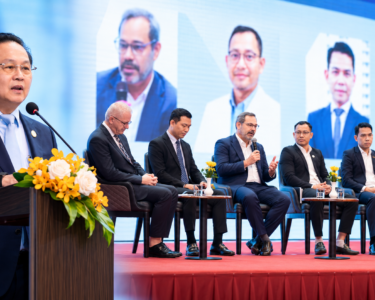


Cambodia’s Council for the Development of Cambodia (CDC) and the European Chamber of Commerce in Cambodia (EuroCham) reported progress on textile recycling, customs procedures and other regulatory reforms at the fifth Cambodia-Europe Public-Private Sector Dialogue.
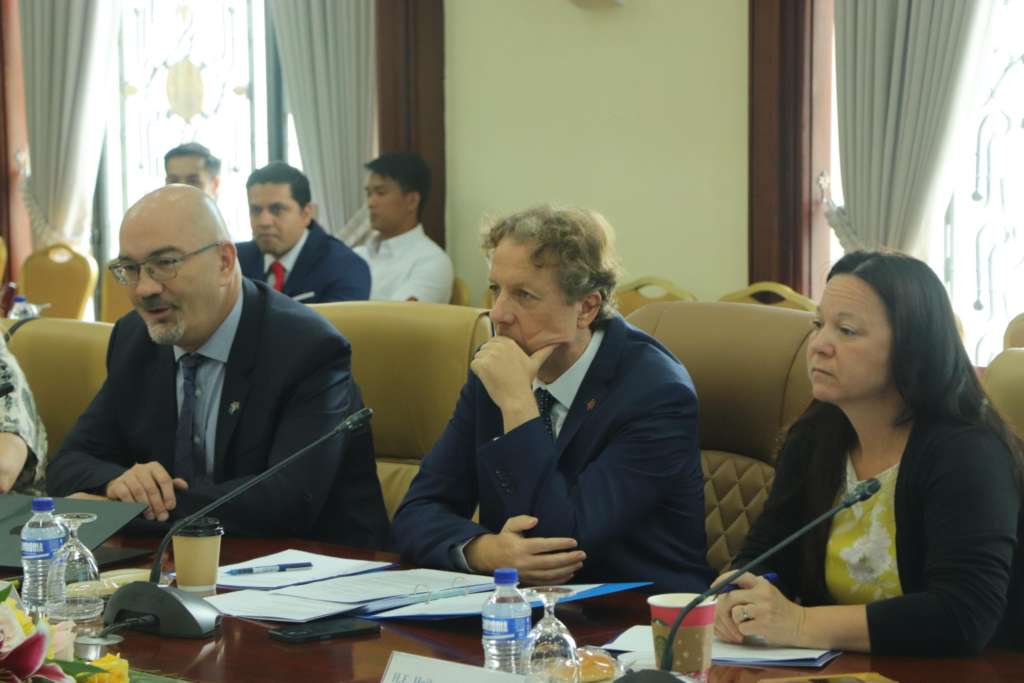
The November 4 meeting brought together senior government officials, the European Union Delegation to Cambodia, EuroCham member companies and the chamber’s board. Deputy Prime Minister Sun Chanthol, the CDC’s first vice-chairman, said the government would work with relevant institutions to address regulatory challenges and improve coordination.
Key Outcomes
- Textile recycling: The CDC confirmed a transfer-of-material mechanism could help garment factories send textile waste to recyclers. A proposed pilot and digital reporting process are being developed.
- Medicine registration: EuroCham called for Cambodia to recognise assessments by the European Medicines Agency and create a faster registration route for medicines already assessed by recognised regulators.
- Customs costs: EuroCham said private-sector broker fees contribute to total customs costs that it estimates are about twice the regional average. The General Department of Customs and Excise is promoting its portal for export documentation.
- Vehicle tariffs: The Ministry of Economy and Finance is reviewing industry recommendations on preferential tariffs for vehicles imported under the ASEAN-China Free Trade Area.
- Administrative processes: The CDC will bring government institutions together to consider digitising company documents, aligning identification requirements and connecting ministry portals.
Textile Recycling Mechanism Under Review
Under current regulations, moving textile waste cuttings from garment factories to recycling facilities can trigger value-added tax and import duties, creating additional costs for businesses.
Following the previous dialogue, the CDC confirmed a transfer-of-material mechanism could facilitate these transfers. EuroCham, the Textile, Apparel, Footwear and Travel Goods Association in Cambodia (TAFTAC) and GIZ have developed a proposed pilot and recommendations for digital reporting. The CDC said the issue had been submitted to the prime minister for consideration.
Massimiliano Tropeano, chairperson of EuroCham’s Garment and Textile Committee, said practical procedures could help Cambodia’s garment industry prepare for sustainability requirements in key export markets, including the European Union.
Regulatory Issues Affecting Healthcare and Vehicles
EuroCham called for Cambodia to recognise medicine evaluations by stringent regulators, including the European Medicines Agency, alongside those from the United States and Japan. It also recommended an expedited registration route for medicines already assessed by recognised authorities, potentially through the Health Service Registration System planned for 2027. Sun Chanthol said he would raise the issue with the Ministry of Health.
The chamber also presented findings indicating that official service fees account for only part of businesses’ total customs broker charges, with private-sector fees contributing to costs it said were about twice the regional average. The General Department of Customs and Excise is encouraging businesses to use its portal to improve visibility over export documentation.
EuroCham’s Automotive Committee raised concerns about preferential tariffs for vehicles imported under the ASEAN-China Free Trade Area. The Ministry of Economy and Finance is reviewing recommendations from industry associations. EuroCham also sought clarification on vehicle tariffs under the Cambodia-US Agreement on Reciprocal Trade.
Makara Chhoeurn, chairperson of EuroCham’s Automotive Committee, said Cambodia’s car market grew 17% through September 2026 compared with the same period a year earlier, with new vehicles accounting for about 70% of the market. He called for balanced tax treatment of locally assembled and imported vehicles.
Wider Business Environment Reforms
The Ministry of Environment is developing a three-tier environmental impact assessment system, with proposed review periods of 30, 60 and 90 days for low-, medium- and high-risk projects. Special economic zone investments are expected to be classified as low risk. Questions about the participation of international assessment and quality assurance firms remain unresolved.
The Ministry of Justice’s technical working group has completed a review of the proposed organisation and operation of a commercial court. Procedural rules still require further research, with support from the Asian Development Bank.
The CDC also committed to convening government institutions to consider ways to reduce administrative burdens, including digitising company registration documents, aligning identification requirements, connecting ministry portals and creating a unified list of business codes.
EuroCham Chairperson Tassilo Brinzer said reducing compliance costs and improving legal certainty would matter to investors, particularly in a relatively small market. He also urged the government to consider visa options for tourists, long-term visitors, experts and investors.