
Cambodia Investment Review
Cambodia’s investment authorities and European business representatives have outlined three administrative reforms aimed at reducing repeated paperwork and making investment approvals and business registration faster and more predictable.
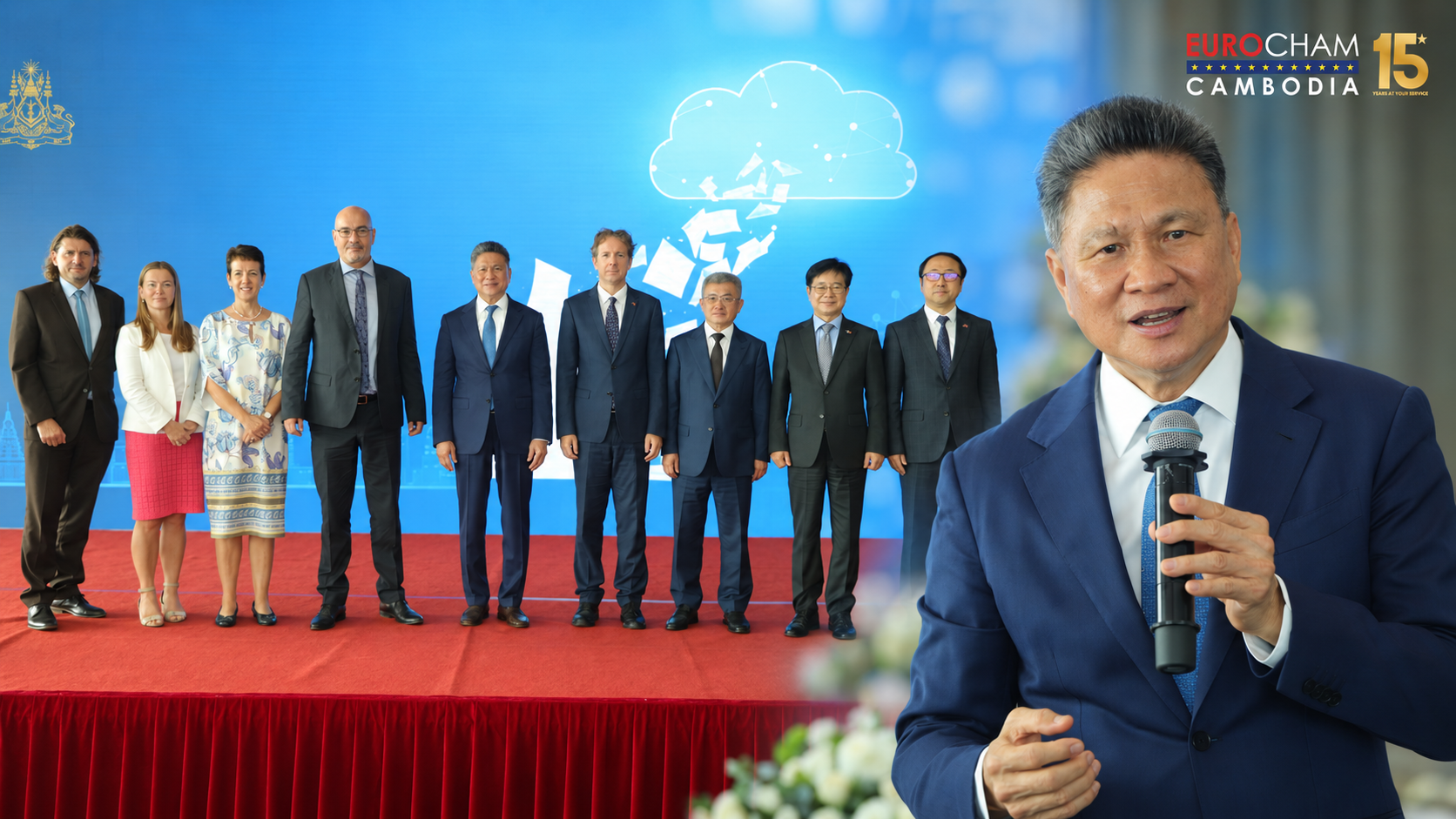
The proposals — shared electronic company documents, standardised photo requirements and consistent business activity codes — were discussed at the fourth Public-Private Sector Breakfast Briefing, convened by the Council for the Development of Cambodia (CDC) and the European Chamber of Commerce in Cambodia (EuroCham).
Held at the Steigenberger Hotel Phnom Penh, the briefing reviewed progress on a joint regulatory facilitation initiative and examined which recommendations could be implemented before the end of 2026.
According to EuroCham’s account of the session, repeated document requests have declined since a baseline assessment in June. However, no figures were provided to quantify the reduction or its effect on processing times and business costs.
Reducing paperwork across ministries
The initiative, launched during the third Public-Private Sector Dialogue, brings together the CDC, relevant ministries and EuroCham to examine the full investor journey, from investment approval through incorporation, licensing and the start of operations.
Its focus is identifying where businesses must submit the same information more than once and finding ways for government institutions to coordinate those requirements.
The first proposed reform would digitalise key company documents, allowing a single electronic version to be accepted across relevant ministries.
The second would standardise photo requirements for official documents, ideally enabling a digital photograph to be collected once and shared between institutions.
The third would align business activity codes through one publicly available classification list. This would help ensure that an activity accepted during company registration remains recognised at subsequent licensing and approval stages.
The proposals remain recommendations. The briefing examined how to secure agreement and translate them into implementation.
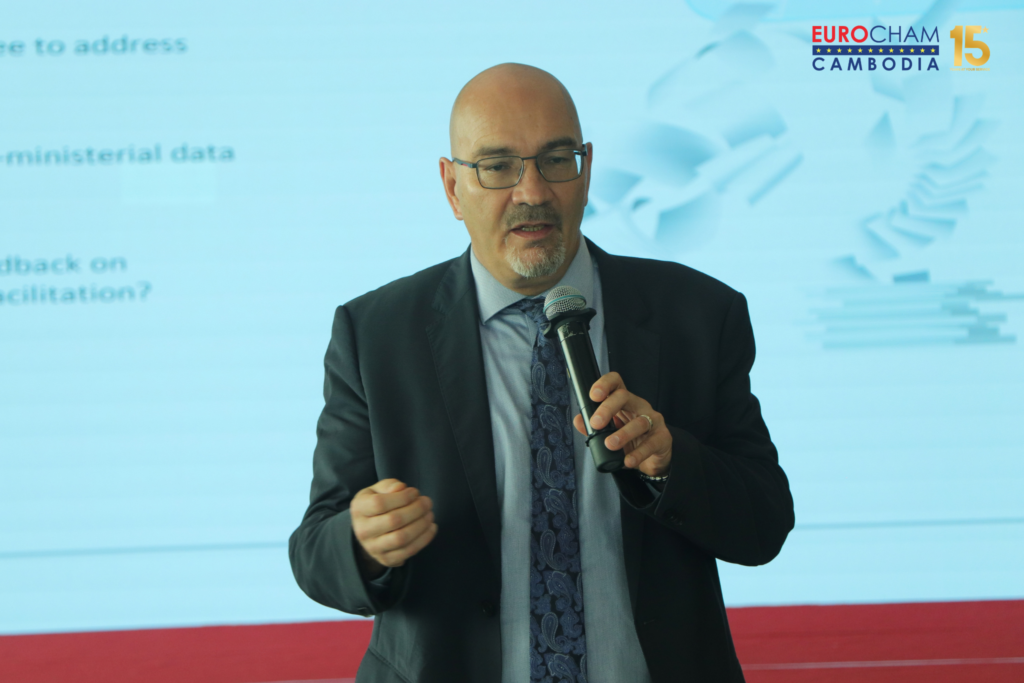
A “once-only” approach to business information
Beyond the immediate fixes, participants explored applying a “once-only” principle across government: information submitted to one institution should not have to be provided again to another.
Under that approach, ministries would share verified information through the CamDX platform, reducing the need for businesses to repeatedly supply supporting documents.
The discussion also considered how to assess whether digital solutions are reducing administrative requirements in practice.
The final exchange focused on which reforms could be delivered before year-end, which institutions could advance data sharing, and how business chambers could contribute practical feedback from companies navigating the approval process.
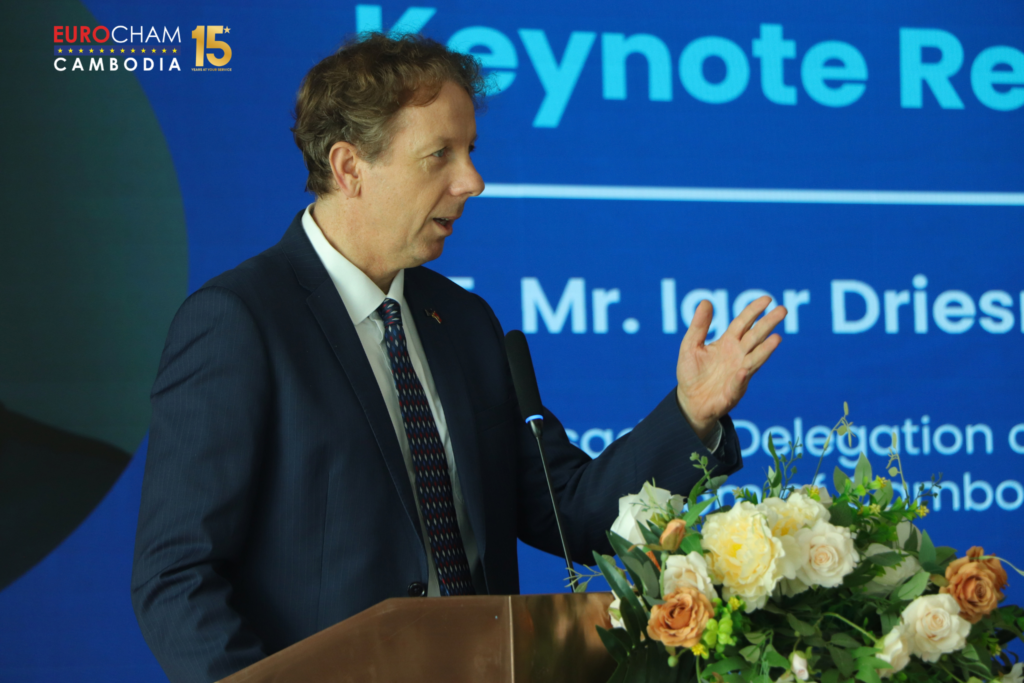
Business leaders call for sustained reform
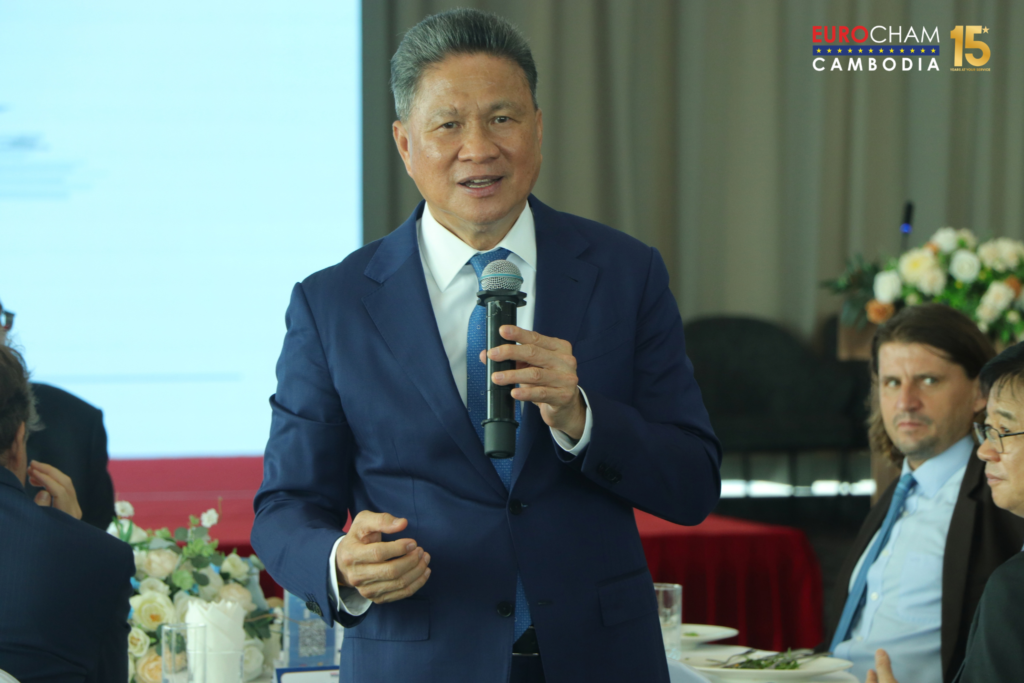
H.E. Mr. Igor Driesmans, Ambassador of the European Union to Cambodia, delivered opening remarks, followed by a welcome from EuroCham Cambodia Chair Mr. Tassilo Brinzer. H.E. Mr. Sun Chanthol, Deputy Prime Minister and First Vice-Chair of the CDC, also addressed the briefing.
In a statement accompanying the event, Brinzer said administrative burdens were a global challenge, while arguing that Cambodia had an opportunity to move quickly with sustained reform.
“We could leapfrog if we put a strong and long-term effort into this,” he said.
Brinzer pointed to Singapore as an example of how efficient, business-friendly regulations and the rule of law in commercial activity can support economic development.
The briefing brought together the European Union Delegation, representatives from the embassies of Germany, the Czech Republic, the United States, Korea and Japan, and Cambodian ministries.
Participating business organisations included AmCham, KoCham, the Japanese Business Association of Cambodia (JBAC), and Chinese and Cambodian chambers of commerce.
The session operated under the Chatham House Rule to encourage open discussion. EuroCham acknowledged support for the programme from the European Union’s Global Gateway initiative and GIZ.