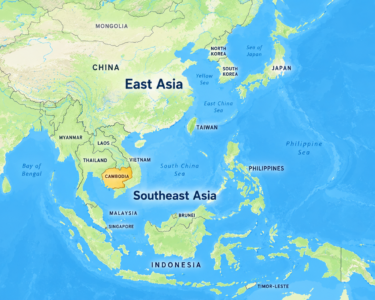


Cambodia’s economy has been on a steady upward trajectory over the past decade, and new data suggests that this progress is doing more than raising incomes.
It is also helping people live longer.
An analysis of World Bank data from 2015 to 2024 reveals a strong relationship between Cambodia’s GDP per capita and life expectancy. During the period, life expectancy increased from about 68.8 years to more than 70.7 years, while average income rose from roughly $1,500 in 2015 to over $2,600 in 2024.
The two indicators show a remarkably strong relationship. Regression analysis indicates a highly significant correlation between higher GDP per capita and longer life expectancy.
In simple terms, the findings suggest that economic growth can improve living standards, healthcare access, incomes, and public services. As economies expand, families are generally better able to afford nutritious food and medical care, while governments gain greater resources to invest in hospitals, sanitation systems, and infrastructure.
This pattern is evident in Cambodia’s development story over the past decade. Growth in sectors such as garments, tourism, construction, and manufacturing has contributed to rising incomes and improved living standards.
Figure created by the author based on data from the World Bank
However, the data also reflects the impact of the COVID-19 pandemic. Despite continued economic activity, life expectancy declined significantly in 2020 and again in 2021. The pandemic disrupted healthcare systems, livelihoods, and daily life across the country, temporarily slowing the progress Cambodia had been making.
Since then, both economic and public health indicators have rebounded. From 2022 onward, life expectancy resumed an upward trend alongside rising GDP per capita, signaling a return to stability and growth.
Still, strong GDP growth alone does not necessarily mean a country is broadly prosperous. Challenges such as inequality, limited access to healthcare and gaps in education can prevent the benefits of economic expansion from reaching all citizens. For economic development to improve overall welfare, growth must be inclusive and sustainable.
For Cambodia, the challenge is not only to maintain consistently high rates of economic growth but also to ensure that the gains are sustainable and broadly distributed.
Meeting this challenge will require responsive governance, greater accountability and policies that address emerging economic and social issues. By responding to citizens’ needs and promoting inclusive development, the government can help ensure that future economic growth translates into lasting improvements in living standards and opportunities for all Cambodians.
This will require continued investment in key sectors such as healthcare and education while sustaining the creation of higher-value-added jobs that enable more people to benefit from increased economic output and new opportunities.
As the data offers a hopeful message, it also indicates that economic development is not only about numbers and markets. It can also lead to healthier lives, longer lifespans and better opportunities for ordinary people.
Suon Mach is a second-year master’s degree student in Development Studies at the Royal University of Phnom Penh.