


Business leaders say faster commercial dispute resolution is critical to restoring lending, resolving bad loans and strengthening investor confidence
Cambodia Investment Review
Cambodia’s business community is calling for the establishment of a specialised Commercial Court and modern bankruptcy framework, arguing the reforms are urgently needed to resolve more than US$5 billion in distressed assets, reduce rising non-performing loans (NPLs), and return capital to productive use across the economy.
The proposal was the focus of the International Business Chamber (IBC) Regular General Meeting held on Wednesday at Shangri-La Phnom Penh under the theme “The Commercial Court: Putting Stalled Assets Back to Work.” The discussion examined how Cambodia can strengthen commercial dispute resolution to improve access to finance, enhance investor confidence and support long-term economic growth.
Panel Speakers
- Mr. Ouk Ry – Senior Partner, BNO & Paul Law Offices
- Mr. Stephen Higgins – Managing Partner, Mekong Strategic Capital
- Mr. Torsten Kleine Buening – Chief Risk Officer & Compliance Advisor to the CEO, ABA Bank
Moderator
- Mr. Paul Clements – Chairperson, International Business Chamber (IBC) and Managing Partner, J.A.D.E.
The discussion comes as Cambodia’s banking sector continues to record steady credit growth despite weakening asset quality.
According to the National Bank of Cambodia’s (NBC) June 2026 Banking Supervision Report, outstanding loans increased 4.6 percent year-on-year to US$64.2 billion. However, the banking sector’s non-performing loan ratio climbed to 9.6 percent, compared with 8.4 percent in June 2025, reflecting increasing pressure on borrowers as the property market continues to cool.
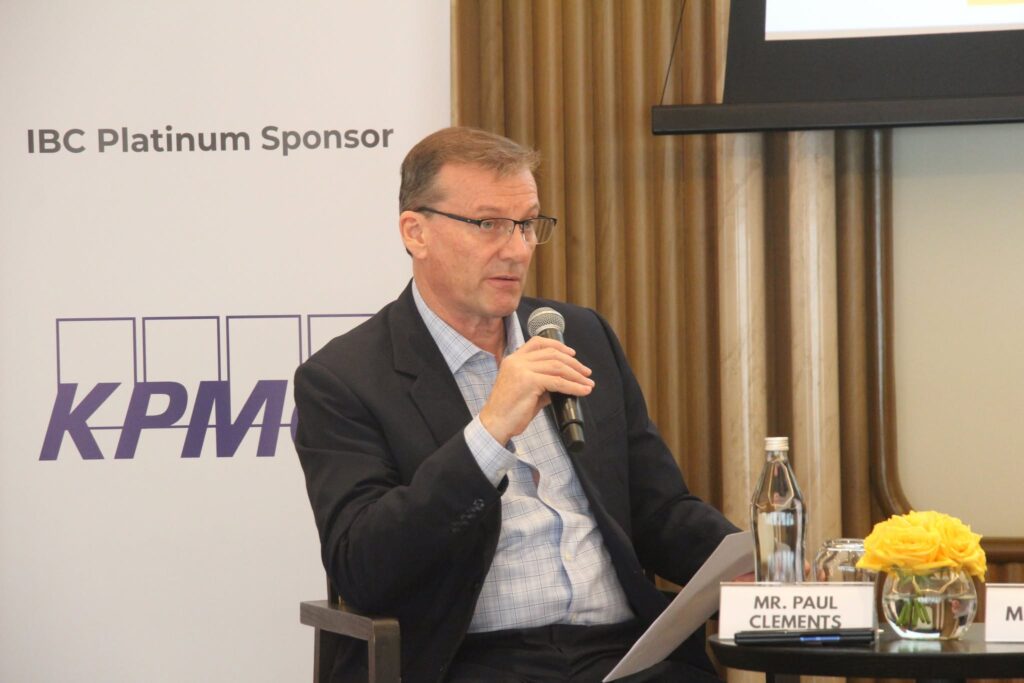
Five to Seven Years to Recover Defaulted Loans
One of the central issues raised during the discussion was the length of time required for lenders to recover collateral after a borrower defaults.
Panelists said the current legal process can take between five and seven years from loan default until a bank is finally able to repossess, sell the underlying asset and recycle the recovered capital into new lending.
During that period, billions of dollars remain tied up in unresolved legal proceedings instead of supporting new investment, business expansion and economic activity.
Industry participants estimated Cambodia now has (according to a ARMO report) more than US$5 billion in stranded or distressed assets, much of it linked to the prolonged slowdown in the property sector following the end of the 2019 real estate boom.
Panelists emphasized the urgency of the issue, noting that Cambodia aims to become a middle-income country by 2030, and that significant capital and assets are currently tied up, preventing them from contributing to economic progress.
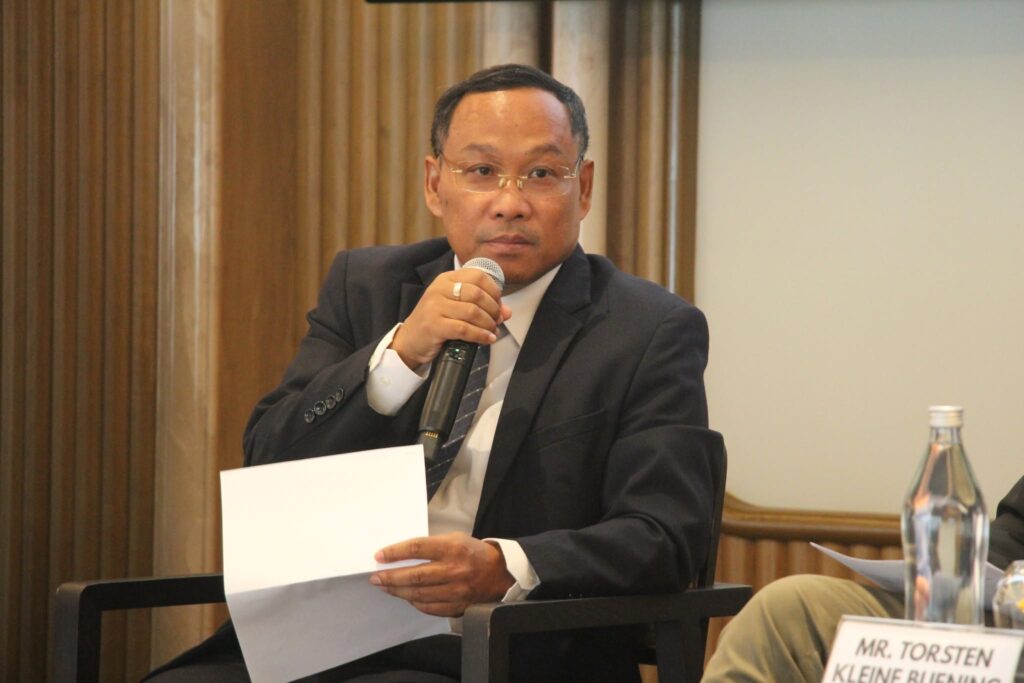
Property Market Reality Slowing Resolutions
Speakers noted that one of the biggest obstacles to resolving distressed loans is the gap between borrower expectations and today’s market conditions.
Many property owners continue valuing assets based on the record prices achieved before COVID-19, when Cambodia’s property market was supported by heavy speculation and strong Chinese capital inflows.
With property values having adjusted significantly since then, negotiations between lenders and borrowers often stall because borrowers remain unwilling to accept current market prices.
The result is prolonged court proceedings, delayed asset sales and increasing volumes of capital sitting idle within the financial system.
Concerns Over Moral Hazard
The panel also highlighted concerns about growing moral hazard within the lending system.
Because repossession cases often remain before the courts for several years, defaulting borrowers can continue occupying or using the secured property throughout much of the legal process.
Participants argued that lengthy enforcement periods reduce incentives for borrowers to resolve their debts quickly while preventing banks from recovering capital that could otherwise be lent to productive businesses.
They also noted that even if a repossessed property is ultimately sold below the outstanding loan amount, borrowers generally remain legally responsible for the remaining balance, allowing lenders to pursue the outstanding debt for many years after the sale.
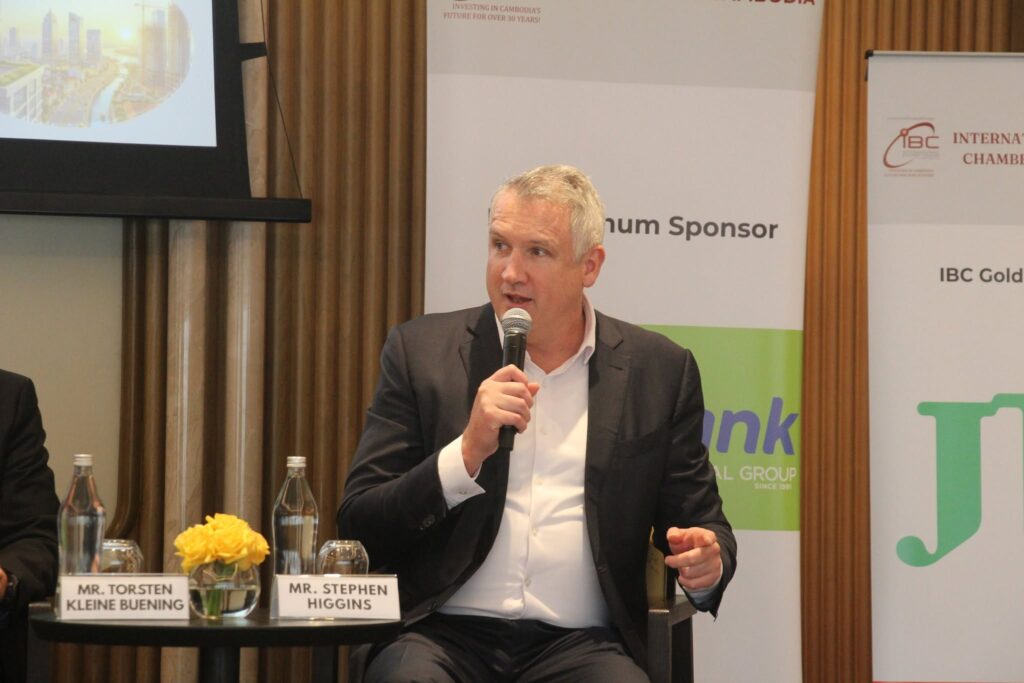
Commercial Court Alone Not Enough
While participants broadly supported the creation of a specialist Commercial Court, they argued that judicial reform must be accompanied by comprehensive personal and corporate bankruptcy legislation.
Such laws would provide a structured legal process for financially distressed individuals and businesses to restructure or declare bankruptcy while creating greater certainty for lenders seeking to recover assets.
Without modernizing the current bankruptcy legislation, participants said many distressed borrowers remain trapped in lengthy legal disputes without a clear pathway toward financial resolution.
Regulatory Progress Needs Judicial Support
The panel noted that Cambodia has already taken important regulatory steps to address distressed assets.
On 19 February 2026, the National Bank of Cambodia issued the Prakas on Conditions for Asset Management Institutions (AMIs), creating a legal framework allowing licensed institutions to acquire, manage and resolve non-performing loans and collateral from banks and financial institutions.
However, participants argued that without a legal system, including for example a commercial or specialized court, capable of efficiently enforcing creditor rights, the AMI framework alone is unlikely to achieve its intended objectives.

Focus on Large Commercial Defaults
Speakers emphasised that any future Commercial Court and amendment to the bankruptcy regime should target first and foremost commercial borrowers, rather than vulnerable households or small landowners.
Several suggested introducing a minimum loan threshold so that specialised insolvency procedures would primarily apply to commercial, larger corporate and investment-related defaults while protecting lower-income borrowers.
Learning from Regional Neighbors
The discussion also highlighted regional examples that Cambodia could adapt.
Thailand established its Central Bankruptcy Court in 1999 following the Asian financial crisis to accelerate corporate restructurings and the resolution of distressed assets. Vietnam has similarly developed specialised legal procedures for commercial insolvencies and corporate debt resolution.
Participants argued Cambodia could draw on these established regional models rather than designing an entirely new framework.
To strengthen confidence during the early years of implementation, several panelists also suggested involving experienced international commercial judges or advisers to mentor Cambodian judges, helping build specialist expertise while reinforcing confidence among foreign investors.
The recommendations will now be advanced through Working Group D before being presented at the Government-Private Sector Forum chaired by Prime Minister Hun Manet later this year, where business leaders hope commercial legal reform will become a national economic priority.