

By Raymond Sia
“Banking is very good business if you don’t do anything dumb – Warren Buffett”
The above quote by one of the world’s best investment guru is apt and while it sounds simple & straight forward; we still see banks (and bankers) paying the price of their own folly or being unprepared and not having contingency plan(s) to manage a crisis (should it occur).
In the final part of Who’s Gonna Ride Your Wild Horses series that covers the banking sector, we look at a few priorities that banks and bankers should be focus-on; bearing in-mind the list is not exhaustive.
Read More: Opinion: Who’s Gonna Ride Your Wild Horses? (Part II – Banking Outlook for 2026)
Banking industry in Cambodia have experienced strong balance sheet growth the past decade; along with attractive & high net interest margins; to the extent that it attracted many individuals and organizations to seek and apply for a banking license.
The landscape has changed the last 3 years as Cambodia banking industry entered into an unprecedented phase; resulting from the impact of Covid-19 and a number of uncontrollable forces such as global geo-political tensions and trade tariff. These occurrences have caused pressure to businesses and individual cashflow; eventually resulting in more delinquent / non-performing loans (“NPL”) cases and causing banks to be more cautious in their lending activities.
1. Liquidity & Lending
“Cash is King”
There has been an increased public interest in recent times on a bank’s financial position; namely their liquidity situation.
We have seen a few banks experiencing tight liquidity positions and were not able to satisfactorily cope to meet the withdrawal demands of their customers. Instead, these banks have imposed a maximum daily cap on the amount of withdrawal. This has caused anxiety in their customers and while credible efforts & measures have been implemented by all relevant stakeholders; we need to be mindful that such situation requires urgent & swift actions to contain (any) negative impact. Perception is a powerful force and often; it is more important than reality itself.
Trust & confidence are the bedrock and foundation of any financial institution and any compromise or even perceived change on this foundation will hurt (badly) any financial institution.
Globally in recent times, we have seen examples of banks facing large withdrawals and because these banks were caught surprised and did not have a contingency plan in-hand, this disruption eventually caused the institutions to close their operations.
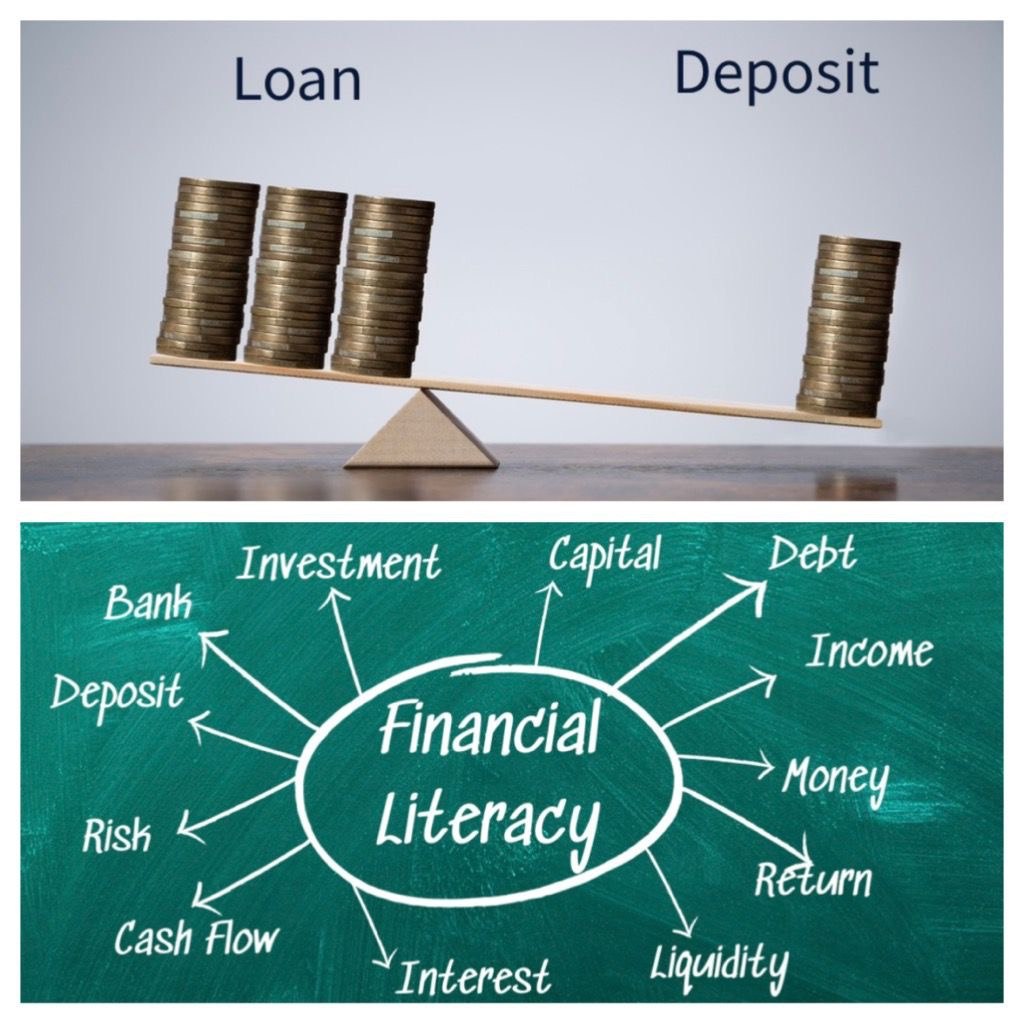
It is encouraging to see the industry Loans-to-Deposit ratio (“LDR”); which is one of the indicators for liquidity declining (and improving) the past few years. However, we should not rest on our laurels as the lower lending growth and lower Statutory Reserves Requirements in the last 3 years had a contributing role on the lower LDR.
LDR is not a regulated financial ratio unlike solvency or capital adequacy ratio; but is a vital indicator for a financial institution when faced with tightening liquidity situations.
A prudent banker will not just rely on LDR and will also match its liquidity position with its loan portfolio & lending pipeline to ensure any immediate deposit withdrawals will not cause unnecessary disruptions to its business & daily operations.
“Fund Before You Lend”.
2. Literacy & Liability
“If something is too good to be true, it probably isn’t”
Banks have moral & social responsibility to their customers and to the community they serve.
Bankers need to ensure they adhere to the principles of “Responsible Banking” and have a duty to ensure their customers are aware of their obligations & liabilities (for lending customers) and rights (for deposit customers).
Bank customers are equally responsible to ensure they duly understand their obligations and be responsible for their actions.
Cambodia banking industry appears to have more challenges & headwinds on the “financial literacy front” compared to ensuring the Kingdom has adequate “financial access” to its people. The large number of banks and micro-finance institutions that is in the Kingdom provides a tailwind to the “financial access” cause.
There are evidently (especially in recent times) more challenges to ensure customers and the public have the appropriate financial education & knowledge.
Banks ought to channel more investment & time to provide the appropriate level of financial education to their customers to avoid any misunderstanding in the future. Banks need to ensure they continue to be a safe haven for the public to deposit their hard-earned money/savings.
“A person can be highly educated, professionally successful, and financially illiterate”
3. People & Machines
“No one is indispensable”
There is no doubt Artificial Intelligence (“AI”) is the New World Order being employed in many industries; banking included. In current times, if a banker fails to recognise the benefits & synergy in leveraging on AI for their work, the banker will likely fail even before starting any new initiatives.
The discussions around redundancies as a result of AI and “rise of machines” is a sensitive topic but it is of reality & eventuality.
Notwithstanding the incredible power and influence of AI in daily banking operations, there are many tasks which cannot be delegated to machines or technology at this juncture and still require people or human intervention.
The “People” component is still relevant and important and we are all mindful that (at least for the near & mid-term) human capital is an important (if not the most important) component for any organization.
Not sounding too theoretical; every “people” in any banks (or organizations) starts-off their careers as a “profile” and the onus is on the respective banks’ leadership & management to identify the profiles with potential-to-be-talents and develop them.
Today; we have ample profiles in the banking industry and need to ensure swift conversion of profiles to talent. Banks should make it a key performance indicator to ensure conversion of “profile” to “talent” occurs swiftly and effectively. This is the pipeline of the future and tomorrow’s success is very much determined by our today’s actions.
“The best way to predict the future is to invent it.”
Raymond Sia currently serves as Managing Director of Canadia Investment Holding Plc and Board Director for Canadia Bank and Credit Bureau Cambodia. Raymond believes every bank and banker should uphold the principles of Responsible Banking. He also believes artificial intelligence is a double-edged sword but if used responsibly, it can be a good force for change & transformation. Raymond is also the author of the “Right Angle – The Collection Volume One” which is available for sale. The views expressed above are strictly the author’s personal opinion and do not represent the organisations & institutions he is attached with or represents.