
By Him Vatana and Try Chhaytith
Cambodia is set to graduate from Least Developed Country (LDC) status on 19 December 2029, following two reviews by the United Nations Committee for Development Policy in 2021 and 2024.
Having been categorized as an LDC since 1991, Cambodia’s graduation is a milestone, as it ensures an adequate political environment and the implementation of major reforms in legal and policy planning and enforcement, alongside support from international partners.
LDC graduation is not a finish line, but a test of whether Cambodia’s economy can compete and stay resilient without trade preferences.
Amid global and regional uncertainties ranging from intensifications of US-China competition, global economic slowdown, and discontents of globalization, it is important that Cambodia continues to enhance partnership with international partners to broaden spaces for its economic development post-LDC graduation.
LDC Graduation Impacts on Cambodia
For more than three decades, through duty-free and quota-free (DFQF) access to developed countries under the European Union’s Everything But Arms initiative, the backbone of the economy has transformed from traditional agriculture to low-labor-intensive industry.
The garment, footwear, and travel goods (GFT) industry, bicycles and other cycles, electrical equipment and metal products, and agricultural goods — particularly rice — have transformed into core sectors employing more than 1.2 million people as of June.
Export growth, particularly in GFT, has averaged roughly 10 percent annually over the past decade to the EU, the US, the UK, Canada, Japan and the rest of the world. Japan has seen growing demand for GFT from Cambodia since 2019, with exports growing by an average of about six percent annually.
Upon graduation, a 2024 projection from the United Nations Development Programme indicates that tariffs on EU-bound GFT goods will rise from 0 percent under EBA/GSP+ to 8.8 percent under standard GSP or 11.5 percent under Most Favored Nation (MFN) rates.
Rice faces the steepest jump, from $0/tonne to $203/tonne ($75/tonne for broken rice). Bicycle tariffs to the EU will rise to 10.1 percent (GSP) or 14.5 percent (MFN).
Canada-bound GFT exports would face tariffs of up to 16.1–16.4 percent. Export declines are expected in rice (13.8 percent), bicycles (18.2 percent), and GFT (8.6 percent). National income will fall by $2.947 billion, over 165,000 people could become unemployed, and about 432,000 people could be pushed into poverty between 2027 and 2030.
The Generalized Scheme of Preferences (GSP) will be granted automatically, and Cambodia can apply for the Generalized Scheme of Preferences Plus (GSP+) after a three-year LDC transition period.
GSP+ is the best option for Cambodia to retain favorable trade preferences. However, eligibility is difficult to obtain, particularly regarding Rules of Origin (RoO) in the GFT sector, as Cambodia relies heavily on imported fabric. This puts the sector at a disadvantaging position compared to Bangladesh and Indonesia, as these countries can produce goods using their own fabric.
Why Deeper International Partnerships Matter
With additional shocks due to slow global economic growth, changes in US trade policy, an energy crisis, the Cambodia-Thailand border conflict, and a sharp rise in non-performing loans, the Ministry of Economy and Finance’s GDP growth projection for 2026 was downgraded from 5.0 percent to 4.2 percent, while the International Monetary Fund projected growth to be around 3.0 percent.
To deal with these multiple shocks, the government launched the Comprehensive Intervention Program in Response to the Multi-crises Situation, allocating a budget of $1.2 billion to strengthen the country’s socio-economic conditions.
This clearly shows that Cambodia’s economy remains vulnerable to external shocks. Graduating from LDC status is not the easiest option, but it has been determined by the government in line with Pentagonal Strategy Phase 1 and set by the United Nations Committee for Development Policy (CDP).
Leveraging the advantages of trade preferences remains key for Cambodia to protect its market and enhance competitiveness but relying solely on them is not a permanent solution, as preferences change over time.
Therefore, structural reforms should be addressed to build economic resilience. They include revitalizing the Law on Investment (differentiating between legal documents, policy interventions, and operational procedure documents, with the Council for the Development of Cambodia serving as a one-stop service for foreign investors to facilitate the complete business establishment process), ensuring investment competition, lowering energy and logistics costs, reskilling and upskilling workers, moving beyond low-skill labor industries, and attracting high-value-added investment.
Thus, Cambodia needs deeper partnerships and should explore opportunities with international partners, such as Japan, the US, the EU, the United Kingdom, China, Singapore, South Korea, and others to contribute to structural reforms, particularly by offering lessons learned, investment, technical assistance and financing.
Among all partners, Japan is the most suitable counterpart for Cambodia to deepen its partnership with. Japan has an experience gradually moving beyond low-labor-intensive industries (cut and trim GFT) to higher-skilled labor industries (automobiles, semiconductors, advanced technology, R&D) over a 20-year period.
In addition, Japan has established a trusted partnership with Cambodia and elevated relations to a Comprehensive Strategic Partnership in 2023.
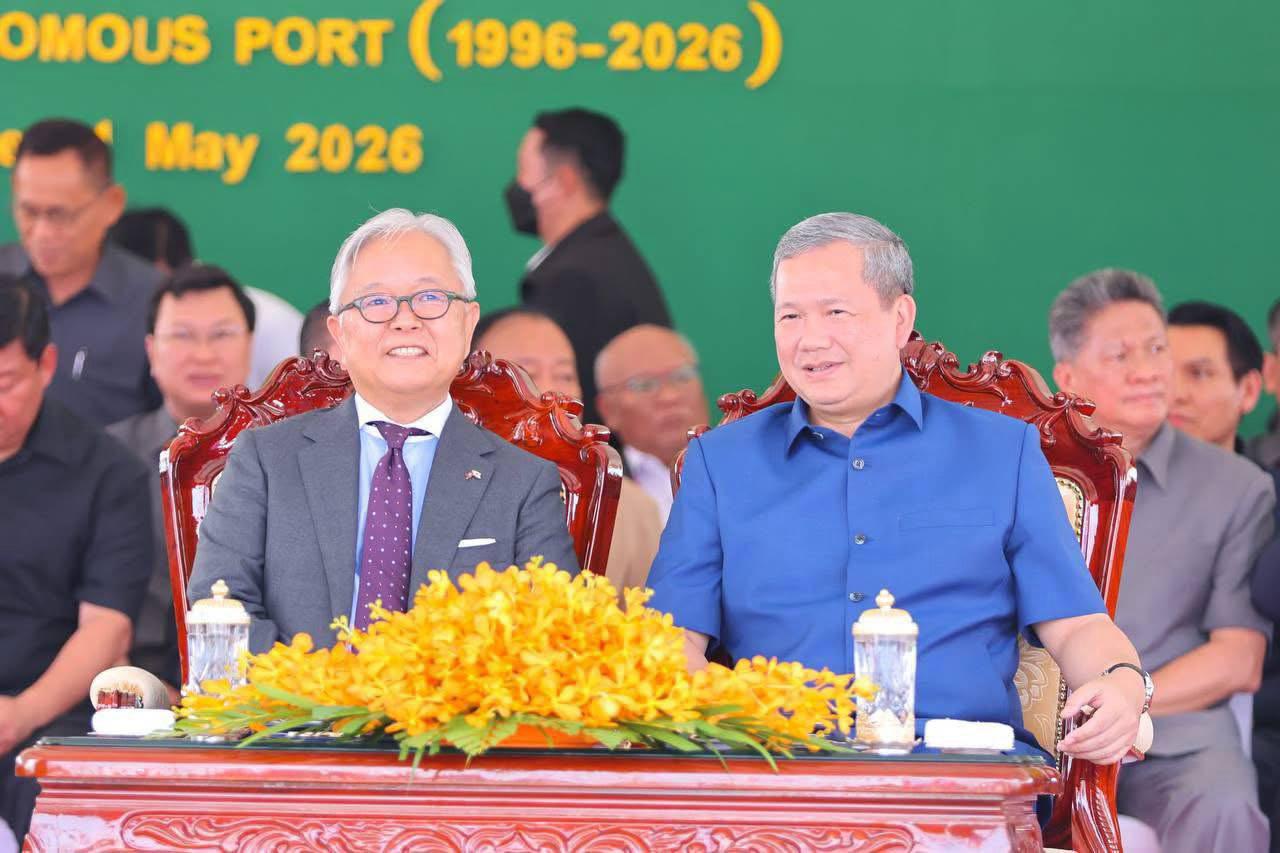
Japan is a major contributor to building Cambodia’s competitiveness and resilience through several key actions: strengthening the Council for the Development of Cambodia’s capacity regarding the one-stop service mechanism to reduce foreign investors’ burdens and serve as a reliable institution that builds investor confidence and trust; acting as a primary partner in developing Cambodia’s only deep-sea gateway, the Sihanoukville Autonomous Port; investing to integrate Cambodia into Japanese supply chains; improving energy stability and clean water access; and developing curriculum standards, instructor training, and skills testing in the electrical sector for Technical and Vocational Education and Training.
Building on this long-standing relationship, Cambodia and Japan should further enhance their partnership for mutual benefit.
In conclusion, Cambodia should proactively pursue structural reforms to prepare for LDC graduation, mitigate unpredictable shocks, and achieve its ambition of becoming a high-income country by 2050.
A set of new engines of growth for Cambodia’s economy should be properly defined to enhance the prospects of developing a more broad-based economy for the country.
International partners, particularly Japan, remain major contributors with which Cambodia can deepen mutually beneficial partnerships to build its economic resilience and chart a way forward to enhance its long-term economic growth amidst the regional and international uncertainties.
_________________
Him Vatana and Try Chaytith are researchers at the Cambodian Center for Regional Studies (CCRS).