
David Van
Cambodia’s SMEs Don’t Need Another Policy Announcement—They Need Policy Consistency & Tacit Implementation
For almost a decade, Cambodia has repeatedly reaffirmed that small and medium enterprises (SMEs) are the backbone of the national economy. Government policy papers, national development strategies and ministerial speeches have consistently emphasized the importance of nurturing entrepreneurship, promoting innovation, improving competitiveness and helping SMEs transition into the formal economy.
On paper, the vision has been difficult to criticize. The Royal Government’s SME policy framework, reinforced by the 2018 Sub-Decree on Tax Incentives for SMEs, sought to encourage businesses to register formally by offering fiscal incentives, promoting investment, improving productivity and supporting enterprise development. The underlying philosophy was straightforward: a stronger SME sector would ultimately create more jobs, diversify the economy and expand Cambodia’s long-term tax base. Yet eight years later, the mood within the private sector tells a different story.
Cambodia’s SME Vision Meets Business Reality
Recent discussions among Cambodian entrepreneurs reveal not anger but something arguably more concerning—fatigue.
The comments are remarkably consistent.
“We have heard these promises before.”
“There are always meetings.”
“There are endless consultations.”
“But on the ground, nothing really changes.”
Such remarks should not be dismissed as isolated complaints. Rather, they reflect a widening perception gap between policy intent and business reality.
Interestingly, most entrepreneurs are not demanding tax exemptions or special privileges. Nor are they rejecting the Government’s commitment to supporting SMEs. Instead, they are asking a far simpler question:
If SMEs are truly the backbone of Cambodia’s economy, why does running one still feel so difficult?
Many business owners point not only to taxation itself, but to the broader burden of compliance. VAT obligations, licensing requirements, documentation, inspections, administrative procedures and reporting requirements collectively consume time, resources and working capital. For a large corporation with dedicated finance and legal departments, these are routine administrative functions. For a family-owned business employing ten people, they often become the owner’s second full-time job. Time, in this sense, becomes an invisible tax.
When Policy and Practice Send Different Signals
Perhaps the most revealing insight emerging from recent discussions comes from within government itself. According to informed sources, one of the recurring concerns has been that while the Government’s broader policy direction sought to provide incentives and encourage SME growth, tax administration increasingly prioritized revenue collection and compliance.
Whether this perception is entirely accurate is ultimately a matter for policymakers to assess. However, if businesses genuinely experienced stronger tax enforcement while simultaneously hearing repeated announcements about incentives, it is easy to understand why many concluded that the Government was sending mixed signals.
One hand appeared to be encouraging businesses to formalize.
The other appeared to be making formalization increasingly expensive.
This is not necessarily evidence that either policy objective was wrong.
A Coordination Challenge Across Government
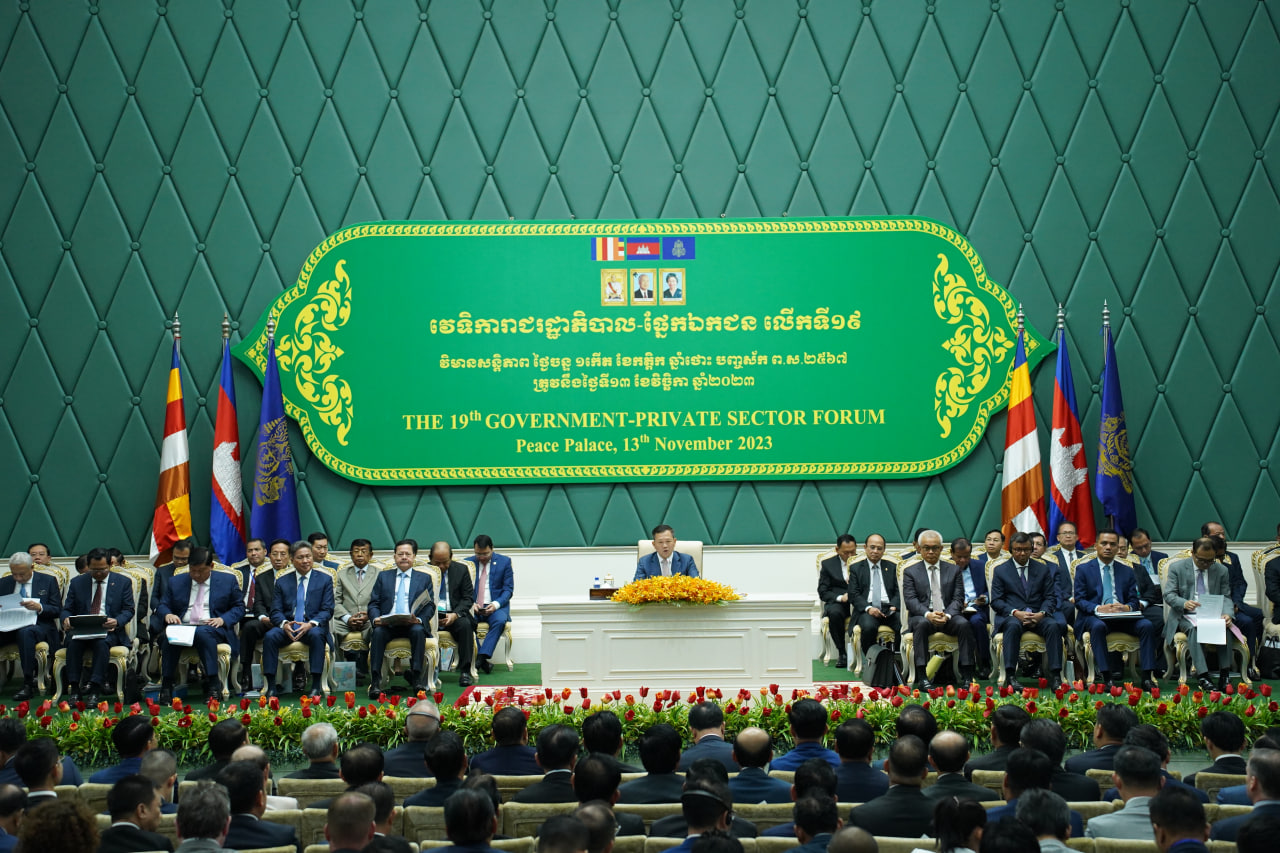
MISTI, the Ministry responsible for SME development naturally focuses on enterprise growth, competitiveness and employment. Meanwhile, the General Department of Taxation has an equally legitimate mandate—to improve compliance, expand the tax base and collect the revenue needed to finance public services.
Individually, both objectives make perfect sense. The challenge arises when they are not synchronized. Public policy succeeds not because individual agencies perform well within their own mandates, but because government functions as a coherent whole. Entrepreneurs do not distinguish between ministries or departments. They judge government by their overall experience.
If one agency announces tax incentives while another intensifies compliance and enforcement, businesses experience only the net effect. That disconnect becomes even more pronounced during periods of economic weakness. Cambodia’s SME policies were largely conceived during years of sustained economic expansion. At the time, annual growth exceeded seven percent, tourism was booming, construction was flourishing and domestic consumption was rising steadily. Under such conditions, businesses were naturally better positioned to absorb new compliance requirements associated with formalization.
Economic Conditions Have Changed
Today’s economic landscape is very different. The lingering effects of the pandemic, weaker domestic demand, a subdued property market, cautious consumer spending and tighter financing conditions have fundamentally altered the operating environment. Many SMEs are no longer focused on expansion. Their priority is survival. In such circumstances, even compliance requirements that may have been manageable during periods of strong growth can become significant financial burdens.
What SMEs Actually Want
This may explain why many SMEs no longer judge government support by the number of policies announced or forums organized.
Instead, they ask practical questions:
Is tax filing becoming simpler?
Is obtaining licences becoming easier?
Can I access affordable financing?
Are compliance costs declining?
Can I spend more time serving customers than completing paperwork?
If the answer to these questions remains largely unchanged, then even well-intentioned policies struggle to earn credibility. This should not be interpreted as a failure of Cambodia’s SME policy itself. In fact, the 2018 framework correctly identified many of the structural constraints facing SMEs and introduced tax incentives intended to encourage formalization and investment.
Implementation Matters More Than Announcements
The more important question is whether implementation across different parts of government remained sufficiently coordinated as economic conditions evolved.
As economies slow, policy priorities often require recalibration.
Many countries temporarily simplify tax administration, defer certain obligations or reduce compliance burdens—not because taxation becomes less important, but because preserving businesses ultimately protects future tax revenue. A surviving enterprise continues employing workers, purchasing supplies and paying taxes over many years. A business forced to close contributes neither employment nor fiscal revenue.
A Call for Greater Policy Consistency
The comments circulating among Cambodia’s entrepreneurs should therefore be viewed less as criticism and more as constructive feedback:
They are not asking government to stop collecting taxes.
They are asking for greater policy consistency.
They are not opposing formalization.
They are asking that the benefits of becoming formal be sufficiently tangible to justify the additional costs.
They are not rejecting dialogue.
They are asking that years of consultation now translate into visible implementation.
Measuring Success by Business Confidence
Ultimately, Cambodia’s success in developing a vibrant SME sector will not be judged by the number of policy documents published, consultation workshops held or speeches delivered. Those are important milestones, but they are not the destination. The true measure of success is much simpler. It is whether entrepreneurs wake up each morning believing that expanding their business is easier than it was yesterday.
When SME owners feel confident enough to invest, hire more workers, purchase new equipment and enter new markets, government policy has succeeded. Until then, the message emerging from the private sector remains both simple and compelling:
Cambodia’s SMEs do not need another round of consultations. They need a coherent policy environment where every arm of government works towards the same objective—helping businesses survive today so they can drive the nation’s prosperity tomorrow.
A Shared Responsibility: It Takes Two Hands to Clap
While much of the public discussion has focused on government shortcomings, fairness requires acknowledging that Cambodia’s SME ecosystem cannot be transformed by government action alone. Sustainable competitiveness is a shared responsibility. As the Khmer proverb reminds us, ‘it takes two hands to clap.’
The Private Sector Must Also Modernise
The private sector must also embrace a 21st-century mindset. Many SMEs continue to operate with traditional business models, limited digitalisation, weak financial record-keeping, informal management structures, inadequate workforce training and a reluctance to invest in productivity improvements. These constraints reduce competitiveness irrespective of government policy.
Formalisation should not be viewed solely as a tax obligation but as a pathway to stronger governance, easier access to finance, participation in regional and global supply chains and long-term business sustainability. Businesses also need to strengthen transparency, adopt digital accounting systems, improve corporate governance, invest in employee skills, pursue innovation and continuously improve productivity rather than relying primarily on low-cost competition.
Government, for its part, should continue simplifying regulations, coordinating policy across ministries and ensuring that tax administration aligns with the broader objective of SME development. The private sector, however, must equally recognise that sustainable growth requires adaptation, investment and a willingness to modernise. Pointing fingers at government alone will not make Cambodian enterprises more competitive.
Towards a National Competitiveness Compact
Cambodia’s next phase of SME development will depend less on drafting new policies than on building mutual trust between government and the private sector. Government must resist measuring success solely through tax collection and instead place equal emphasis on enterprise growth, productivity and competitiveness. At the same time, businesses must move beyond a mindset of dependency and embrace innovation, digitalisation, productivity, professional management and good governance. The future of Cambodia’s SMEs will not be determined by what either side does alone, but by how effectively they work together.
Cambodia is entering a different economic era. The easy growth driven by garments, construction and tourism has matured, while global competition is becoming increasingly knowledge-based and technology-driven. The country’s next chapter will be determined by productivity, innovation, human capital and the ability of its enterprises to compete regionally and globally.
This transition cannot be delivered by government policies alone, nor by private enterprise acting independently. It requires a new National Competitiveness Compact founded on trust, accountability and shared responsibility. Government must provide a predictable, coherent and enabling policy environment, while businesses must modernise, innovate and invest in becoming globally competitive.
In the end, the debate should not revolve around whether government or the private sector is more responsible for Cambodia’s SME challenges. The more meaningful question is how both can become stronger partners in achieving the same national objective. Policies create opportunities, but entrepreneurs create enterprises. When both hands clap together, Cambodia will not simply have more SMEs—it will have stronger, more resilient and internationally competitive businesses capable of driving the nation’s long-term prosperity.
VAN David (Vichet)
21-6-2026
David Van is a veteran Cambodian business strategist and public policy advisor with over 45 years of multinational corporate, trade, and investment experience across Southeast Asia. A pioneer in Public–Private Partnerships (PPP) and blended finance, he has helped shape Cambodia’s trade, transport, skills, and industrial development policies while advising governments, multilateral agencies, and global corporations.