
Cambodia Investment Review
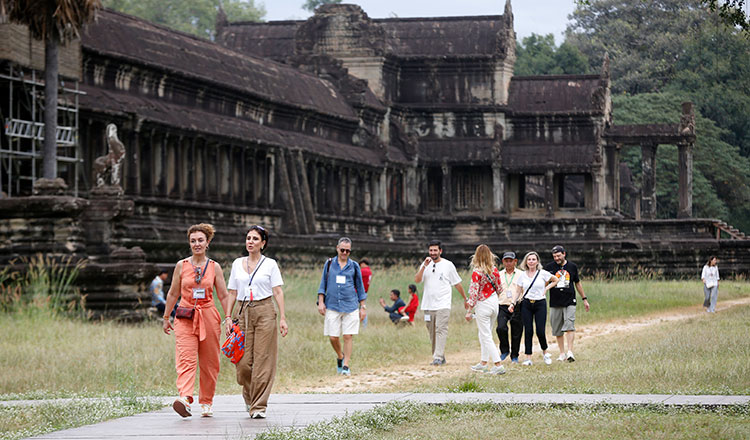
Cambodia’s tourism sector is shifting focus toward recovery strategies and confidence rebuilding measures after international visitor numbers fell sharply in 2025, raising concerns about the Kingdom’s regional competitiveness.
The Ministry of Tourism (MoT) this week released its “2026 Tourism Statistics Forecasts” alongside the official launch of the 2025 Tourism Indicators, outlining both the challenges facing the sector and a series of proposed solutions aimed at reviving growth.
According to the ministry, Cambodia welcomed 5.57 million international tourists in 2025, down 16.9 percent from the 6.7 million recorded in 2024. However, tourism revenue still rose 6.6 percent to $3.878 billion, with Tourism Minister Huot Hak saying the Kingdom had seen growth in higher-spending visitors.
The Numbers
The ministry outlined three possible tourism outcomes for 2026 depending on regional conditions and confidence levels:
- Strong recovery: 6.1–6.3 million visitors
- Moderate recovery: 5.3–5.5 million visitors
- Continued pressure: 4.6–4.8 million visitors
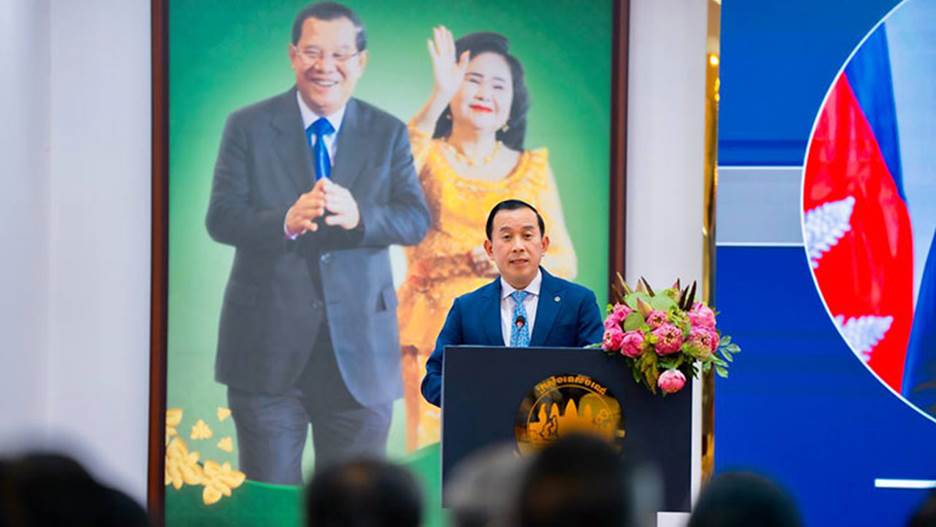
Hak said the tourism working group under the Government-Private Sector Forum had already developed six strategic measures approved by the Royal Government to help stabilize the sector and restore international confidence.
Read More:
“Together, they have formulated six strategic measures aimed at maintaining the resilience of Cambodia’s tourism sector against crises, sustaining regional and global competitiveness, strengthening confidence, and enhancing trust in the tourism sector,” Hak said.
Visa Reform Emerging as Key Industry Priority
Private sector leaders say one of the fastest ways to improve Cambodia’s tourism competitiveness is through visa reform.
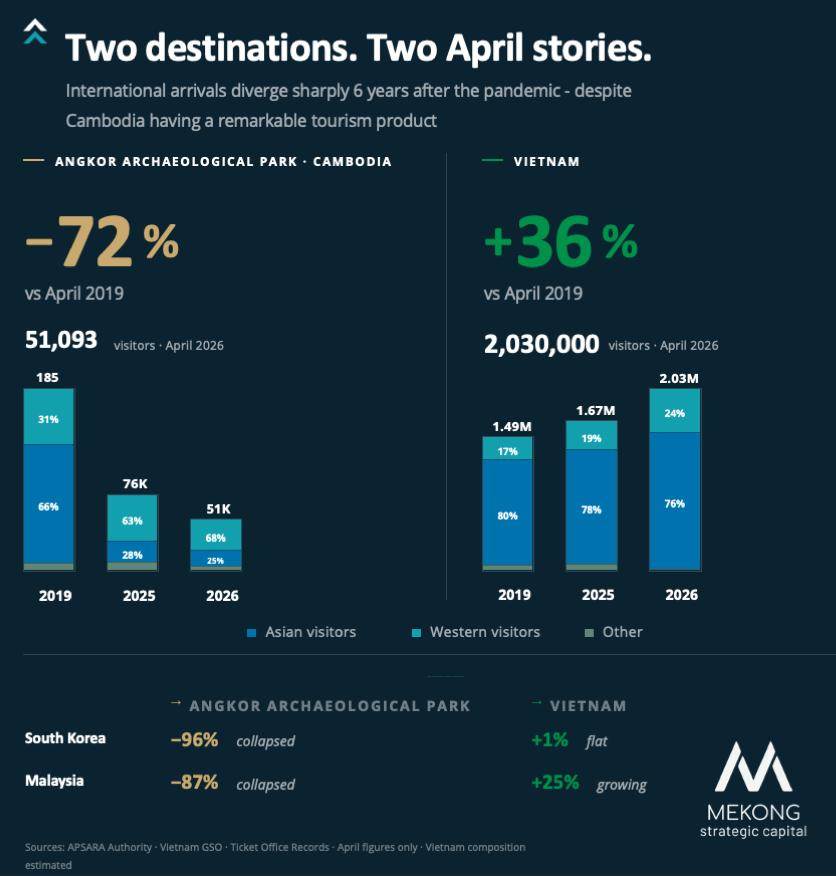
Stephen Higgins, managing partner of Mekong Strategic Capital, said Cambodia’s visa policies have become less competitive compared to regional rivals such as Vietnam, which has significantly expanded visa exemptions in recent years.
“Over the last few years, Vietnam has dramatically expanded tourist visa exemptions. Cambodia’s current approach is just uncompetitive,” Higgins told Cambodia Investment Review.
However, Higgins noted that ASEAN travellers already benefit from visa-free access to Cambodia, meaning the issue primarily impacts long-haul and non-ASEAN markets rather than regional visitors.
Industry observers believe simplifying tourist visa procedures and expanding visa-free access for additional markets could help Cambodia regain lost market share among international travellers.
Data from Mekong Strategic Capital showed that South Korean arrivals to the Angkor Wat complex remain down 96 percent compared to pre-pandemic levels, while Malaysian visitor numbers are down 87 percent from pre-Covid levels. Higgins said these declines were driven more by reputation issues and regional tensions than by flight connectivity alone.
Global Marketing and Reputation Recovery
Another major focus is rebuilding Cambodia’s international image following years of negative headlines linked to scam centre operations.
Higgins says Cambodia now needs a major international tourism marketing campaign to restore traveller confidence and reposition the Kingdom as a premium destination.
“Cambodia needs to do a dramatically better job at international marketing to offset the reputational damage,” Higgins said, suggesting the government consider investing at least $30 million into a coordinated global campaign.
Pre-pandemic, tourism represented around 10 percent of Cambodia’s GDP and supported hundreds of thousands of jobs across hospitality, transport, retail and entertainment sectors.
Airport Connectivity and Long-Term Planning
Industry leaders are also calling for improved tourism infrastructure and stronger transport connectivity, particularly in Siem Reap.
Higgins said the issue is now less about reversing airport decisions and more about improving transport links and future planning processes.
“This isn’t so much a fix, as it is hard to undo it, but for Cambodia’s long-term future they need to look at how decisions like this get through the system. Now all they can really do is fix the transport links,” Higgins said.
The Ministry of Tourism meanwhile stressed that accurate tourism data, professional monitoring systems and closer government-private sector coordination would be essential in shaping future tourism policies.
As Cambodia faces rising competition from neighbouring destinations, the success of its tourism recovery may increasingly depend not only on visitor numbers, but on how quickly confidence, accessibility and international perception can be rebuilt.