

Cambodia Leadership Review
Currie Sun Min Lee serves at the intersection of law, diplomacy, finance, and cross-border investment. She is currently Korean Embassy Legal Advisor, Independent Director and Head of Audit Committee at KB PRASAC Bank Plc., KOTRA M&A Global Regional Advisor, and Head of Korea Desk at Bun & Associates. Her roles span advisory, governance, policy engagement, and investment facilitation, positioning her at the nexus of Korean capital and Cambodia’s evolving legal and regulatory landscape.
With prior experience advising on foreign direct investment in China during its formative regulatory period, Lee brings a cross-cultural and cross-jurisdictional perspective to legal leadership in emerging markets. In this interview she reflects on leadership in legal practice, the evolution of the Korean business community in Cambodia, investor confidence, and the future of cross-border legal services.
Download the 50 International Voices Magazine 2026 here.
Leadership in Legal Practice
CLR: As the Korean Embassy Legal Advisor, KB Prasac Independent Director/Head of Audit Committee, KOTRA M&A Global Regional Advisor and Head of Korea Desk at Bun & Associates, how would you describe your leadership approach within a legal advisory context, and what does effective leadership look like when advising clients operating across different legal, cultural, and regulatory environments?
As the Korean Embassy Legal Advisor, KB Prasac Independent Director/Head of Audit Committee, KOTRA M&A Global Regional Advisor and Head of Korea Desk at Bun & Associates, my leadership approach—particularly in Asia—is inherently collaborative, interpersonal, network-centric, partnership-oriented and trust-centered. In a legal advisory context—particularly one involving cross-border investment, not only in relation to Korean investors—effective leadership is not limited to technical legal expertise or experience. It requires practical, commercial and proactive engagement with clients and other public and/or private stakeholders before, during and after providing legal advice.
Read More: Leader Talks with Currie Sun Min Lee on Cambodia’s Legal Landscape and Korean Investment
Rather than limiting oneself to passively prescribed mandates, I see leadership as establishing a nexus for Korean investors to flourish by navigating legal, cultural, and regulatory nuances. This means closely participating in cross-sectoral and/or cross-societal Korean and Cambodian community engagements, predicting operational opportunities and/or challenges, and positioning the firm as a long-term strategic partner rather than a transactional service provider.

Advising across different legal, cultural, and regulatory environments requires the ability to translate—not just language, but expectations—practically, commercially and proactively. Having practiced foreign direct investment in China when the legal and regulatory framework was nascent, one truly appreciates the effect of culture and particularly connections, i.e. ‘guanxi’ in Chinese, ‘inmek’ in Korean or ‘khsae/kar korop/sahakar/bandanh’ in Khmer, on norms which dictate decision-making in both professional and personal contexts. Effective leadership involves bridging the gap between Korean corporate culture and Cambodian legal, regulatory and administrative realities, ensuring that the advice is both vetted and viable. It also means assisting clients with navigating nuanced formal and informal practices and advising on the bilateral interpretation and application of ever-evolving expectations, and strategically adapting to and aligning with commercial objectives.
My leadership role is layered with my wearing of parallel “hats” which collectively inform how I assist or advise clients. As the Korean Embassy Legal Advisor, KB Prasac Independent Director/Head of Audit Committee, KOTRA M&A Global Regional Advisor and Head of Korea Desk at Bun & Associates, I operate at the intersection of commercial objectives, investment priorities, policy and promotion, and corporate operations, which provide me with a unique insight into legal, cultural, and regulatory trends.
Ultimately, leadership in cross-border legal advisory is about stewardship—of investor interests, institutional initiatives, and market developments. My role is to lead not only by responding to legal queries, but by contributing to creating confidence in a commercial climate in which Korean investors and their investments will succeed and continue to be sustainable.
Media Profile and Broader Engagement
CLR: Prior to relocating to Cambodia, you were featured in and interviewed by television channels from CCTV to CNN, newspapers and fashion magazines from Harper’s Bazaar Jewelry, Marie Claire, L’Officiel, Madame Figaro to VOGUE, lifestyle magazines such as TATLER, and travel magazines from Luxe City Guides, Travel+Leisure Asia’s Best of 2009 to ELLE Italia. As Insider China’s “Women to Know,” Tatler China’s “Top 8 Business Influencers,” and a strategic consultant on HNWIs for multinational luxury brands, how does this influence your role today?
I believe that my diverse engagements, particularly relating to client relations and having been a business owner myself, provide me with a proactive, commercial and practical perspective in how I approach and address the legal issues of investors and clients.
This unique flexibility and foresight have been especially useful in emerging markets where strategically curating and cultivating connections with stakeholders and understanding the commercial objectives and operations of clients and investors is critical. These connections and understanding permit me to assist on matters in a manner that is commercially strategic, not only with regard to the interpretation and application of legal advice, on which I rely on Bun & Associates’ respective local specialisms, but also on identifying synergies in connecting stakeholders for investment opportunities or meeting the actual needs of clients and investors.

The Korean Business Community in Cambodia
CLR: From your vantage point, how has the Korean business community in Cambodia evolved in recent years, and what legal, regulatory, or operational issues are Korean companies most commonly navigating as they establish and expand their presence in the Kingdom?
From my vantage point, the Korean business community in Cambodia has evolved in discernible stages of development cooperation and shifting sectoral strengths. Korean engagement was closely connected to ODA and infrastructure-related initiatives—with private investment initially concentrated in real estate and subsequently financial institutions and capital markets—and is recently diversifying into FMCG, manufacturing, logistics, technology and services sectors.
This diversification reflects not only Cambodia’s own market maturation, but also an overall regional recalibration. As traditionally favoured Korean investment destinations in ASEAN—most notably Vietnam—become increasingly saturated, Cambodia is increasingly perceived as an attractive alternative for its comparatively lower entry costs, political stability, strategic positioning and higher growth potential.
Investor interest is additionally reinforced by the relative accessibility and approachability of Cambodian government institutions. Direct dialogue with policymakers, particularly the relevant line ministries—a clearer communication channel and stronger sense of public-private partnership—is perceived by many Korean investors as a significant differentiator in emerging markets given its development cooperation history.
Alongside these developments, the legal, regulatory and operational landscape for Korean companies has evolved. There has been a substantial shift towards formal, official and institutionalised engagement aligned with the Royal Government of Cambodia’s priorities on transparency and rule-based administration.
Despite Cambodia’s impressive institutional progress, legal, regulatory, and operational challenges remain, as in other emerging markets. A key issue is the unintentional unpredictability of administrative practices that are not articulated in the laws, regulations, sub-decrees, prakas, or other instruments. This complicates compliance planning for Korean corporates.
Cambodia’s Legal Environment and Investor Confidence
CLR: How do you assess the maturity and direction of Cambodia’s legal and regulatory framework today, particularly in areas such as investment, dispute resolution, and compliance, and how does this affect investor confidence from Korea and the wider region?
My assessment is that Cambodia’s legal and regulatory framework has reached a level of meaningful maturity—with a deliberate direction towards the institutionalization of investment, dispute resolution and compliance measures—albeit within the realities of a dynamically developing system. This trajectory has direct implications for investor confidence, particularly for Korean investors who tend to prioritize legal and regulatory predictability, established corporate governance standards, and certainty with exit and entry procedures.
It is impossible to ignore the impact of recent scam-related incidents on both private sector investment and public sector ODA, particularly regarding enforcement inadequacies, reputational risks, and market integrity. However, what has been notable—and positively perceived from a Korean vantage point—has been the Royal Government of Cambodia’s response. The speed, visibility, and seriousness with which authorities acted to address these issues have been perceived by many Korean investors as a signal of institutional intent by a politically stable power, rather than systemic weakness or unwillingness.
Dispute resolution is another area in which Cambodia’s framework is more mature than is often assumed. Cambodia is a signatory to the New York Convention and has an established domestic arbitral institution in the form of the National Commercial Arbitration Centre (NCAC), which provides both arbitration and mediation as alternatives to court-based litigation. Unfortunately, both remain underutilized, often due to a lack of familiarity rather than lack of function.
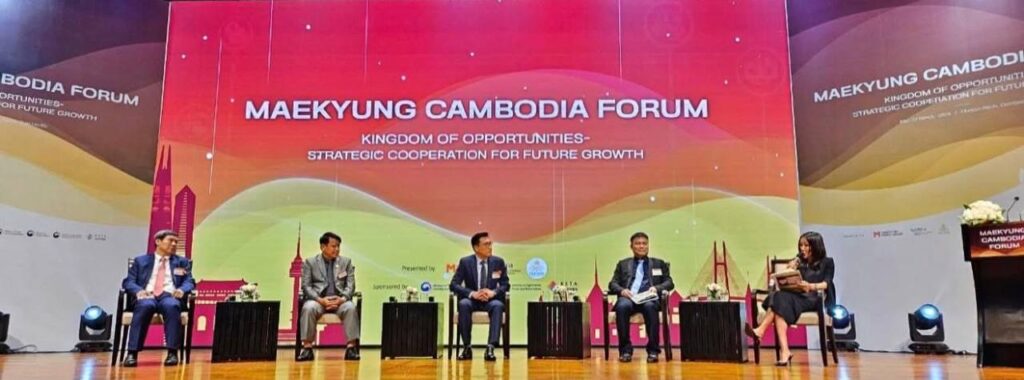
Looking Ahead
CLR: Looking forward, what trends do you expect to shape legal services and cross-border investment between Korea and Cambodia over the coming years, and how is Bun & Associates positioning its Korea Desk to support clients in a more complex and competitive environment?
With intensifying regional competition for capital and increasingly compliance-reliant corporate strategies, institutional credibility becomes a critically decisive criterion as investors prioritize investment destinations that are aligned not only with their financial but also ESG-related reputational risk appetites.
Investor confidence is not determined by the absolute absence of risk but by the presence of a responsive government with credible institutions. Cambodia’s progressive reform of its legal and regulatory framework, combined with its eagerness to engage in transparent and direct dialogue with investors, positions it positively within the regional and global investment landscape—provided that investors themselves also enter and exit with proper legal advice.
As a leading full-service local law firm with localized legal know-how and longstanding engagement with both public and private stakeholders, Bun & Associates has positioned its Korea Desk not only as a legal service provider but as a long-term strategic partner—with commercial acumen and local connectivity—to assist and advise Korean investors. CLR