
Stew Post
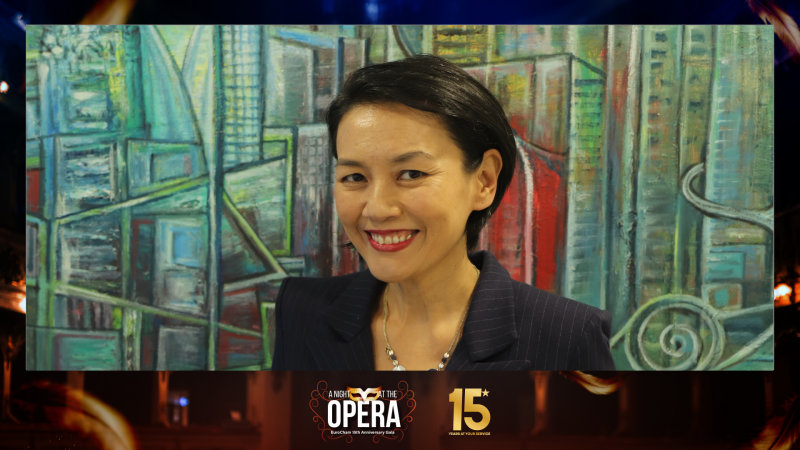
With EuroCham’s 15 Anniversary Galaon the horizon, this week’s interview saw Senior Communications Officer Stew Post speak with former EuroCham Executive Director Ratana Phurik-Callebaut, whose journey since leaving the Chamber has spanned consulting, finance, governance, and community building.
From pioneering EuroCham’s early advocacy programs to mentoring Cambodia’s next generation of finance professionals, she reflects on a career shaped by collaboration, reinvention, and a deep belief in the power of people to drive sustainable growth.
Stew: Since leaving EuroCham you’ve continued to work closely with the private sector and investment community. What have been some of the most significant moments in your career in recent years?
Ratana: When I left EuroCham, I didn’t have a precise plan — but I I wanted more flexibility and independence, and I wanted to reconnect with areas I had put aside, such as research and policy analysis. So that’s what I did: I started working as an independent consultant on projects related to sustainability, access to finance for the Cambodian business ecosystem. It is intellectually stimulating, but as a consultant, your role often ends at the recommendation stage so your impact is somewhat limited.
Interestingly, the most defining moments in my career actually came from something I never expected: my finance background and my CFA qualification. When I earned the CFA charter, it wasn’t well known in Cambodia, and I didn’t imagine it would be useful one day but then I was invited to join the Board of Directors of ANZ as an Independent Director, thanks to a connection who knew about my CFA. That opened doors to other board roles and opportunities, and today I’m honoured to serve on the Board of ACLEDA Bank and to chair the Board of ACLEDA University.
Another transformative experience was being asked by the CFA Institute to establish a CFA/Investment professionals community in Cambodia. At first, I wasn’t sure it would work but eight years later, our community has become a cornerstone for young finance professionals through the CFA Research Challenge in Cambodia that we organise every year and where we train the next generation of equity research analysts. It’s entirely volunteer-driven and super niche, but the results make me super proud. The quality of the impact, the dedication of the volunteers, and growth of the students are just incredible.
Looking back, I feel very fortunate, my experience at EuroCham allowed me to grow in new directions: governance, mentoring, and community building, while staying closely connected to entrepreneurs. I can’t say I’ve built a linear career, but every role has been very fulfilling. Cambodia is a place where you can constantly reinvent yourself, and I think my journey reflects exactly that.
Stew: As Executive Director, what were some of the main challenges you faced in strengthening EuroCham’s visibility and influence in Cambodia’s business community, and how did you address them?
Ratana: There were honestly so many challenges — but also so many opportunities.
At that time, most business associations in Cambodia were like small business clubs with limited financing. So, when EuroCham received this grant from the EU, it was a complete game changer. Expectations were high and failure wasn’t an option.
The first challenge was really about building consensus. We had so many stakeholders, the EU Delegation, several European embassies, and of course the founding chambers: the French, the British, the Germans — all with different priorities and personalities. Finding common ground and keeping everyone aligned wasn’t always easy, but it was absolutely essential to build a united voice.
The other challenge was that we were in a start-up mode (small but dynamic team, trying to launch many projects quickly) but dealing with the heavy compliance and reporting requirements of a donor-funded program. The first year was really tough — we were setting up systems, making mistakes, learning as we went — but once the foundations were in place, the momentum came naturally.
And I think that we did well: we created great tools, made fantastic publications, did outreach, promotion, market research but what made a difference, was really the advocacy program. Only then, EuroCham found its voice and influence.
Stew: Indeed, during your tenure, EuroCham deepened its engagement with the Royal Government and the private sector. How important is this bridge-building role in shaping policy dialogue and supporting business confidence?
Ratana: Very important! And the credit should really go the team behind Advocacy and all the members involved.
Before that, public–private dialogue existed through the Government–Private Sector Forum (GPSF), but it was largely driven by the Government and often perceived as accessible mainly to large companies. EuroCham’s approach brought a different spirit — one that was inclusive, evidence-based, and action-oriented.We set up sectoral committees made up of business members acting as experts, reporting real issues from the field. The position papers were based on extensive consultations and contained practical, actionable recommendations. It was never about lobbying for a few.
The White Book became our flagship advocacy tool — and what made it so effective was the decision to include the Government’s responses and follow-ups directly in the publication. That simple idea turned it into a true dialogue platform, which was really appreciated by the Government. I remember also great moments during our annual Tax Forums, where more than 500 participants gathered and where the GDT high ranking officers were interacting directly with businesses of all sizes. It was refreshing and inspiring.
Today, most chambers have their own advocacy programs, but back then it was pioneering work. It created collective impact, built trust and long-term partnerships, and positioned EuroCham as a credible, respected voice for the business community.
Stew: How have these experiences shaped your current perspective on Cambodia’s business development?
Ratana: Oh yes — completely.
My background was very analytical, I was probably a bit of a perfectionist, almost rigid. But over time, Cambodia taught me something fundamental: it’s all about people. To make things work here, you have to take a human-centred approach. You need to build trust, at every level.
I also learned how powerful collective impact can be. Alone, your influence is limited to what you can personally do. But when you bring people together around a shared vision and empower them to succeed, everything changes.
So today, my philosophy is quite simple: keep your standards high — because that’s how you build credibility — but always focus on people, trust, and community.
Stew: With your background in finance and investment, what do you think have been the most meaningful developments in Cambodia’s business landscape in recent years? How have they changed how people do business in the Kingdom?
Ratana: There have been many meaningful changes in Cambodia’s business landscape over the past few years, but for me, one of the most important has been the growing recognition of the entrepreneurial ecosystem as a real driver of development.
A decade ago, most of the focus was on attracting foreign investment but sustainability and resilience also comes from within — from the entrepreneurial mindset of Cambodian people and the energy of the new generation. It’s been very encouraging to see the rise of national initiatives (Khmer Enterprise, the SME Bank, the Skills Development Fund, and the Credit Guarantee Corporation of Cambodia) and also the growing emphasis on financial inclusion and women’s entrepreneurship
There’s still a long way to go but what matters is that the mindset has shifted, Cambodia now sees its entrepreneurs as partners in growth, not just beneficiaries of it. Cambodia has always been a land of entrepreneurs and it is great that they are finally at the center of the country’s development story.
Stew: Looking ahead, what do you think are the business trends to be on the lookout for in the coming years?
Ratana: I think sustainability will remain one of the biggest forces shaping Cambodia’s business landscape — and honestly, we don’t have much choice.
Cambodia is a small country with a small market, so the only way to stay competitive is to play smart: focus on niche, high–value markets, invest in education and human capital, and use our size as an advantage to stay agile — to leapfrog, especially through technology. We know that.
When I talk about sustainability, I mean much more than environmental responsibility. It’s about positioning Cambodia as a place where green and innovative projects can be tested — in tourism, in agribusiness, in finance and so many other sector
I also believe AI will completely transform the way we work and learn here. It’s already happening. The key will be learning not only how to use it, but also how not to use it
But for any of this to happen, two things are absolutely essential:
First, we need to rebuild trust — trust in our systems and in the image of the country, and not let it be defined with what is happening now.
And second, we need to invest deeply in education, especially outside Phnom Penh.
Stew: If you could give one piece of advice to entrepreneurs looking to invest or start a business in Cambodia, what would it be?
Ratana: It would be: take the time to really understand the country, what makes it unique.
A lot of people arrive and are amazed by all the opportunities they see. Everything feels open and easy. But it’s not. You can’t cut corners here. You need to invest in time, in quality, and in people At the same time, if you come with a rigid mindset, you will hit walls quickly. Cambodia doesn’t adapt to you; you have to adapt to it.
So do your homework, come, meet people, and take the time to adjust your beliefs and expectations. But if you decide to come, the reward is worth it. This is still a country where your actions can have a real impact.
The most inspiring entrepreneurs I’ve met here — the good ones — are deeply passionate about the value they create and the difference they make. That’s what makes doing business in Cambodia so special. You can still build something meaningful, not just profitable.