
Cambodia Investment Review
Stronger monitoring and cooperation with international digital asset platforms could help Cambodia address financial crime risks after TRM Labs tracked approximately $1.07 billion in cryptocurrency flowing to Sihanoukville casinos between January 1 and September 7, 2026.
The blockchain intelligence firm’s October report covered 34 physical casinos. Almost all the cryptocurrency received — 99.9% — was USDT transferred over the TRON blockchain.
Read the full TRM Labs report here.
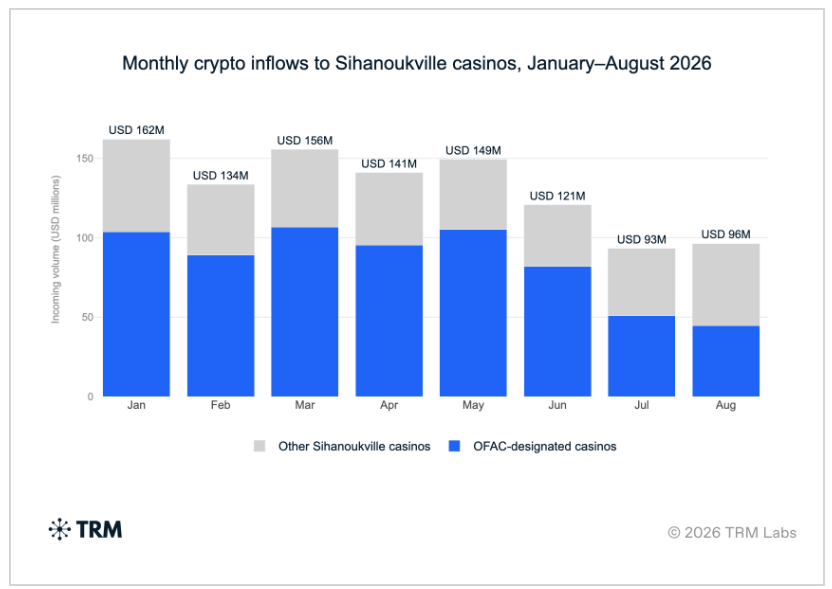
Approximately $687 million, or 64%, went to casinos TRM associated with US-sanctioned networks. Three casino entities linked to designated networks received more than $320 million after the relevant sanctions took effect.
The findings highlight the importance of financial oversight alongside Cambodia’s crackdown on online scam operations. Stronger controls could help protect legitimate businesses, reduce financial institutions’ exposure to illicit transactions and strengthen investor confidence.
The figures measure transfers to wallets TRM linked to casinos. They do not represent casino revenue or establish that every transaction involved criminal proceeds.
Inflows Decline as Enforcement Intensifies
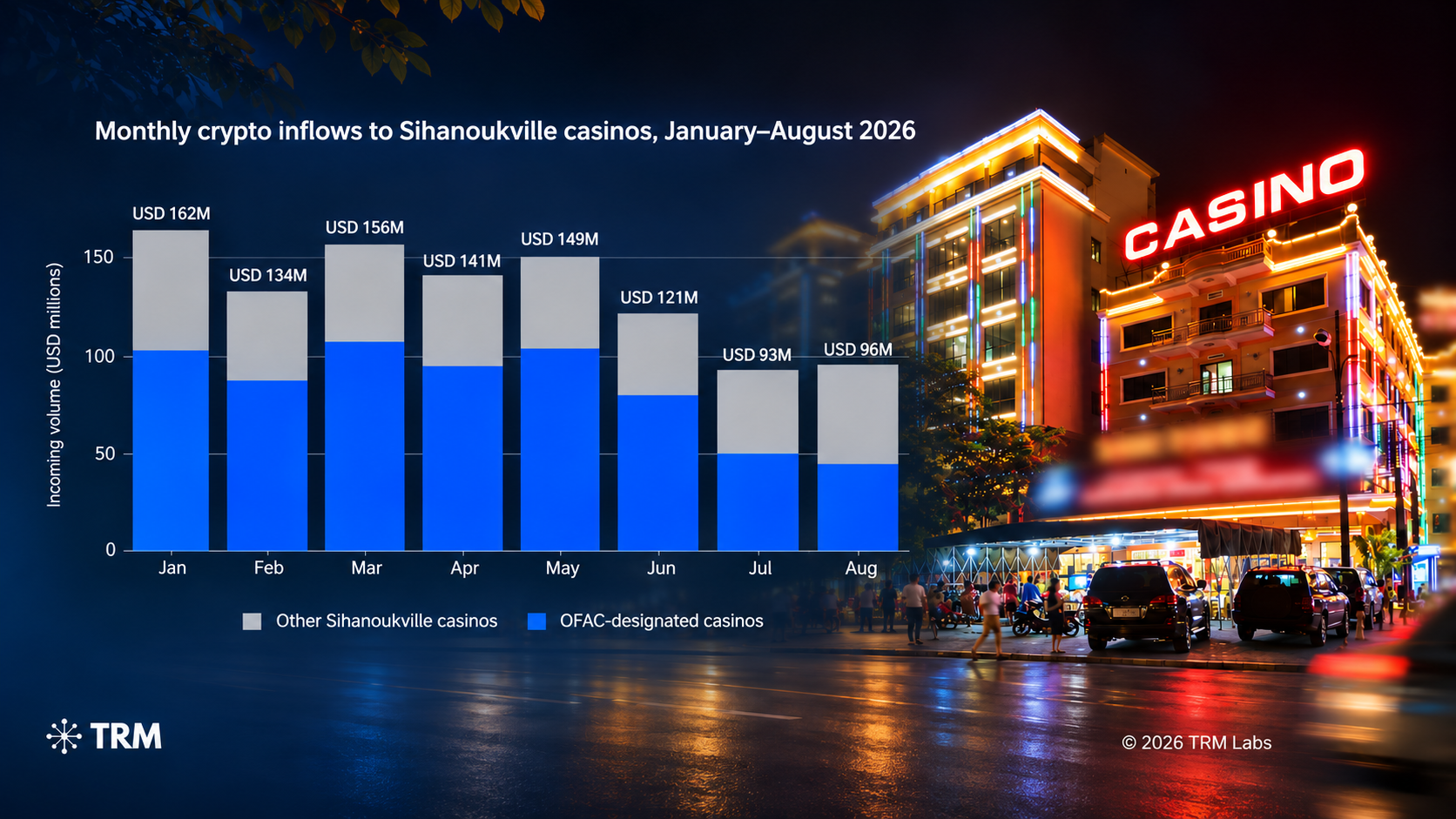
Average monthly cryptocurrency inflows fell from approximately $148 million between January and May to $95 million in July and August, according to TRM.
Read More: Opinion – Preparing Cambodia for the Rise of BTC and USDT Wallet-to-Wallet Scam Networks
Casinos linked to sanctioned networks accounted for most of the decline, with their monthly average dropping from approximately $100 million to $48 million.
However, operators’ frequent wallet changes complicate monitoring. TRM cautioned that some funds may have moved to unidentified addresses, meaning the figures could overstate the underlying slowdown.
Cambodian authorities reported raiding 832 scam sites between July 2025 and August 2026, according to local media. The country’s anti-scam commission announced in September that 18 casino licences had been revoked and nine suspended.
TRM also observed a quieter local economy, with businesses serving compound workers closing or scaling back. Nevertheless, cryptocurrency continued reaching casinos associated with designated networks.
Cash Conversion Services Remain Available
TRM researchers observed casinos accepting USDT at cashier desks and converting it into gambling chips and US dollars with little apparent customer due diligence.
Hotels, convenience stores, phone shops, pawnshops and exchange counters also continued offering cryptocurrency-to-cash services.
USDT is a stablecoin designed to maintain a value of approximately one US dollar. TRM attributed the popularity of transfers over TRON to low fees, liquidity and widespread regional adoption.
The Commercial Gambling Management Commission of Cambodia told local media that gambling operators are prohibited from trading or accepting cryptocurrency payments. It said monitoring was being conducted with the National Bank of Cambodia and National Police, without detailing enforcement measures.
Local media also reported that central bank rules issued in 2024 require businesses exchanging, transferring or holding cryptocurrency for customers to obtain a licence.
Cooperation Could Improve Financial Oversight
The Cambodia Blockchain Association identified closer cooperation with international digital asset platforms as a way to strengthen the tracing and freezing of suspicious transactions, according to local media.
Such partnerships could complement customer verification and monitoring, particularly when operators replace wallets or use intermediary businesses.
The exchange market also serves routine needs. An anonymous operator told local media that Cambodian workers commonly converted USDT salaries into dollars through transactions of $200 to $300, illustrating the importance of distinguishing everyday activity from illicit finance.
TRM recommended that exchanges and stablecoin issuers monitor indirect exposure to casino and commercial entities alongside sanctioned addresses.
For Cambodia, the findings suggest that sustained progress will require enforcement against scam sites alongside stronger oversight of the financial channels supporting them.