


Cambodia Investment Review
Cambodian businesses face closer scrutiny of related-party transactions and changes to mandatory audit requirements, prompting calls from DFDL specialists to review tax exposure, financing arrangements and reporting obligations before year-end.
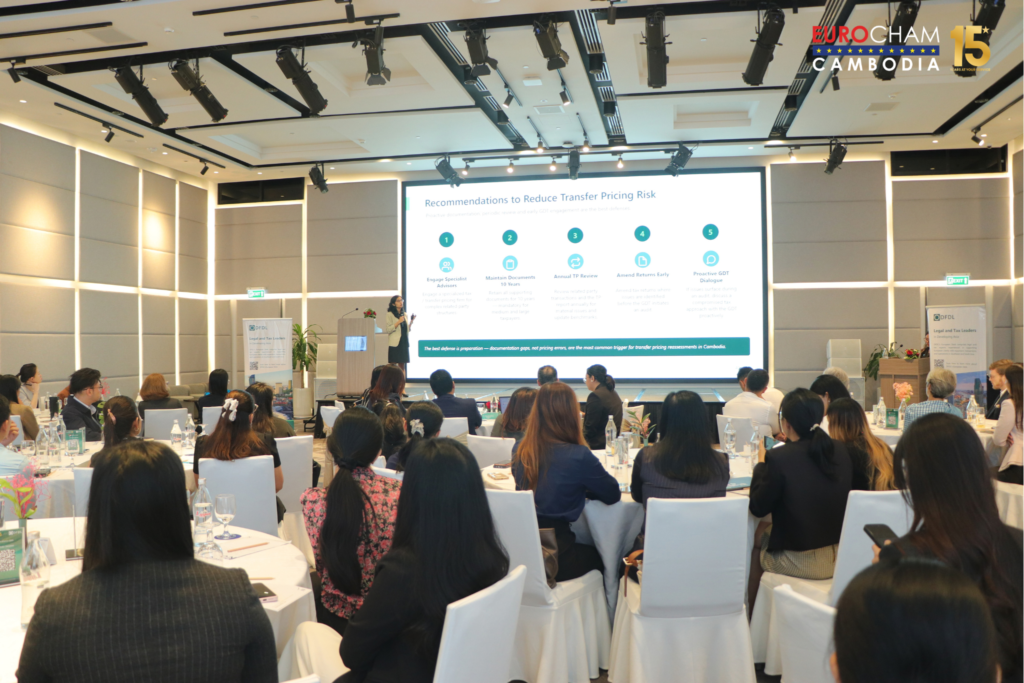
At a breakfast briefing hosted by DFDL Cambodia and EuroCham at Novotel Phnom Penh, advisers outlined changes affecting capital gains, transfer pricing and financial reporting. The session brought together chief financial officers, tax directors, chief accountants, in-house counsel and NGO representatives.
The changes could increase compliance costs for businesses with cross-border or related-party dealings, even as higher audit thresholds ease requirements for some small and medium-sized enterprises.
DFDL Tax Partner Diberjohn Balinas moderated the briefing, which featured Tax Partner Vajiravann Chamnan, transfer pricing lead Vandana Vijayakumar and Accounting Director Michelle Cielo.
Capital Gains and Tax Liabilities in Focus
Chamnan outlined Cambodia’s new capital gains tax regime, which imposes a 20% tax on taxable gains from specified capital assets, including share transfers, investment assets, goodwill and intellectual property.
According to the presentation, implementation timelines differ across certain asset classes, with applicable filings due within three months of a sale.
She also highlighted rules clarifying responsibility for unpaid taxes when a business is sold, merged or transfers its shares. The treatment of outstanding liabilities depends on factors including which entity survives a transaction and whether the relevant business properly completes deregistration.
For companies planning restructuring or ownership changes, the rules make reviewing outstanding tax obligations a key part of transaction preparation.

Related-Party Deals Draw Audit Attention
Loans, management fees, goods sales, royalties and licensing payments between related companies remain major areas of scrutiny for Cambodia’s General Department of Taxation, Chamnan told attendees.
Potential audit outcomes include the disallowance of related-party expenses, additional tax assessments and penalties ranging from 10% to 40%, alongside monthly interest. Cases involving deliberate tax evasion or fraud may attract further enforcement measures.
The briefing underscored the need for businesses to maintain evidence supporting both the commercial basis and pricing of transactions within a corporate group.
Transfer Pricing Adjustments Could Add Tax Exposure
Vijayakumar outlined changes under Cambodia’s transfer pricing regulation, Prakas 574, including provisions that could create additional tax exposure following a pricing adjustment.
Where the tax authority adjusts a company’s transfer pricing upward, the resulting difference may be recharacterised as a dividend, loan or capital contribution, potentially triggering a second layer of tax.
The regulation also provides two separate relief regimes. One exempts qualifying companies from full transfer pricing documentation based on financial thresholds, while another provides a narrower exemption for certain related-party loans.
Eligibility for both must be reassessed annually, according to the presentation.
Vijayakumar advised companies to map all related-party transactions, review their eligibility for exemptions each year and retain documentation demonstrating that pricing reflects arm’s-length terms.
Audit Overhaul Eases Some Requirements, Expands Others
Cielo outlined changes under Prakas 063, signed on August 18, 2026, which revises requirements for annual financial statements and independent audits.
The regulation raises turnover and asset thresholds for mandatory audits and introduces sector-specific thresholds, potentially removing some small and medium-sized enterprises from the audit requirement.
At the same time, the presentation identified categories captured regardless of size, including branches of foreign companies and casino operators, alongside revised requirements affecting larger property developers.
NGOs face separate audit triggers linked to project costs or a combination of overall spending and staff numbers.
Businesses and NGOs falling outside the new thresholds can apply for an exemption, but must do so within 30 days of the end of their accounting year, Cielo said.
She also highlighted escalating penalties for late filing. According to the briefing, penalties double after 30 days of non-payment and triple after 60 days, with further enforcement action possible beyond that period.
Intercompany Funding Tops Business Concerns
The closing question-and-answer session focused heavily on the treatment of everyday financing between related businesses.
Attendees asked how loans and cash advances from head offices, shareholders and sister companies are taxed, and how businesses should establish an appropriate interest rate.
Other questions addressed companies facing an independent audit requirement for the first time.
The discussion highlighted the practical challenge for finance teams heading into year-end: determining which obligations apply, documenting related-party arrangements and preparing for filing and exemption deadlines.