
By David Van
A National Roadmap for Industrial Transformation (2026–2040)
Executive Narrative
The global economy is entering a new phase—not of clean separation, but of complex reconfiguration. Supply chains that once prioritized efficiency above all else are now being reshaped by geopolitics, resilience concerns, and technological competition. Yet despite growing tensions between major powers, the world is not dividing neatly into separate blocs. Instead, it is becoming more layered, more redundant, and more interconnected in new ways.
In this evolving landscape, countries that attempt to fully align with one side risk limiting their economic future. By contrast, countries that can operate across systems—flexibly and pragmatically—stand to benefit the most.
This is where Cambodia’s opportunity lies.
Rather than competing directly with industrial giants, Cambodia can position itself as a reliable, neutral connector within global supply chains—a place where production, logistics, and trade can continue to flow even as the broader system fragments.
This roadmap outlines how Cambodia can move from a low-cost manufacturing base to a strategically relevant industrial and logistics node, capable of supporting both regional and global supply chains over the next 15 years.
Understanding the Moment
Today’s global supply chains are deeply embedded, often opaque, and heavily dependent on upstream inputs concentrated in a few countries—most notably China. Attempts by major economies to reduce these dependencies are underway, but the process is slow, costly, and incomplete.
What is emerging is not a world of separation, but one of partial diversification. Production is being redistributed, not replaced. Supply chains are becoming multi-layered, with different countries performing different roles.
This creates a new kind of opportunity—not for countries that try to dominate entire industries, but for those that can insert themselves intelligently into key segments of the value chain.
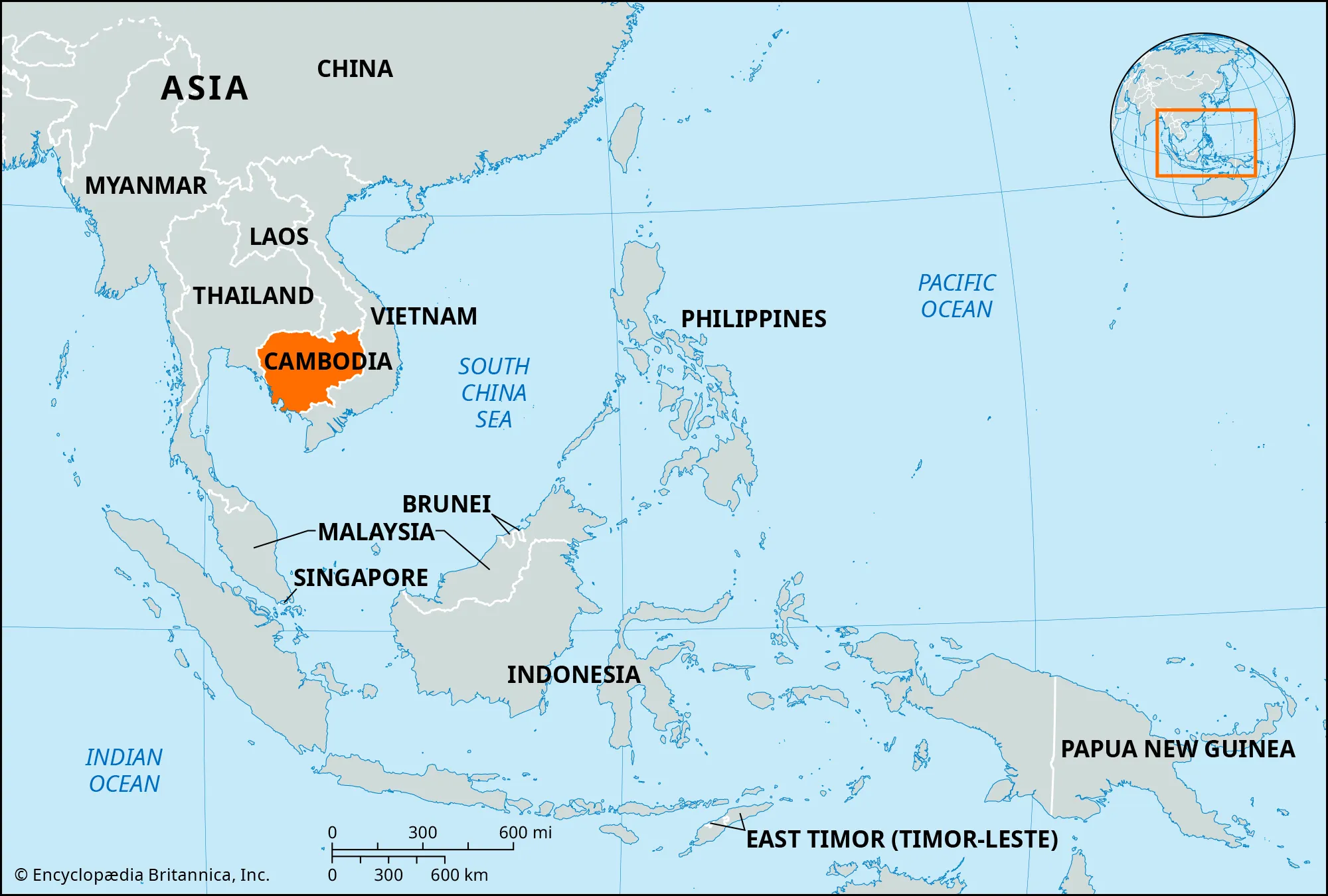
Cambodia, with its geographic position in the heart of ASEAN and its openness to trade and investment, is well placed to do exactly that.
A Realistic National Objective
Cambodia’s ambition should not be to become a semiconductor powerhouse or a high-tech manufacturing hub overnight. Such goals require decades of capital accumulation, technological depth, and ecosystem development.
Instead, the country should pursue a more grounded and ultimately more achievable objective:
To become a multi-aligned industrial and logistics hub, connecting regional and global supply chains while steadily upgrading its capabilities over time.
This means focusing on areas where Cambodia can realistically compete today, while building the foundations for more advanced activities tomorrow.
Where Cambodia Can Win
The most immediate opportunities lie in sectors that are already shifting out of concentrated production bases and into Southeast Asia.
Electronics assembly is one such area. As companies diversify their manufacturing footprints, there is growing demand for locations that can handle labor-intensive processes such as wiring systems, printed circuit board assembly, and basic electronic modules. These are not the most glamorous parts of the value chain, but they are essential—and scalable.
Similarly, logistics is becoming just as important as production. As supply chains become more complex, the ability to move goods efficiently across borders is a critical advantage. Cambodia’s location between Thailand and Vietnam places it in a strong position to serve as a regional logistics bridge, particularly if infrastructure and customs systems are upgraded.
Another promising pathway lies in upgrading existing strengths. Cambodia’s garment sector, long a pillar of its economy, can evolve into higher-value activities such as technical textiles, protective equipment, and specialized manufacturing. This is not a leap into the unknown—it is a natural progression.
Over time, these foundations can support entry into adjacent sectors such as automotive components and industrial subassemblies, where regional demand is already strong.
Building the Right Foundations
None of this transformation will happen without deliberate policy action.
First, Cambodia’s industrial zones must evolve. Special Economic Zones should no longer be seen merely as land for factories, but as integrated ecosystems—with reliable infrastructure, efficient customs processes, and clustering of related industries.
Second, infrastructure investment must be prioritized with a clear strategic lens. Roads, railways, and ports are not just development projects—they are the backbone of Cambodia’s role in regional supply chains. At the same time, digital systems—particularly in customs and logistics—will determine how competitive the country truly is.
Third, the workforce must be prepared. Industrial upgrading depends not only on capital, but on skills. Expanding technical and vocational training in areas such as electronics assembly, industrial maintenance, and logistics management will be essential.
Finally, Cambodia must remain open and balanced in its external relationships. The country’s strength lies precisely in its ability to work with multiple partners. Preserving this flexibility will be key to long-term success.
Managing the Risks
This strategy is not without risks.
There is the risk of overdependence—on a single country, a single sector, or a narrow range of investors. There is also the risk of being outpaced by regional competitors such as Vietnam or Thailand, both of which are moving aggressively to capture new supply chain opportunities.
Perhaps most importantly, there is the risk of global uncertainty itself. Supply chains will continue to shift, sometimes unpredictably.
These risks cannot be eliminated—but they can be managed. Diversification, regulatory efficiency, and policy flexibility must be at the core of Cambodia’s approach.
A Phased Path Forward
Transformation of this scale requires time and sequencing.
In the first phase, from 2026 to 2028, the focus should be on laying the groundwork—reforming industrial zones, improving logistics infrastructure, and aligning policy frameworks.
The second phase, from 2028 to 2033, is about scaling—attracting investment, expanding industrial clusters, and deepening integration into regional supply chains.
The final phase, from 2033 to 2040, should focus on consolidation and upgrading—moving selectively into higher-value activities while strengthening domestic capabilities.
This is not a short-term project. It is a long-term national transformation.
What Success Looks Like
If implemented effectively, this strategy would lead to a Cambodia that is more resilient, more diversified, and more integrated into the global economy.
Manufacturing exports would grow not just in volume, but in value. New jobs would be created across industrial and logistics sectors. Investment would broaden beyond traditional areas. And Cambodia would no longer be seen only as a low-cost production base, but as a reliable partner in global supply chains.
Final Reflection
The global economy is not standing still. The question is not whether supply chains will change—they already are.
The real question is whether Cambodia will simply adapt to these changes, or actively position itself to benefit from them.
This roadmap argues for the latter.
Cambodia does not need to compete with the world’s largest industrial powers to succeed. It needs to understand where the system is going—and place itself where it matters.
If done right, Cambodia can become not just a participant in global supply chains, but a strategically important node within them.
David VAN
5-5-2026