
Cambodia Investment Review
The Private Infrastructure Development Group (PIDG) has made its first investment in Laos, committing USD 2.5 million to LOCA, the country’s largest ride-hailing and e-mobility platform, in a move designed to rapidly scale electric vehicle infrastructure nationwide. The funding, channelled through InfraCo – PIDG’s project development arm – will support the installation of new charging stations and the deployment of a pilot EV taxi fleet, marking a strategic push to advance climate-aligned transport solutions in the Mekong region.
The deal also includes a USD 66,000 technical assistance grant to conduct wider EV market analysis for Laos, highlighting a market-building approach rather than standalone capital injection. PIDG framed the investment as part of its mandate to expand sustainable infrastructure that improves economic opportunity and living standards in emerging economies.
LOCA expands from ride-hailing pioneer to e-mobility ecosystem
Founded in 2018, LOCA Company Limited has grown from Laos’ first ride-hailing platform into a broader technology ecosystem integrating mobility, EV charging, and fintech services. With more than 1,000 active drivers — over 90% operating electric vehicles — LOCA has become a central enabler of Laos’ national electrification objectives.
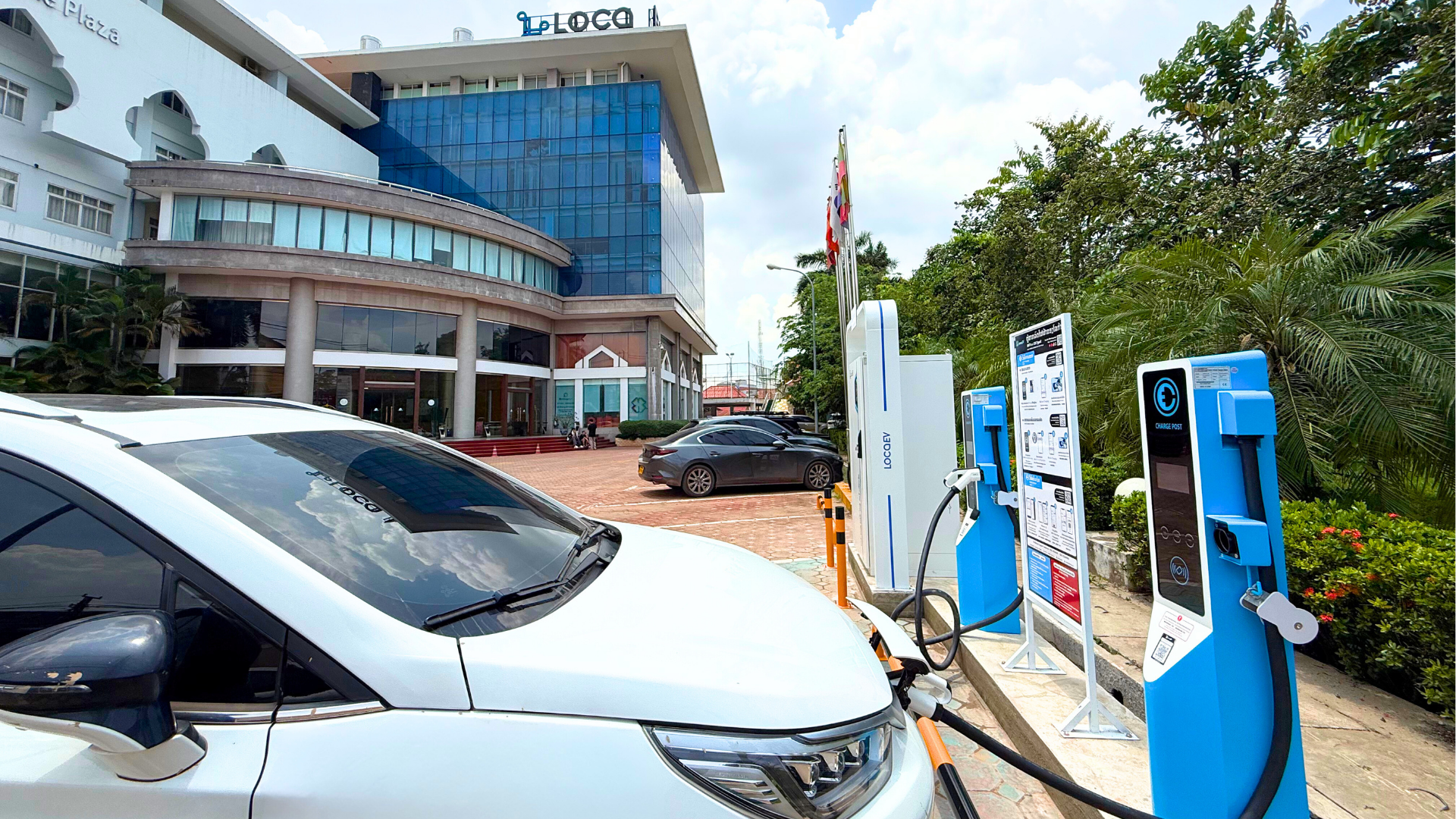
Since 2021, the company has driven EV adoption from just 50 electric vehicles on the road to more than 15,000 in 2025, supported by its expanding LOCA EV Fast Charging Network, innovative financing models for drivers, and public education campaigns. The platform is positioned to help move the country toward its stated ambition of 100% electric mobility by 2030.
LOCA’s regional profile has grown alongside this shift. The company has received the ASEAN Business Award in 2019 and 2023 for digital transformation and sustainability, the Clean Energy Technology Award in 2024, and recognition by Forbes Asia as one of the Top 100 Businesses to Watch — reflecting its emerging role in shaping Southeast Asia’s clean-tech and mobility landscape.
Investment aligned with Laos’ demand shift and electrification policy
Urban transport in Laos has undergone rapid transformation as ride-hailing becomes the preferred mobility mode for both locals and tourists. Market forecasts show compound annual growth of 4.33 per cent between 2025 and 2030, with revenues surpassing USD 8 million and an estimated 1.6 million users by decade end.
Read More: Laos’ Tax Landscape Evolves as Business Community Emphasizes Collaboration and Compliance
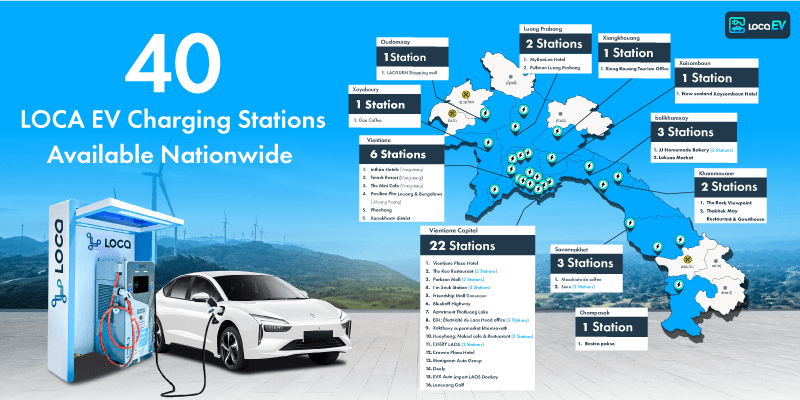
LOCA plans to use PIDG’s investment to install an estimated 54 new charging stations and deploy up to 20 EV taxis. Once fully completed, the network could reach as many as 93 stations nationwide — a milestone expected to significantly ease long-distance EV travel, reduce range anxiety, and improve accessibility for private motorists as well as commercial fleets.
Government policy further reinforces the shift, as Laos aims for EVs to represent 1 per cent of vehicles by 2025 and more than 30 per cent by 2030 to reduce fuel import dependence and emissions.
Snapshot – What the investment supports
• Expansion of the LOCA charging network to 54 new stations
• Pilot fleet of up to 20 EV vehicles for commercial operations
• USD 66,000 technical assistance grant to evaluate national EV market readiness
• Long-term target of up to 93 charging stations across Laos
PIDG positioning for deeper participation in regional clean-infrastructure
The LOCA partnership aligns with PIDG’s 2023–2030 strategy, which identifies sectors including transport electrification, energy and power, logistics and connectivity, and sustainable urban systems as priority zones for impact investment. The organisation has stated that future mobilisation of capital in the Mekong region will continue to focus on infrastructure that drives both economic growth and climate resilience.
By supporting an e-mobility ecosystem rather than only a vehicle fleet, PIDG’s investment reflects a broader trend across Southeast Asia: mobility platforms serving not only as transport providers but as catalysts for nationwide EV accessibility. For Laos, LOCA’s continued expansion may serve as a blueprint for electrification in smaller emerging markets where a single technology player can substantially influence national adoption rates.
If growth proceeds as projected, Laos could emerge as a regional case study on how ride-hailing, infrastructure investment, and supportive public policy can converge to deliver a rapid transition toward clean transportation.